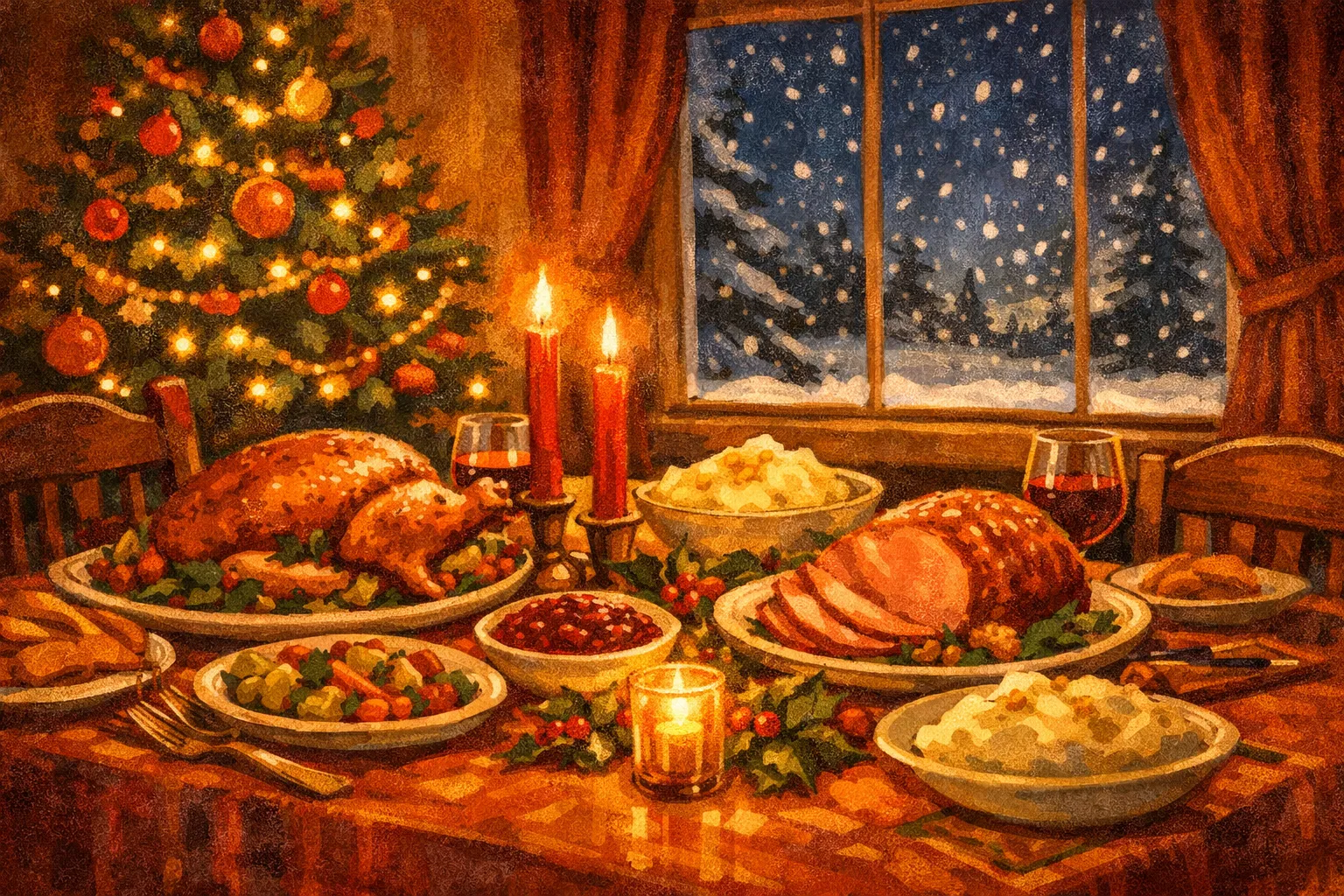
Christmas Eve: Traditions, Dinner and History
For half the world, December 25 is an afterthought. The real Christmas happens the night before, with rituals that have shaped how families celebrate for centuries.
Christmas Eve falls on December 24 every year, and for a large part of the world it is the most important night of the entire holiday season. While English-speaking countries tend to treat December 25 as the main event, much of Europe, Latin America, and parts of Asia consider the evening of the 24th to be when Christmas truly happens. Gifts are exchanged, feasts are served, and midnight church services mark the transition from waiting to celebration.
Contents
The reason is rooted in how ancient cultures counted days. In Jewish tradition, which shaped early Christianity, a new day began at sundown rather than midnight. Christmas Eve was the start of Christmas, not the prelude to it. That logic still drives the customs of dozens of countries where the 24th overshadows the 25th.
What Is Christmas Eve and When Is It?
Christmas Eve is always December 24, the day and night immediately before Christmas Day. The word "eve" comes from the Old English aefen, meaning evening. In liturgical terms, it marks the final day of Advent and the beginning of the Christmas season at sundown.
The date never moves. Unlike Easter, which follows a lunar calendar and shifts every year, Christmas is fixed to December 25 in the Western Christian calendar. Christmas Eve is therefore always December 24 in countries following the Gregorian calendar. Orthodox Christians using the Julian calendar celebrate Christmas on January 7, making their Christmas Eve January 6.
Is Christmas Eve a Federal Holiday?
In the United States, Christmas Eve is not one of the 11 official federal holidays. Christmas Day (December 25) is, but the 24th carries no automatic legal status. That said, many Americans assume it is a holiday because government offices and businesses often close early or shut entirely.
What actually happens is more ad hoc. Sitting presidents have repeatedly issued executive orders granting federal employees a day off on December 24, particularly when the calendar makes it convenient. When Christmas falls on a Tuesday or Wednesday, a Monday or Tuesday off avoids an awkward single working day. But these orders are one-time decisions, not permanent law.
At the state level, the picture varies. Some states recognize Christmas Eve as a state holiday for government employees. Private employers make their own choices. The National Retail Federation has noted that roughly half of American businesses give employees at least a partial day off on December 24.
In most of Europe, the situation is clearer. Germany, Poland, the Czech Republic, Slovakia, and the Scandinavian countries treat December 24 as the primary celebration day, and businesses close by early afternoon. In many of these countries, working on Christmas Eve afternoon would be as unusual as working on Christmas Day in the United States.
Christmas Eve Dinner Traditions Around the World
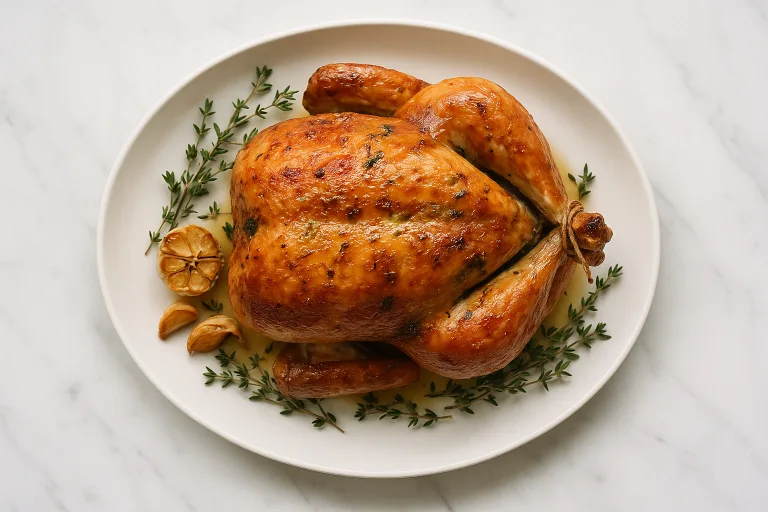
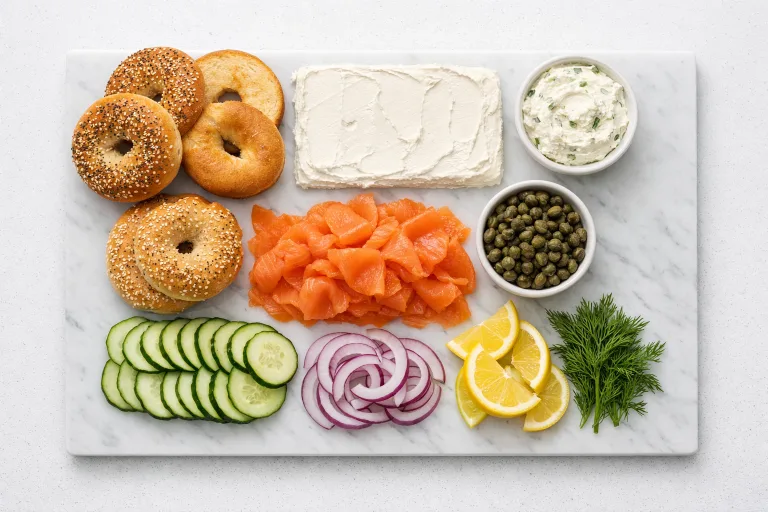
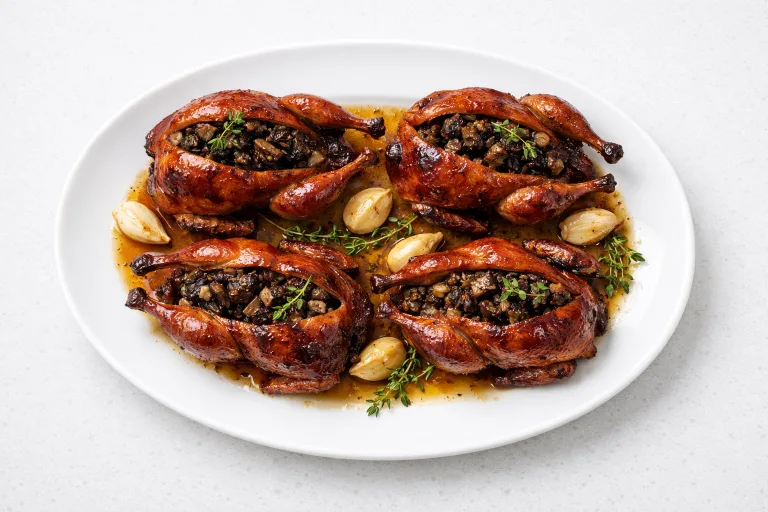
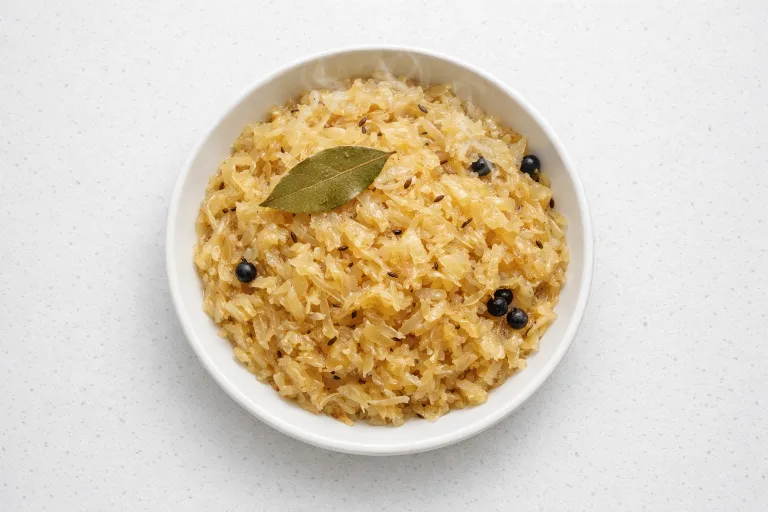
The Christmas Eve dinner is where cultural identity shows up most vividly. Every country has its own version, and people defend their traditions with the same intensity they bring to arguments about whose grandmother made the best version of the national dish.
Poland: Wigilia
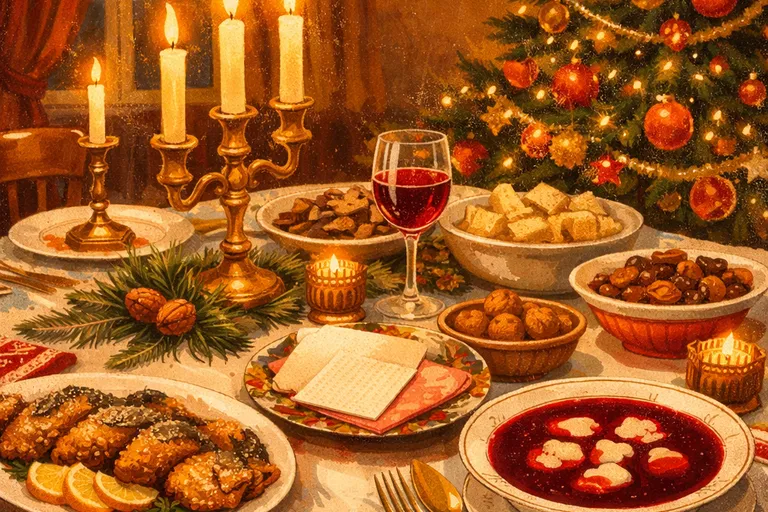
The Polish Christmas Eve supper, called Wigilia, is one of the most structured and ritualized meals in the world. The evening begins when the first star appears in the sky. The table is set with one extra place for an unexpected guest, and hay is placed under the tablecloth to recall the manger in Bethlehem.
Wigilia is strictly meatless. Traditionally it consists of 12 dishes, one for each apostle. Common dishes include barszcz (beetroot soup) with uszka (small dumplings), carp (fried or in aspic), pierogi, kutia (wheat berry pudding), and poppy seed cake. Before eating, family members break and share oplatki, thin Christmas wafers, while exchanging wishes for the coming year. It is the most emotionally charged moment of the Polish Christmas.
Czech Republic and Slovakia: Carp and superstition
In the Czech Republic and Slovakia, the centerpiece of the Christmas Eve dinner is fried carp with potato salad. Families traditionally buy a live carp days before Christmas and keep it swimming in the bathtub until the 24th. The practice has declined in cities, but fish vendors still set up tanks on street corners in Prague, Brno, and Bratislava each December.
Czech Christmas Eve is wrapped in superstitions. No one should leave the table during the meal, or someone in the household will die in the coming year. Cutting an apple crosswise should reveal a star shape for good luck. And children are told that if they fast all day, they'll see a golden pig on the wall that evening, a symbol of prosperity.
Italy: The Feast of the Seven Fishes
Italian-American tradition calls for La Vigilia, the Feast of the Seven Fishes, on Christmas Eve. The number seven has disputed origins. Some link it to the seven sacraments, others to the seven days of creation. Many Italian families serve far more than seven dishes. The point is abundance, not arithmetic.
Common dishes include baccala (salt cod), calamari, shrimp scampi, clams, mussels, and eel. In southern Italy, where the tradition has its deepest roots, the meal can stretch for hours across multiple courses. The seafood focus reflects the Catholic tradition of abstaining from meat on the vigil before a major feast day.
Sweden: Julafton
Sweden treats Christmas Eve, or Julafton, as the absolute center of the holiday. The celebrations start at 3:00 PM when roughly half the country sits down to watch Kalle Anka och hans vanner onskar God Jul, a Disney Christmas special that has aired annually on SVT since 1959. Audience ratings typically exceed 30% of the population.
The Julbord (Christmas table) features an array of herring, meatballs, Jansson's Temptation (a potato and anchovy casserole), ham, and rice pudding with a hidden almond. Whoever finds the almond will marry in the coming year, or so the tradition claims. Gifts are exchanged on the evening of the 24th, delivered by the Jultomten (Christmas gnome) rather than on Christmas morning.
Germany: Heiligabend
In Germany, Heiligabend (Holy Evening) is when gifts are exchanged, the tree is decorated (many German families keep the tree hidden until the 24th), and families gather for dinner. The meal varies by region. In northern Germany, potato salad with sausages is the most common choice, deliberately simple so the cook doesn't spend the day in the kitchen. In southern Germany, more elaborate meals featuring carp or goose are typical.
Mexico and the Philippines
In Mexico, Nochebuena (the Good Night) centers on a late meal after evening Mass. Tamales, bacalao (salt cod stew), romeritos (a dish of dried shrimp and greens in mole sauce), and ponche (warm fruit punch) fill the table. Extended families gather, and the meal often doesn't begin until after 10 PM.
The Philippines follows a similar pattern with Noche Buena, the family feast following Simbang Gabi, the series of nine dawn Masses culminating on Christmas Eve. Filipino tables feature lechon (roast pig), queso de bola (Edam cheese), ham, and bibingka (rice cake). The meal is served after midnight Mass, making it technically the first meal of Christmas Day.
Christmas Eve Traditions Beyond the Dinner Table
Midnight Mass
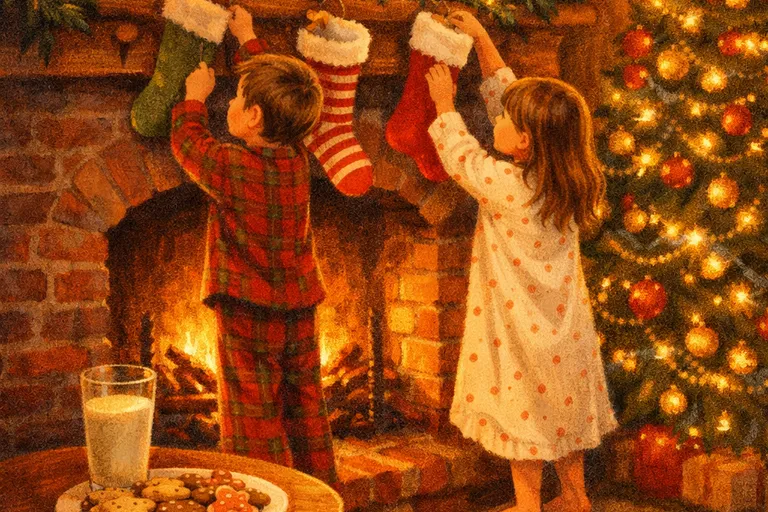
The tradition of Midnight Mass on Christmas Eve dates to at least the 5th century. Pope Sixtus III is credited with establishing a midnight celebration at the Basilica of Santa Maria Maggiore in Rome around 432 AD. The timing was meant to coincide with the believed hour of Christ's birth. Today, many churches have shifted their "midnight" services to 10 PM or 11 PM to accommodate families with young children, but the Vatican's papal Mass at St. Peter's Basilica remains one of the most watched religious services in the world.
Tracking Santa
Since 1955, NORAD (the North American Aerospace Defense Command) has operated a Santa tracker on Christmas Eve. The tradition began by accident when a Sears department store advertisement printed a misprinted phone number that connected children to the Continental Air Defense Command. Colonel Harry Shoup, the officer on duty, played along and told the children he could see Santa on radar. NORAD now tracks Santa across a dedicated website, with over 15 million unique visitors each December 24.
Leaving food for Santa
American and British children leave cookies (or mince pies in the UK) and milk for Santa Claus on Christmas Eve. In Sweden, children leave rice porridge for the Jultomten. In Ireland, it's a pint of Guinness. The tradition likely evolved from older Norse customs of leaving food offerings for spirits during the Yule season.
In the Czech Republic, children place their cleaned boots on the windowsill on the evening of December 5 (St. Nicholas Eve), not December 24. But on Christmas Eve itself, gifts appear under the tree, delivered by Jezisek (Baby Jesus), with no chimney-based logistics required.
Frequently Asked Questions
When is Christmas Eve?
Christmas Eve is always on December 24. Unlike holidays tied to lunar calendars, the date is fixed in the Gregorian calendar. Orthodox Christians following the Julian calendar observe Christmas Eve on January 6.
Is Christmas Eve a federal holiday in the United States?
No. Christmas Eve is not one of the 11 official U.S. federal holidays. However, presidents frequently grant federal employees the day off through executive orders, and many states and private employers treat it as a half-day or full day off.
Why do some countries celebrate on Christmas Eve instead of Christmas Day?
The tradition comes from the ancient practice of counting days from sundown to sundown. In early Christianity, the new day began at sunset, so Christmas started on the evening of December 24. Countries like Germany, Poland, Czech Republic, and the Scandinavian nations maintained this tradition while English-speaking countries shifted celebrations to the morning of December 25.
What do people eat on Christmas Eve?
It varies widely by country. Poland serves a 12-dish meatless Wigilia supper featuring carp and beetroot soup. Italy has the Feast of the Seven Fishes. Sweden offers a Julbord with herring and meatballs. Germany keeps it simple with potato salad and sausages. Many traditions feature fish or seafood due to the Catholic practice of abstaining from meat on vigil days.
What is Midnight Mass?
Midnight Mass is a Christian church service held on Christmas Eve, traditionally at midnight to mark the moment of Christ's birth. The practice dates to at least the 5th century in Rome. Many modern churches now hold the service earlier, between 10 PM and 11 PM, though the Vatican still celebrates at the traditional hour.
How did NORAD Santa Tracker start?
In 1955, a misprinted Sears advertisement gave children the phone number of the Continental Air Defense Command instead of a Santa hotline. Colonel Harry Shoup answered the calls and told children he could track Santa on radar. The tradition continued, and NORAD now runs an official Santa-tracking website every Christmas Eve with over 15 million visitors annually.