

A Child's Christmas (2008)
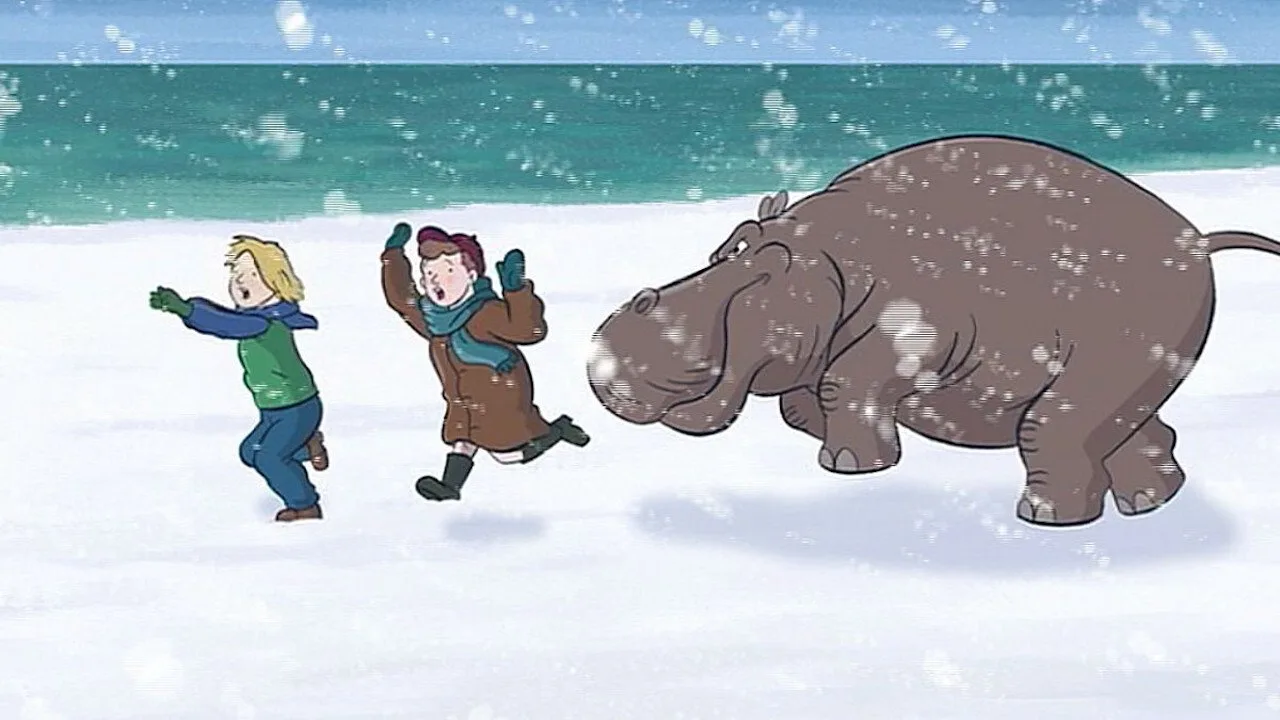
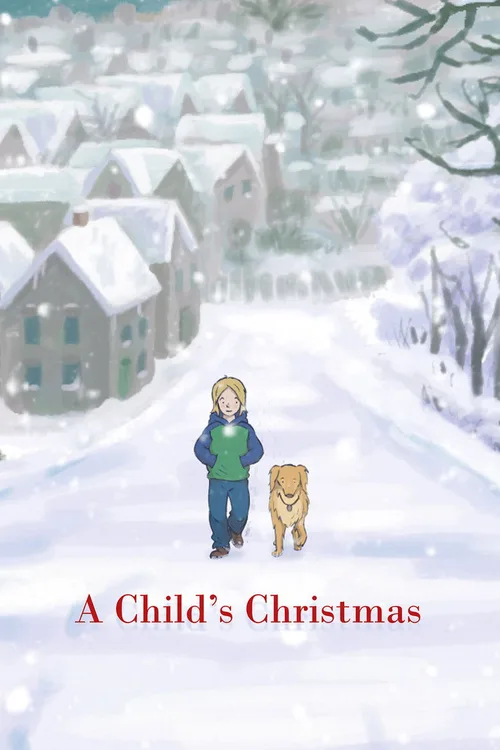
An old man and a young boy discuss whether or not Christmas has changed. The old man takes the young boy back to the Christmas' of his youth, and teases him with a mysterious assertion concerning snow.
 rating 8/10 0
 ❄ Christmas Connection
A Child's Christmases in Wales is built entirely around Christmas, structuring three complete Christmases across the 1980s as its narrative backbone. Every scene takes place at Christmas, and the holiday itself drives all conflict, comedy, and family dysfunction. The film is also a direct adaptation of Dylan Thomas's "A Child's Christmas in Wales," one of the most celebrated pieces of Christmas writing in the English language.
Our Review
Every family has that relative who makes Christmas simultaneously unbearable and unforgettable. A Child's Christmases in Wales, the 2009 BBC Four film written by comedian Mark Watson, is about a household where every relative fills that role at once. It spans three Christmases across the 1980s in the South Wales mining town of Ferndale, and it captures something that most Christmas films don't bother with: the specific comedy of being a child trapped in rooms full of adults who are behaving far worse than you are.
Watson adapted the premise from Dylan Thomas's beloved prose piece of the same name, a 1952 recording that is widely credited with launching the audiobook industry in the United States. Watson keeps the spirit of nostalgic Welsh remembrancing but fills it with something Thomas never attempted: a chaos of uncles. Specifically, Uncle Huw and Uncle Gorwel.
Three Christmases, One Increasingly Chaotic Terraced House
The film follows young Owen Rhys across 1983, 1986, and 1989. Each Christmas, his father Geraint (Mark Lewis Jones) welcomes his brothers into the family home, and each Christmas the visit devolves in its own way. Geraint is penny-pinching and anxious. Huw (Steve Speirs) is a recently divorced carpet king who talks constantly and arrives with a rotating inventory of malfunctioning gadgets. Gorwel (Paul Kaye) drifts through every scene in a state of magnificent, shambling detachment.
Ruth Jones plays Owen's mother Brenda, and she is the spine of the film. Brenda is obsessively tidy, quietly exasperated, and absolutely certain that she alone stands between Christmas and complete collapse. Jones plays her without condescension. Brenda is not a punchline; she's a woman who loves her family and cannot understand why they make it so difficult.
The comedy comes from the gap between what Brenda wants Christmas to be and what it actually becomes. Huw's computer games don't work. Mum steps on the Subbuteo set. The brothers bicker with the enthusiasm of people who have been saving their grievances all year for this precise occasion. Meanwhile Owen and his cousin Maurice age from ten-year-old boys into teenagers, while their fathers seem to move in the opposite direction.
What Paul Kaye Does with Almost Nothing
Paul Kaye as Gorwel is the film's most surprising performance. Where Speirs's Huw is voluble and aggressive, Kaye plays Gorwel as a man who has largely opted out of conventional participation in life. He says little. He appears in rooms unexpectedly. He seems to be observing Christmas rather than attending it. It's a genuinely funny piece of physical and reactive comedy, and Kaye commits to it completely without ever tipping into parody.
The film is patient enough to let this register. Watson's script trusts its cast to carry tonal weight without underlining every joke.
What the Welsh Valleys Actually Look Like at Christmas
The production filmed in Ferndale, Rhondda Cynon Taf, a former mining community in the South Wales valleys. The terraced houses, the steep streets, the specific texture of working-class Welsh domestic life in the 1980s are all present and treated with care rather than nostalgia-gloss. This is not a chocolate-box version of Christmas past. It's a specific place rendered with affection and recognizable detail.
The 1980s period is handled through props and costume rather than heavy signposting. The failing computer games, the Subbuteo, the particular quality of light through net curtains in a Welsh winter: these things establish the decade more effectively than any caption could.
Dylan Thomas in the Background
The film's connection to Thomas's original prose piece is tonal rather than structural. Thomas wrote in a fictionalised autobiographical style designed to evoke nostalgia rather than tell a tight story. Watson takes a different approach: he builds actual narrative, actual conflict, actual character arcs across three time periods. But the Welsh instinct for "remembrancing," for recreating the past through the quality of feeling rather than the accuracy of record, runs through Watson's script as well.
Owen as a narrator looking back at these Christmases is the film's organizing principle. The comedy is warm because we understand he loved these people, madness and all.
The Case for Watching It Now
This film was a BBC Four one-off in December 2009, which means it was always going to be obscure. It didn't have a cinema release, it didn't generate award campaigns, and its cast, though excellent, were not yet at the level of visibility they would later reach. Ruth Jones became a national figure through Gavin and Stacey, which was running concurrently with this film's production. Watching her here, you see exactly why she was the right choice: she is funny and real in the same breath.
Since 2017, the film has been available on BritBox, which is where most people will find it. It belongs in the same category as the best British Christmas specials: specific in its setting, universal in its comedy of family dysfunction, and short enough to watch with a mince pie and still have time to regret it.
The film ends with Owen grown, the Christmases long past, and the uncles presumably still arguing somewhere. It's the right ending: not resolved, not sentimental, just the acknowledgment that those Christmases happened and can't be taken back.
Fun Facts
The film was written by stand-up comedian Mark Watson, who is best known for his Edinburgh Fringe marathon shows. His 2009 script for the BBC was his first major television writing credit.
Dylan Thomas's original "A Child's Christmas in Wales" began as a 1945 BBC Radio Wales talk called "Memories of Christmas," commissioned by producer Lorraine Davies. Thomas later expanded it twice, merging in a 1947 Picture Post essay before recording the definitive version in 1952.
Thomas's 1952 recording of "A Child's Christmas in Wales" was selected for the United States National Recording Registry in 2008, with the Library of Congress citing it as the work credited with launching the audiobook industry in America.
The film was shot in Ferndale, Rhondda Cynon Taf, a former coal mining community in the South Wales valleys. The same street was later used as a filming location for the Sky One comedy-drama Stella, which also starred Ruth Jones.
Ruth Jones was already co-writing and starring in Gavin and Stacey for BBC Three when she filmed this one-off special for BBC Four in 2009, making that year one of the most concentrated periods of Welsh television comedy on British screens in recent memory.
Paul Kaye, who plays the spectacularly detached Uncle Gorwel, first became famous in the 1990s for his confrontational celebrity interviewer character Dennis Pennis, a persona so effective that several Hollywood stars refused to speak to the real Kaye for years afterward.
The film was repeated on BBC Two after its original BBC Four broadcast, a common marker of unexpected success for a one-off special. It became available to stream on BritBox in November 2017, eight years after it first aired.
Cast
