
The terror of witnessing the UFO! Damned as outcasts with blue blood!
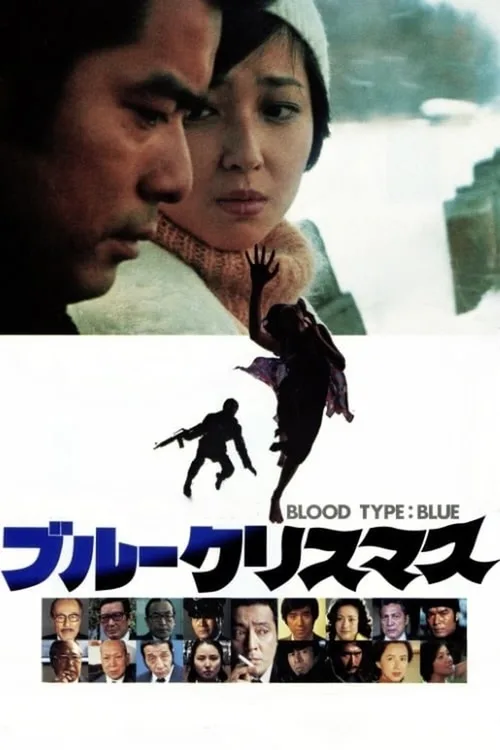
Blood Type: Blue (1978)
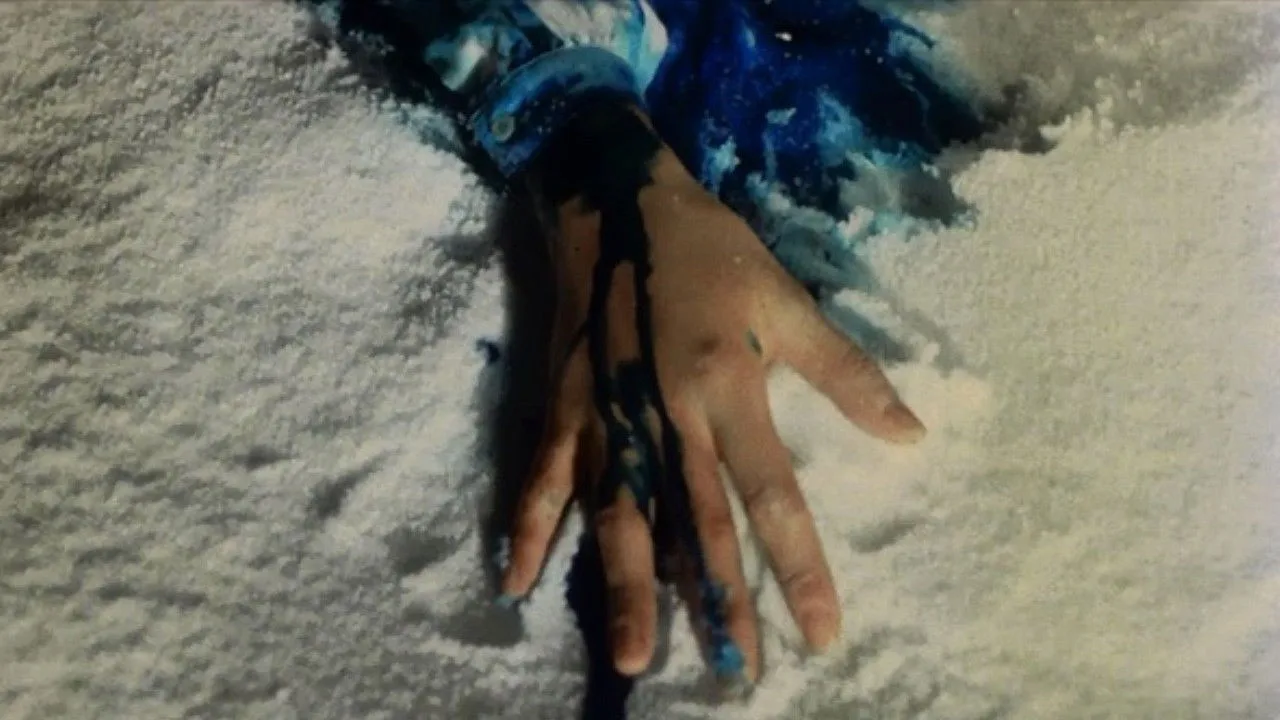
UFOs appear on Earth, and people who actually see them suddenly find that their blood has turned blue. Soon panic and hysteria result in the new "blue-bloods" being persecuted by the rest of mankind, and eventually certain all-too-familiar measures begin to be taken against them.
 rating 5/10 User rating 7 votes 55%
 ❄ Christmas Connection
Blue Christmas is set during the Christmas season and uses the holiday backdrop as a deliberate contrast to its paranoid, cold-war-inflected plot. The festive period is not incidental -- it sharpens the alienation of people who are literally marked as different during a time everyone is supposed to feel the same. The film was broadcast as a Christmas TV special in Canada, positioning it squarely in the holiday programming tradition.
Our Review
Blue Christmas arrived on Canadian television in 1978 under the alternate title "The Christmas Invasion," which tells you exactly what the distributors thought audiences needed to know. It is a movie about people who have been turned blue by contact with UFOs. It is also, technically, a Christmas film. J. Lee Thompson, the British director best known for The Guns of Navarone (1961) and a string of hard-edged Charles Bronson thrillers, shot this Canadian television production with more craft than the premise strictly required.
The result sits somewhere between genuine B-movie and earnest social allegory. Whether that gap is a flaw or the whole point depends on your patience for 1970s Canadian television.
What Blue Christmas Is Actually About
The plot follows people who, after close encounters with UFOs, have had their skin permanently altered to a distinctive blue. The government's response is not curiosity or care but containment. The "blue people" are identified, tracked, and quietly rounded up under the cover of a Christmas quarantine operation. Art Hindle plays the investigative journalist following the story as it unravels.
The allegory is not subtle. In 1978, Canadian television had developed a reasonably sophisticated tradition of issue-driven drama, and Blue Christmas fits that mode. The blue skin functions as a stand-in for any visible difference that triggers bureaucratic fear. The Christmas setting amplifies the irony without belaboring it -- families are celebrating goodwill while the state is quietly warehousing people who look different.
Thompson keeps the paranoia practical rather than operatic. There are no elaborate set pieces, no grand confrontations. The machinery of government suppression shown here is mundane, which makes it more unsettling than melodrama would have.
J. Lee Thompson Directing Canadian TV in 1978
Thompson is the most interesting fact about this film. By 1978 he had directed Gregory Peck, Anthony Quinn, and Richard Burton in major studio productions. He had made Cape Fear (1962), the first version, with Gregory Peck and Robert Mitchum. The jump from those films to a Canadian television movie about blue-skinned UFO survivors is a significant one.
The practical answer is money and work. By the late 1970s Thompson was making films quickly and for whoever was paying. He made five movies with Charles Bronson between 1976 and 1982. Blue Christmas came in the middle of that run, a detour into Canadian genre television that showed he could still impose coherent visual logic on low-budget material.
He does not phone it in. The film has a consistent tone and a real sense of the institutional spaces -- offices, corridors, government facilities -- where its surveillance drama plays out. Thompson understood how to make limited locations feel like a system rather than a set.
Art Hindle and the Canadian Ensemble
Art Hindle was at something of a career peak in 1978. He had appeared in David Cronenberg's The Brood (1979), filmed around the same period, and in Invasion of the Body Snatchers adjacent productions. He was a reliable presence in Canadian genre film of the era, capable of carrying a narrative without inflating it.
His performance here is functional rather than memorable. The investigative journalist is a role designed to be the audience's surrogate -- reactive, increasingly alarmed, ultimately impotent against institutional forces. Hindle plays it straight, which is the right call. The film does not need a hero who solves the problem. It needs someone who sees what is happening clearly and cannot stop it.
The supporting cast includes several actors who worked regularly in Canadian film and television through this period. The production has the texture of a competent industry working within its means rather than a passion project or a studio film.
The Christmas Setting and What It Does
Blue Christmas uses Christmas the way good horror often uses cheerful settings: as a pressure valve pointing in the wrong direction. The decorations, the seasonal music, the social rituals of the holiday all continue as normal while something very abnormal is being organized in the background.
The title plays on this directly. "Blue Christmas" is the Elvis Presley song from 1957, a number about loneliness during a season built around togetherness. The film inherits that resonance without explicitly citing it. The blue people are not just physically marked; they are socially excluded during the one period when exclusion feels most cruel.
The Christmas vibes rating for this film is a firm two out of five. It is set at Christmas and the holiday matters thematically, but viewers looking for warmth or festivity will find neither. This is cold-weather paranoia dressed in tinsel.
Should You Watch It
Blue Christmas is not a lost masterpiece. It is a solid, atmospheric piece of Canadian genre television from a director who knew what he was doing, built around a premise that sounds ridiculous and turns out to be only slightly less ridiculous in execution. The allegory is blunt. The budget is visible. The pacing is deliberate in ways that will test audiences accustomed to faster cutting.
For viewers interested in Canadian film history, in J. Lee Thompson's career across its full arc, or in the specific tradition of socially-minded science fiction that ran through 1970s television, it is genuinely worth an hour and a half. For viewers who want a Christmas film with Christmas in it, there are better options in every direction.
The film's best moment is its least dramatic: a government official explaining, in the calm language of public health policy, why the blue people need to be isolated "for their own protection." Thompson holds on the face of the official long enough to make the point without a word of commentary.
Fun Facts
Blue Christmas was broadcast in Canada under its original title in 1978 but distributed internationally as "The Christmas Invasion," a title that emphasizes the UFO plot over the holiday setting and was clearly designed to appeal to different markets.
Director J. Lee Thompson had directed The Guns of Navarone in 1961 alongside a cast that included Gregory Peck, David Niven, and Anthony Quinn, earning an Academy Award nomination for Best Director. Blue Christmas came roughly halfway through his later, prolific B-movie period.
Art Hindle appeared in David Cronenberg's The Brood (1979) in roughly the same period he made Blue Christmas, establishing him as a key figure in the distinctive tradition of 1970s Canadian genre film sometimes called "Canuxploitation."
The film was produced during a boom in Canadian television drama partly driven by the CRTC's Canadian content regulations (CanCon), which required broadcasters to air a minimum percentage of Canadian-produced material. Genre television was a cost-effective way to meet those quotas.
J. Lee Thompson directed five films with Charles Bronson between 1976 and 1982, including The White Buffalo (1977) and Cabo Blanco (1980). Blue Christmas (1978) was made in the middle of that run, representing a brief detour into Canadian television.
The concept of people physically marked by alien contact and then persecuted by their own government appeared across several science fiction productions in the 1970s, reflecting the decade's broader suspicion of institutional authority following Watergate and related political scandals in the United States and Canada.
Thompson's earlier film Cape Fear (1962), starring Robert Mitchum and Gregory Peck, was remade by Martin Scorsese in 1991. Thompson himself appeared in a small cameo in Scorsese's version.
Cast