
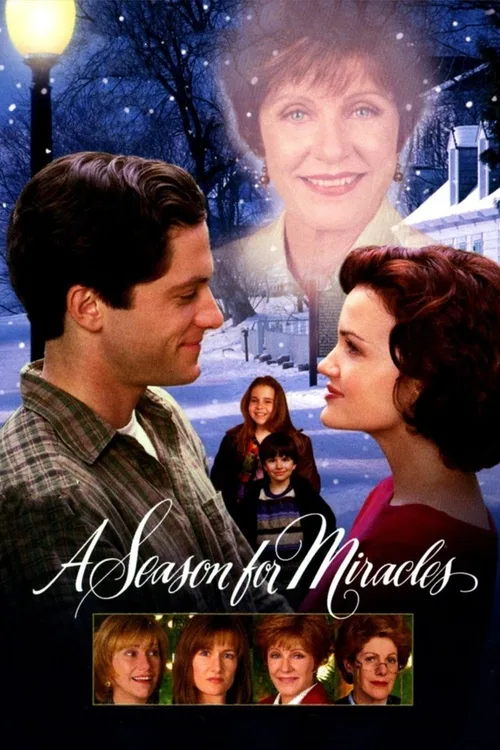
A Season for Miracles (1999)
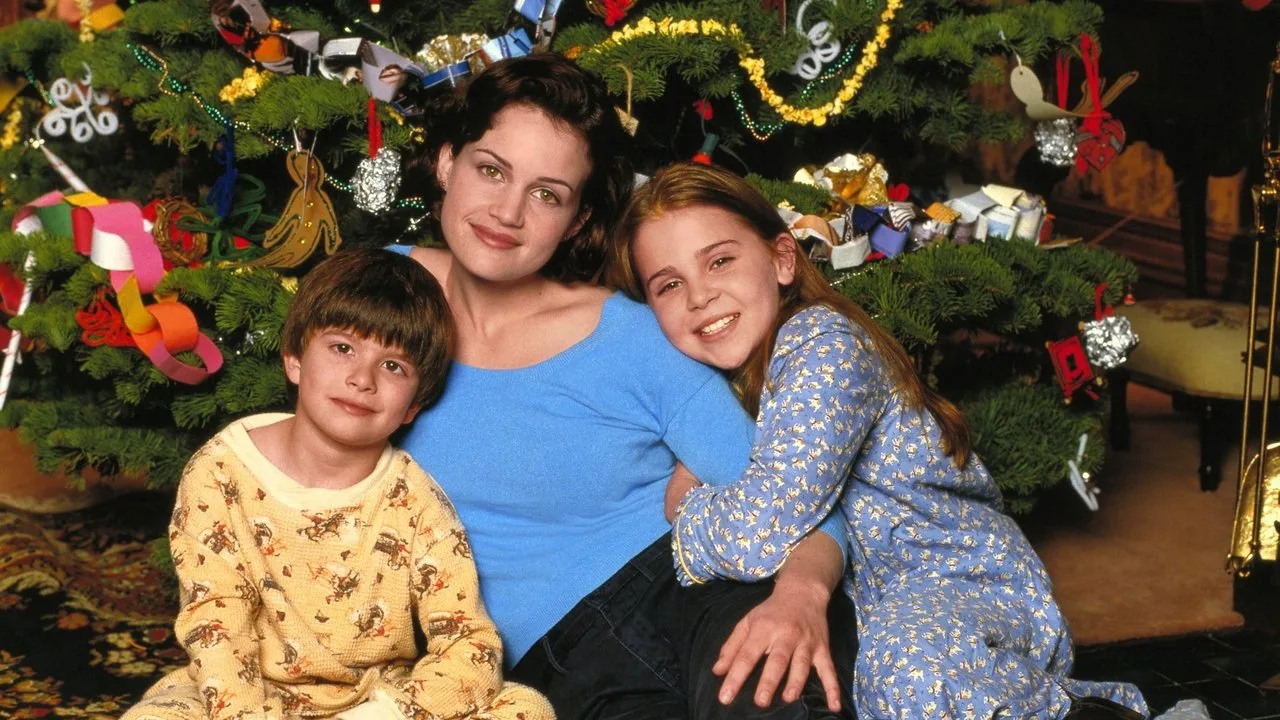
A miracle occurs for a homeless family consisting of two wayward children and their protective aunt with the help of an angel. When a young woman's niece and nephew are threatened with foster care after her sister is hospitalized following yet another overdose, she flees with them until they land in the sleepy town of Bethlehem just before Christmas and a series of kindnesses and coincidences gives the trio a chance at happiness.
 rating 7/10 User rating 36 votes 70%
 ❄ Christmas Connection
The entire story takes place in the weeks leading up to Christmas, with a family running from their old life to create a new one in time for the holiday. Christmas functions as the deadline, the goal, and the emotional prize. Without the holiday, there's no plot.
Where to Watch


Our Review
A Season for Miracles came out in 1999, when Hallmark Hall of Fame still occasionally made television movies that felt like they were written by someone who'd read a book. That's not an accident: this one was based on a novel by Emilie Richards, and the source material's structure shows. There's a real premise here, not just a premise-shaped object that exists to hold Christmas decoration shots together.
Carla Gugino plays Gemma, who is not the maternal type until circumstances force her to become one. Her sister has a drug problem, social services are circling, and rather than watch two kids get absorbed into the foster system before Christmas, Gemma grabs them and drives. She ends up in Bethlehem, Ohio, which the movie is not subtle about naming, where she poses as a widow and tries to pass off these kids as her own. The town takes her in. A man named Alanna's love interest shows up. You know the shape of where this goes.
What the Cast Does With It
The casting is the reason this movie works better than it should. Gugino was 30 when this filmed and had already done Son In Law and Snake Eyes, but she wasn't yet the household name she'd become after Spy Kids. She plays Gemma as someone genuinely improvising, not someone running a confident long con. That uncertainty makes the character believable in a way that Hallmark movies rarely earn.
Kathy Baker is in this film as a local woman who takes Gemma in, and Baker has one of those faces that projects accumulated human experience without trying. She's quiet and specific where a lesser movie would have given her speeches. David Conrad plays the love interest, a local who starts to suspect Gemma's story doesn't hold together. He doesn't get the showiest material, but he holds his scenes.
Laura Dern appears in a smaller role than you might expect given her billing, but she makes an impression. Her scenes have a different energy from the rest of the film. There's something uncomfortable about them, which is probably the point.
Directed Like Someone Who Knew What They Were Doing
Michael Pressman directed this, and his background in television drama keeps the film from drifting into the soft-focus blur that plagued holiday movies of this era. The cinematography uses the Ohio winter without romanticizing it into a postcard. It looks cold because it is cold. The town looks like an actual small town, not a set dressed to suggest small-town life.
The pacing is patient in the first half, which some viewers will mistake for slowness. It isn't. The movie is establishing what Gemma wants and what she's risking, so that the third act has stakes worth caring about. That setup pays off.
The Hallmark Hall of Fame Standard
In 1999, Hallmark Hall of Fame productions were still operating on a different tier from the cable Christmas movie factory that the Hallmark Channel would later become. The Hall of Fame label carried a legacy going back to 1951. Productions under that banner had won Emmy Awards and Peabody Awards. The budgets, the casting decisions, and the script standards reflected that history.
A Season for Miracles won the Viewers for Quality Television Award, which was a real organization run by TV critics and quality-conscious viewers who advocated for substantive programming. It wasn't a prize you bought with a marketing budget. The movie won it because audiences who cared about quality television voted for it.
That context matters for understanding why this movie feels different from what the Hallmark brand produced in later decades. The network eventually became synonymous with a particular formula: meet-cute, misunderstanding, resolution, snow. A Season for Miracles has all of those elements, but it also has a character doing something legally questionable because she loves her niece and nephew more than she loves the rules. That moral complexity almost never makes it into modern Hallmark productions.
What Actually Doesn't Work
The town of Bethlehem is too convenient. Every person in it is patient and generous and fundamentally good, which drains some tension from the story. When Gemma's deception starts to crack, the threat feels more abstract than real because we've never seen this community behave badly toward anyone. Real small towns are not like this.
The resolution also moves fast. The legal situation surrounding the kids gets resolved with a speed that would not survive any contact with actual family court. The movie gestures at the complexity and then waves it away to get to Christmas morning. Given how carefully the first two acts were constructed, this is a disappointment.
Still. A small-town Christmas movie with Carla Gugino looking genuinely scared for most of it, a moral situation that doesn't resolve cleanly for most of the runtime, and Kathy Baker being quietly excellent in every scene she's in. That's a good deal for a December evening in 1999, or any December since.
Fun Facts
A Season for Miracles was based on "A Season for Miracles," a novel by romance and women's fiction author Emilie Richards, published in 1999 the same year the film aired. Richards had been publishing novels since 1984 and had a substantial following before the adaptation.
The Hallmark Hall of Fame anthology has been running since December 24, 1951, making it one of the longest-running anthology series in American television history. At its peak, it was one of the most prestigious designations in American TV movies.
Carla Gugino received the role of Gemma before her profile significantly rose with the 2001 film "Spy Kids," which made her recognizable to a generation of younger viewers who later rediscovered this movie.
The fictional town of Bethlehem, Ohio, where the story is set, shares its name with over a dozen real towns called Bethlehem across the United States, including ones in Pennsylvania, Georgia, and Connecticut.
The Viewers for Quality Television organization, which gave the movie its award, was founded in 1984 by Dorothy Swanson as a consumer advocacy group for quality TV programming. It operated until 2000, just a year after this film aired.
Director Michael Pressman also directed "To Gillian on Her 37th Birthday" (1996) and multiple episodes of "Chicago Hope" and "Picket Fences," both critically respected dramatic series. He brought a drama-television sensibility to the material rather than a conventional holiday-movie approach.
Laura Dern, who appears in a supporting role, had won the Independent Spirit Award for Best Female Lead in 1992 for "Rambling Rose" and received an Academy Award nomination for the same film. Her appearance in a television holiday movie in 1999 was not typical of her career trajectory at the time.
Cast