
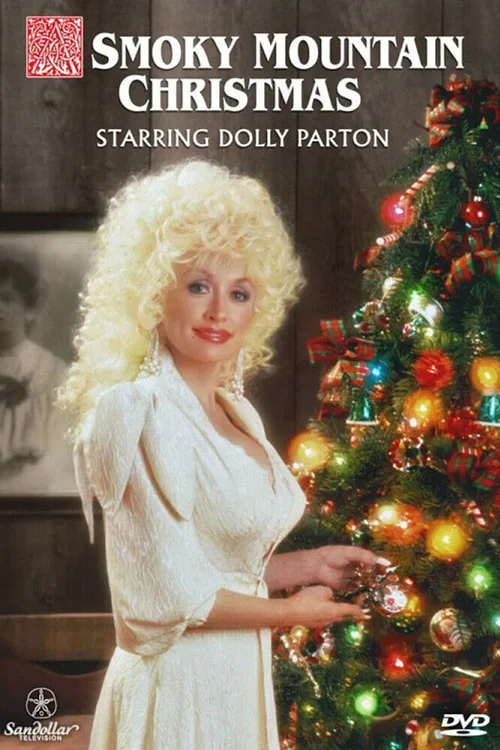
A Smoky Mountain Christmas (1986)
A country-western singer on a trip through the Tennessee mountains runs into a reclusive backwoodsman — and a witch.
 rating 7/10 User rating 25 votes 57%
 ❄ Christmas Connection
A Smoky Mountain Christmas is set entirely during the Christmas season, with Dolly Parton's character retreating to a Smoky Mountain cabin where she discovers seven orphaned children. The holiday drives every plot thread, from the fairy-tale structure to the original Christmas songs Parton performs throughout.
Our Review
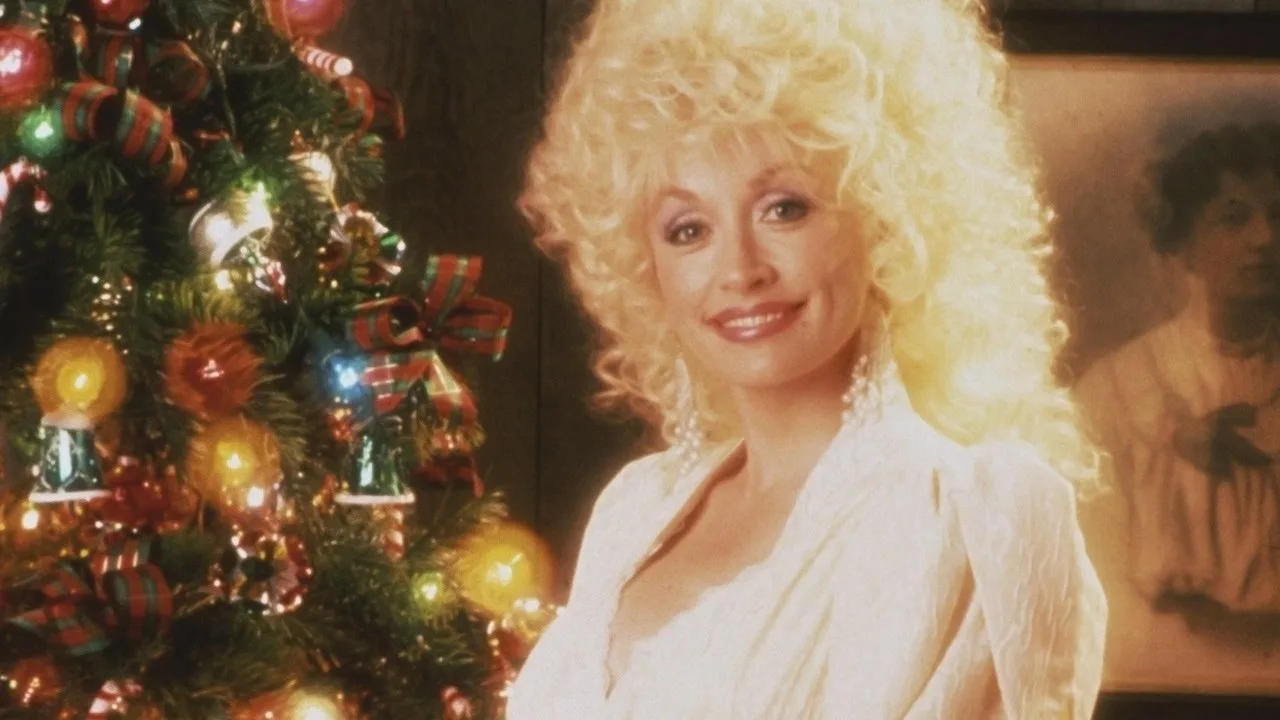
A Smoky Mountain Christmas is one of those TV movies that sounds like a fever dream when you describe it out loud. Dolly Parton plays a burnt-out country music star who retreats to a cabin in the Smoky Mountains, only to find it occupied by seven orphaned children hiding from the local authorities. There's a jealous mountain witch. A hermit played by Lee Majors. A cameo from John Ritter as a judge. Henry Winkler directed it. And Dolly wrote six of the seven songs. It aired on ABC on December 14, 1986, and somehow all of this works.
The Smoky Mountain Christmas Cast
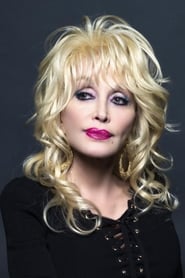
Dolly Parton stars as Lorna Davis, a country music superstar fleeing Los Angeles for a friend's cabin in Tennessee's Smoky Mountains. Parton co-wrote the story with screenwriter William Bleich, and the parallels to her own life are hard to miss. She grew up one of twelve children in a one-room cabin in Locust Ridge, just outside Sevierville, without running water or electricity. Lorna's instant bond with the orphans living in her cabin isn't just scripted warmth. It reads like autobiography filtered through fairy tale.
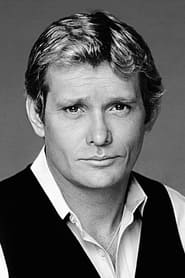
Lee Majors, fresh off six seasons of The Fall Guy, plays Mountain Dan, a gruff hermit who knows the ways of the mountain folk and protects Lorna from the local witch. Majors underplays the role nicely, resisting the urge to turn a mountain man into an action hero.
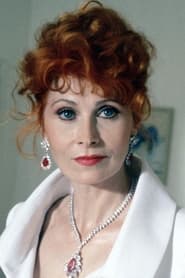
The Smoky Mountain Christmas cast is stacked with reliable character actors. Bo Hopkins plays Sheriff Jensen, the small-town lawman whose romantic attention toward Lorna triggers the witch's jealousy. Anita Morris chews every available piece of scenery as Jezebel, the mountain witch who wants Lorna dead. Dan Hedaya shows up as a relentless paparazzo trailing Lorna into the hills. And John Ritter makes a brief, welcome appearance as a judge in the film's resolution.
Snow White in the Smoky Mountains
The film's boldest move is how openly it borrows from Snow White. Lorna arrives at the cabin exhausted, falls asleep in one of the beds, and wakes up surrounded by seven children staring at her. The orphans have names like Jasper, String Bean, and Buster. The witch Jezebel, jealous of Lorna's beauty and the sheriff's attention, eventually disguises herself as an old woman to deliver a poisoned pie. These aren't subtle references. The film is a full-scale fairy-tale adaptation transplanted to the Appalachian Mountains.
What keeps this from feeling like a gimmick is Parton's sincerity. She doesn't wink at the camera or treat the material as beneath her. When she sits on the cabin porch singing to children who have been sleeping in the woods and stealing food to survive, the tenderness is genuine. Parton grew up knowing what it meant to have nothing, and she brings that understanding to every scene with the kids.
Director Henry Winkler, in what was essentially his feature directorial debut, handles the fairy-tale elements with more restraint than you'd expect. The witch is threatening without being terrifying. The mountain setting feels real enough to anchor the fantasy. Winkler keeps the pace brisk across the 94-minute runtime, never letting the story drag between musical numbers.
Dolly Parton's Smoky Mountain Christmas Songs
The movie features seven original songs, six written by Parton and one by her uncle Bill Owens. These aren't filler. "Mountain Magic" carries real melodic charm. "A Smoky Mountain Christmas," the title track, didn't see a commercial release until 2022, when it appeared on the Ultimate Deluxe Edition of Parton's A Holly Dolly Christmas album, 36 years after the film aired.
The songs function the way musical numbers should in a story like this: they reveal character and advance the plot rather than pausing it. When Lorna sings to the children, the music establishes trust between them faster than dialogue could. When she performs "Country Memories," the song carries the weight of everything she left behind in Los Angeles.
No official soundtrack album was released in 1986, which was standard for TV movies of that era. Three songs from the film finally received their first commercial release on that 2022 deluxe edition. For decades, fans of the film could only hear these songs by watching it.
A TV Movie That Knows What It Is
A Smoky Mountain Christmas doesn't pretend to be a theatrical film. The production values are TV-grade. Some of the child performances are uneven. The witch subplot resolves too neatly. But the film has something most made-for-TV Christmas movies lack: a genuine point of view.
Parton's Lorna isn't just a celebrity having a bad week. She's a woman confronting the gap between fame and fulfillment, and finding the answer in a drafty cabin full of kids who need someone to care about them. The fairy-tale framework gives the story permission to be simple without being stupid. Evil gets punished. Kindness gets rewarded. Orphans get a home.
The film holds an 81% audience score on Rotten Tomatoes and a 6.9 on IMDb. Those numbers track. This isn't a masterpiece, but it's a well-crafted holiday special with a movie star operating at full charisma. Parton carries every scene she's in, which is nearly all of them, and the Smoky Mountain setting gives the whole thing a texture that generic TV-movie Christmas towns never achieve.
If you're looking for the Dolly Parton Smoky Mountain Christmas movie, it's exactly what you'd hope for: big hair, bigger heart, and a poisoned pie that resolves everything.
Fun Facts
A Smoky Mountain Christmas was directed by Henry Winkler, best known as Fonzie on Happy Days. It was one of his earliest directing credits for a full-length film.
Dolly Parton co-wrote the story with screenwriter William Bleich, drawing on her own childhood in the Smoky Mountains, where she grew up one of twelve children in a one-room cabin near Sevierville, Tennessee.
The parents of Ron Howard, Rance Howard and Jean Speegle Howard, both have small roles in the film. Ron Howard was Henry Winkler's co-star on Happy Days.
The title song "A Smoky Mountain Christmas" was not commercially released until 2022, when it appeared on the Ultimate Deluxe Edition of Parton's A Holly Dolly Christmas album, 36 years after the film first aired.
Six of the film's seven songs were written by Dolly Parton. The seventh, "(I'd Like to Spend) Christmas with Santa," was written by her uncle Bill Owens, who co-wrote many of Parton's early hits.
The film aired on ABC on December 14, 1986, competing in a golden era of network TV Christmas specials when original holiday movies could draw massive prime-time audiences.
Danny Cooksey, who played the orphan Jasper, went on to voice Montana Max in the animated series Tiny Toon Adventures and had a recurring role on Diff'rent Strokes.
Cast