The Original Entourage
Alvin and the Chipmunks (2007)
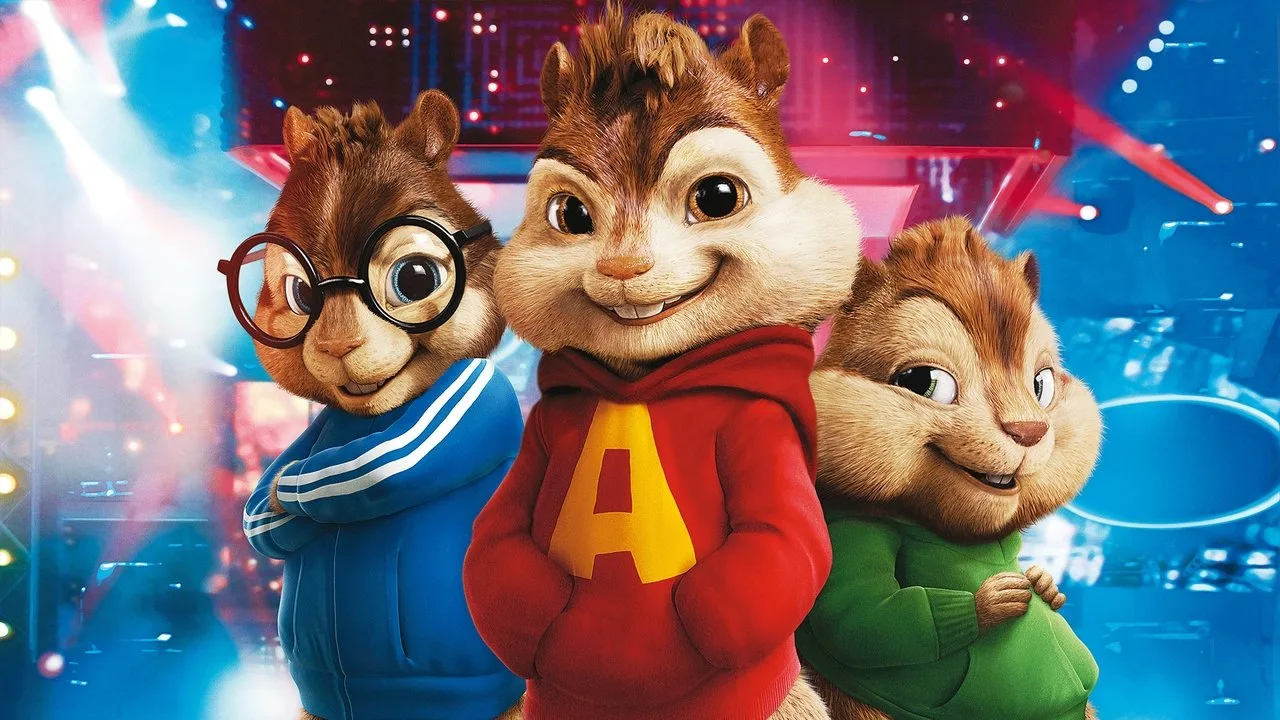
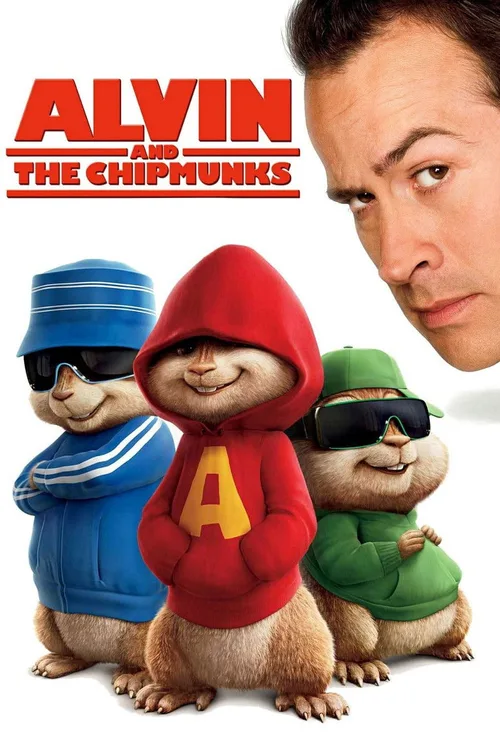
A struggling songwriter named Dave Seville finds success when he comes across a trio of singing chipmunks: mischievous leader Alvin, brainy Simon, and chubby, impressionable Theodore.
 rating 6/10 User rating 4,683 votes 58%
 ❄ Christmas Connection
The entire film builds toward a Christmas performance, with "The Chipmunk Song (Christmas Don't Be Late)" as its emotional centerpiece. The third act is essentially a holiday concert movie, and the story's themes of found family and belonging are framed entirely around the holiday season. Without Christmas, there is no plot.
Where to Watch


Our Review
The bar for a Hollywood live-action/CGI hybrid in 2007 was not high. The bar for a movie about singing chipmunks was lower. And yet Alvin and the Chipmunks, directed by Tim Hill and released December 14, 2007, cleared both with enough energy left over to launch one of the most lucrative family franchises of the following decade. Made for $60 million, it grossed $365 million worldwide. Critics mostly hated it. Audiences disagreed loudly.
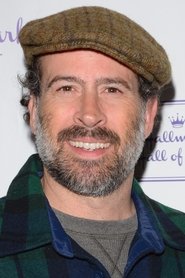
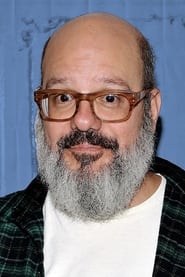
The premise is exactly what it sounds like. David Seville (Jason Lee) is a struggling songwriter in Los Angeles who accidentally adopts three talking, singing chipmunks. They become pop stars. The villain (David Cross, wearing his smarminess like a second suit) tries to exploit them. There is a Christmas concert. Feelings are had.
What stops it from being disposable is the film's genuine commitment to the original mythology. The house number on Dave's door is 1958, the year Ross Bagdasarian Sr. created the characters. The Chipmunk Song itself appears, performed as it should be, with Theodore's warbling neediness and Alvin's barely suppressed chaos. Ross Bagdasarian Jr. reprises his father's role doing Alvin's singing voice, and Janice Karman returns as Theodore's. That's not trivia. That's the real lineage showing up on screen.
What the 2007 Film Gets Right
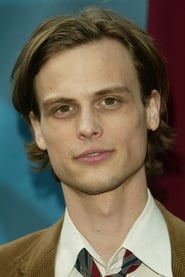
The voices are the whole game, and the film wins it. Justin Long, Matthew Gray Gubler, and Jesse McCartney voice Alvin, Simon, and Theodore respectively. Long went hoarse repeatedly during recording because he pitched his voice up naturally before the speed-alteration process, which produced a more convincing result than simply speaking normally and letting software handle it. McCartney described recording as "tedious," noting it could take 40 takes for a single line. The effort paid off. The three chipmunks feel distinct in a way that animated characters this small often don't.
Theodore in particular is a small miracle of voice work and CGI. He's terrified of everything, wants desperately to be loved, and eats constantly. Gubler plays him without irony, which is the correct choice. The character became a template for a type of anxious, round, sweet-natured animated sidekick that a dozen studios immediately tried to replicate.
Jason Lee's Dave is underrated. He gets very little credit in reviews of this film, but he's doing actual work: playing a man whose resentment at being upstaged by three small animals is completely understandable, while also making it clear why those three animals would attach themselves to him. Lee grounds the absurdity without winking at the camera.
David Cross and the Film's Honest Cynicism
Ian Hawke, Cross's music industry villain, is the most interesting character in the movie precisely because the film isn't wrong about him. He's a predatory executive who sees the Chipmunks as content to be packaged and distributed. In 2007, this felt like a generic villain template. By 2026 it reads as a reasonably accurate portrait of how the entertainment industry actually operates. Cross plays him with the correct amount of self-awareness, making Ian contemptible but recognizable. His eventual comeuppance involves a food-based incident that small children find hilarious and adults find adequately deserved.
Is Alvin and the Chipmunks a Christmas Movie?
More than most films that carry the label. The Christmas concert at the end isn't decoration. It's the climax. The question of whether Dave and the Chipmunks constitute a real family gets answered through the performance of a Christmas song that has been part of the culture since 1958. The original "The Chipmunk Song (Christmas Don't Be Late)" reached number one on the Billboard Hot 100 in December 1958 and won three Grammy Awards. Using it as an emotional resolution in a 2007 film required that the audience already have a relationship with it, and many did. The film earned that shortcut because the song genuinely meant something to the parents in those theater seats.
The Christmas setting also explains the film's pacing logic. Dave tries to control the Chipmunks, loses them to Ian's manipulation, and gets them back in time for a Christmas performance. It's structured like a holiday play, complete with reconciliation before the feast.
What Doesn't Hold Up
The CGI is fine for 2007 and rough by current standards. The Chipmunks occupy uncanny valley territory in several scenes, particularly in close-ups where the fur rendering hasn't quite solved the weight problem. They look slightly too clean, too weightless.
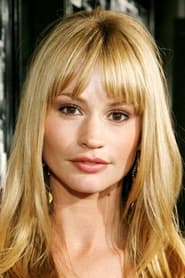
The screenplay by Jon Vitti, Will McRobb, and Chris Viscardi is functional rather than clever. Jokes are telegraphed. The Dave/Claire relationship (Cameron Richardson) exists almost entirely off-screen. The film knows what it is and doesn't pretend otherwise, but it also doesn't push against its own limitations anywhere.
The sequels got progressively louder and emptier, which made this first film look better by comparison. Relative to Alvin and the Chipmunks: Chipwrecked, the 2007 original is practically a character study.
Fun Facts
The original "Chipmunk Song (Christmas Don't Be Late)" was recorded in 1958 by Ross Bagdasarian Sr. by singing his own vocals at half speed on a tape recorder, then playing them back at normal speed to achieve the high-pitched chipmunk effect. The song hit number one on the Billboard Hot 100 and won three Grammy Awards.
The Chipmunks are named after real executives at Liberty Records: Alvin Bennett, Simon Waronker, and Theodore Keep, who were running the label when Bagdasarian Sr. signed his deal with them.
Bill Murray, Jim Carrey, Chevy Chase, Tim Allen, John Travolta, Vince Vaughn, Adam Sandler, and Ben Stiller were all offered the role of Dave Seville before Jason Lee accepted it.
David Seville's house number in the film is 1958, the year the Chipmunks were originally created by Ross Bagdasarian Sr.
Justin Long (Alvin) would pitch his voice up naturally before recording each line, going hoarse repeatedly during production. Jesse McCartney (Theodore) said individual lines sometimes required 40 takes due to the technical demands of the recording process.
The film was made for a budget of approximately $60 million and grossed $365 million worldwide, making it one of the highest-grossing live-action/CGI hybrid films of 2007 and launching a four-film franchise that would collectively gross over $1.3 billion.
Ross Bagdasarian Jr. (son of the creator) performed Alvin's singing voice in the film, continuing the family's direct involvement with the characters across nearly five decades.
Cast