
Beethoven's Christmas Adventure (2011)
A Christmas elf accidentally takes off in Santa's sleigh, crash lands in a small town, and loses the magic toy bag. Beethoven must rescue the elf, recover the bag from greedy crooks, and return the sleigh to Santa in time to save Christmas.
 rating 4/10 User rating 157 votes 59%
 ❄ Christmas Connection
Beethoven's Christmas Adventure is built entirely around Christmas mythology: Santa's sleigh, a magic toy bag, an elf who wants to be a toy maker, and the race to save Christmas Eve delivery. The North Pole, snowbound Minnesota, and a villain who steals toys from other stores make this film as Christmas-specific as it gets. There is no version of this plot without Christmas.
Where to Watch


Our Review
By the time Universal released Beethoven's Christmas Adventure in November 2011, the franchise had already produced six films over nineteen years, and most of the sequels had gone straight to DVD without any significant fanfare. This seventh installment followed the same path. What makes it slightly unusual is a creative decision that no previous Beethoven film had made: the dog talks. Tom Arnold provides the voice, which tells you roughly everything you need to know about the film's ambitions.
The Plot: An Elf Problem in Minnesota
The setup is reasonably inventive for a low-budget family film. Henry, a North Pole elf played by Kyle Massey, is assigned to stable duty rather than the coveted toy-making department. Resentful and impulsive, he steals Santa's sleigh and flies off, crash-landing in the fictional town of Wood Haven, Minnesota. Santa's magic toy bag separates from the wreckage and lands in the hands of Sylvester Smirch, a failing toy store owner played by Robert Picardo, who quickly grasps that a bag producing infinite toys could solve his business problems permanently.
Beethoven and his young owner Mason, played by Munro Chambers, find Henry and agree to help. The magical candy that allows humans to understand dogs is introduced early and without apology, which is the correct approach. You either accept these terms or you don't.
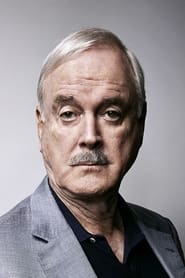
John Cleese narrates. He is clearly doing the job from a recording studio with no particular emotional investment, but his voice is still John Cleese's voice, which lends the whole production a dignity it hasn't entirely earned.
The Franchise Context
The original 1992 Beethoven earned $147 million worldwide and starred Charles Grodin as a suburban father at war with a slobbering St. Bernard puppy that the family had adopted against his wishes. It was a theatrical release with a real budget and real stakes. The script was written by John Hughes under the pseudonym Edmond Dantes, which Hughes required because he was in a dispute with Universal at the time.
By Beethoven's 3rd in 2000, the theatrical run was over and the series had moved entirely to DVD. The St. Bernard premise survived, but the original Newton family did not. Each subsequent film invented new owners, new towns, and new problems for the dog to blunder through. By the time of the Christmas Adventure, Beethoven is essentially a brand placeholder rather than a continuing character.
Giving him Tom Arnold's voice is the franchise's most radical creative choice since the original film. It also removes the one consistent quality the earlier sequels preserved: the comedy of a large, clumsy, speechless animal disrupting carefully arranged domestic situations. A talking Beethoven who delivers wry commentary is a fundamentally different proposition.
What Works and What Doesn't
Kyle Massey brings genuine energy to Henry. He was 19 at the time of filming, coming off a run on the Disney Channel series That's So Raven and its spinoff Cory in the House, and he handles the physical comedy of the elf role with more commitment than the film deserves. His scenes with the St. Bernard work better than they should.
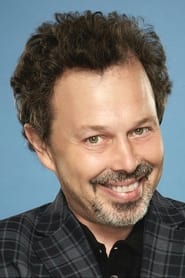
Robert Picardo as Smirch and Curtis Armstrong as his sidekick Kenny are playing the classic incompetent-villain double act. Neither actor phones it in. Picardo, best known as the holographic Doctor on Star Trek: Voyager, gives Smirch a genuine oiliness. The slapstick sequences where the two crooks get outwitted by a dog follow a template established in the original film and refined across six subsequent installments.
The film is shot in Canada standing in for Minnesota, which is standard for productions of this budget level. It looks fine. The Christmas decoration work is thorough. Snow is everywhere. The North Pole sequences are minimal, which is probably wise given what the budget could realistically achieve.
What doesn't work is Tom Arnold's voiceover. The problem isn't Arnold specifically. The problem is that once Beethoven speaks, the film loses the thing that made the character function in the first place. A silent dog who causes chaos is universally legible. A dog who makes jokes is just a talking animal, a genre that requires either extraordinary writing or extraordinary performance to succeed. This film has neither.
The Real Audience and Its Reasonable Expectations
Critics are not the audience for Beethoven's Christmas Adventure. It holds a 4.4 on IMDb, which is roughly what you would predict. The actual audience is children between five and nine years old watching it on a streaming platform in early December while adults pretend to be interested. For that specific viewing context, it works. The villain is clearly bad. The elf is likable. The dog is large and physically funny. The running time is ninety minutes, which is appropriate.
Common Sense Media rated it suitable for ages 5 and up, which is correct. There is nothing in this film that would disturb a small child or irritate a parent beyond the usual mild tedium of watching content that was not made for them.
The franchise has always understood its audience better than its critics. The original 1992 film worked because Charles Grodin's exasperation was funny to adults and the dog's chaos was funny to children. The direct-to-video sequels made a different calculation: the adult entertainment could go, as long as the dog and the simple moral lesson remained. For Beethoven's Christmas Adventure, the lesson is that Henry needs to accept his assigned role with grace before he can be trusted with a better one. It is a perfectly adequate lesson, delivered adequately.
Fun Facts
Beethoven's Christmas Adventure was released on November 8, 2011, making it the seventh film in the Beethoven franchise, which began in 1992 with a theatrical release that grossed $147.2 million worldwide.
This is the only film in the franchise in which Beethoven has a speaking voice. Tom Arnold provided the voiceover, marking a permanent departure from the silent-dog format used in all six previous films.
The original 1992 Beethoven script was written by John Hughes under the pseudonym Edmond Dantes. Hughes was in a dispute with Universal Pictures at the time and agreed to the production only on the condition that he not be credited under his real name.
John Cleese serves as narrator, a role that required no on-set presence. Cleese was likely cast for name recognition on the DVD cover and international marketing, as his voice is immediately identifiable to adults in English-speaking markets.
Kyle Massey, who plays Henry the elf, was 19 years old during filming. He had previously starred in two Disney Channel series: That's So Raven (2003-2007) and its spinoff Cory in the House (2007-2008).
Robert Picardo, who plays the villain Sylvester Smirch, is best known as the Emergency Medical Hologram (the Doctor) in Star Trek: Voyager, which ran from 1995 to 2001. Smirch originally ran a business called Most Wanted Mattresses before pivoting to toy theft.
By the time this film was released, the theatrical Beethoven franchise had been dormant for eighteen years. Beethoven's 2nd (1993) was the last film in the series to receive a wide theatrical release in the United States.
The film was a co-production between the United States and Canada. It was shot in Canada, which provided both the winter landscape and the lower production costs typical of Canadian runaway productions in the family film genre.
Cast