

'Tis six months before Christmas. But all through the nation Celebrations are starting... HERE'S YOUR INVITATION!
Christmas Eve (1947)
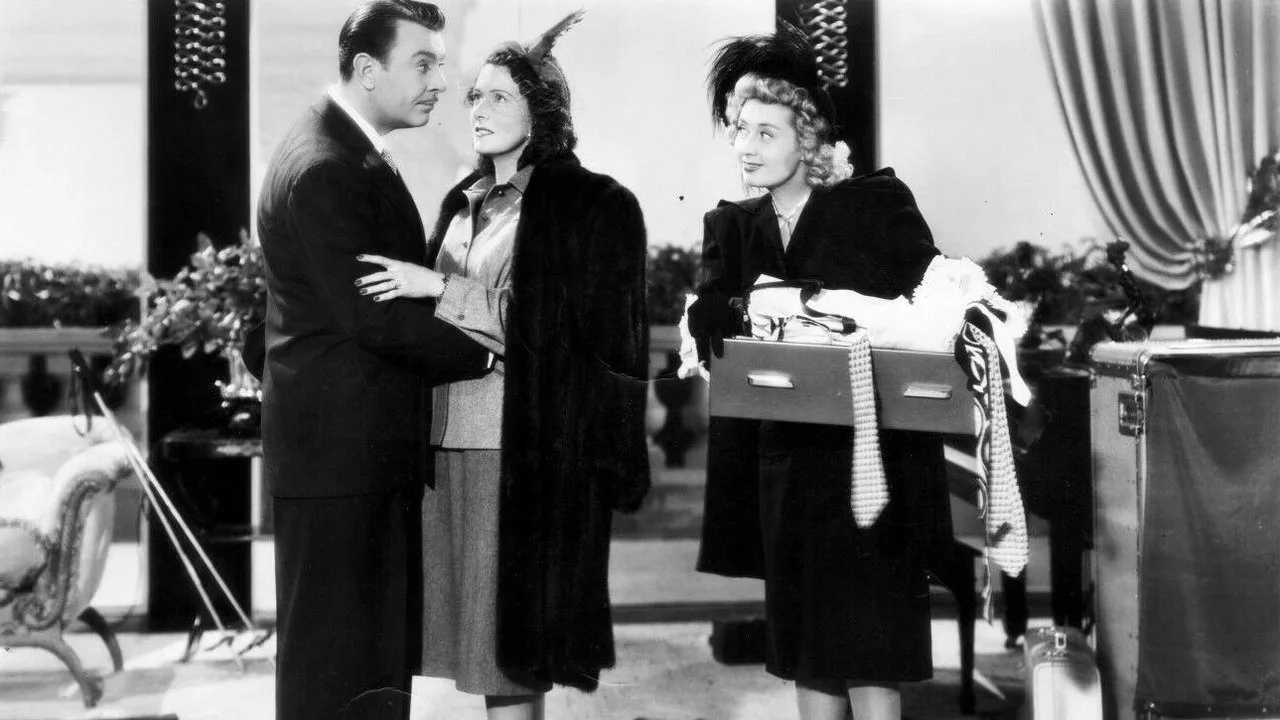
The greedy nephew of eccentric Matilda Reid seeks to have her judged incompetent so he can administer her wealth, but she will be saved if her three long-lost adopted sons appear for a Christmas Eve reunion. Separate stories reveal Michael as a bankrupt playboy loved by loyal Ann; Mario as a seemingly shady character tangling with a Nazi war criminal in South America; Jonathan as a hard-drinking rodeo rider intent on a flirtatious social worker. Is there hope for Matilda?
 rating 6/10 User rating 13 votes 51%
 ❄ Christmas Connection
The entire plot is driven by a Christmas Eve deadline: an elderly woman must locate her three adopted sons before midnight or lose control of her estate to a scheming nephew. The holiday is not decoration here but the engine of the story, with the countdown to Christmas structuring every scene and the season's spirit of family reunion giving the ending its emotional payoff.
Where to Watch


Our Review
The premise of Christmas Eve (1947) is one of those ideas that sounds preposterous until you realize it actually works. Matilda Reid, a fabulously wealthy elderly woman played by Ann Harding, has spent years giving her fortune away to strangers and lost causes. Her nephew, who stands to inherit everything if she is declared incompetent, has maneuvered her in front of a psychiatrist. The verdict: she must produce her three adopted sons by Christmas Eve to demonstrate she has people in her life who care about her. If she can't find them in time, the courts will hand control of her estate to the nephew and she'll be packed off to an institution.
What follows is an anthology in disguise. The film splits into three separate stories, each tracing one of the sons through his current circumstances. The structure is unusual for a studio picture of this era, and director Edwin L. Marin handles the transitions cleanly enough that you don't feel cheated when the film keeps cutting away from characters you've just started to care about.
Three Sons, Three Very Different Movies
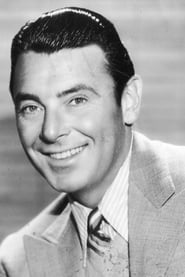
Michael Brooks, played by George Brent, is a rancher turned into a penniless drifter after his ranch was stolen in a crooked land deal. His segment plays like a straight Western, complete with cattle, corrupt operators, and a man working to reclaim what's his. Brent brings quiet authority to the role without doing anything particularly surprising.
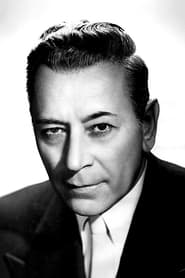
Mario Torio, played by George Raft, is the most interesting of the three on paper. A small-time gangster who runs an illegal gambling operation, Mario is the son Matilda's friends would have warned her about. Raft was at this point in his career being edged out of the A-list, but he plays the character with genuine complexity. Mario isn't redeemed in the cheap sense. He's just a man who still loves his adoptive mother, which turns out to be enough.
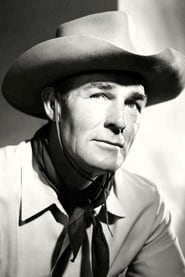
Jonathan Carey, played by Randolph Scott, has gone to South America and become involved with a Nazi war criminal hiding there. This is the segment that dates most awkwardly. In 1947, hunting escaped Nazis was topical and morally legible. Today the storyline feels grafted in from a different film entirely, though Scott handles it with his usual understated competence.
The three storylines share a single problem: none of them gets quite enough time. This is the fundamental challenge of anthology structure. Each son's subplot could support a full picture. Compressed to roughly a third of the running time each, they feel abbreviated. The ranching dispute wraps up with suspicious convenience. The Nazi plot resolves almost offhandedly.
Ann Harding Holds It Together
The film's real reason to watch is Ann Harding as Matilda. She had been a major star in the early 1930s, nominated for an Academy Award for Holiday in 1930, and by 1947 was taking supporting and character roles that suited her regal bearing. As Matilda she is warm without being saccharine, shrewd without being unkind, and the scenes where she outmaneuvers her scheming nephew carry a dry wit that the film doesn't fully capitalize on.
Matilda's habit of giving money to strangers is treated by her nephew as evidence of incompetence. The film quietly suggests the opposite. She knows exactly what she's doing with her money. The nephew's problem is that her values don't match his.
What Kind of Christmas Movie Is This
The Christmas setting is fully functional rather than atmospheric. There are no carolers, no tree-trimming sequences, no snow falling at dramatically convenient moments. The holiday exists as a deadline and as a frame for the reunion at the end. That's not a flaw. It keeps the film from getting cloying.
The final scene, when all three sons arrive at Matilda's house on Christmas Eve, is genuinely earned rather than manipulative. The film has spent its running time establishing why each son might not come back, which gives the reunion actual stakes. Matilda's face when she realizes all three made it is the payoff the film has been building toward, and Harding delivers it without overselling.
This is not a film that turns up on many holiday watchlists, and there are reasons for that. The anthology structure creates tonal whiplash. The pacing is uneven. The resolution of several subplots requires a degree of suspension of disbelief. But the core story is genuinely affecting, Ann Harding is worth the time on her own, and the film's vision of Christmas as a deadline that concentrates the mind is more honest than most holiday pictures' approach to the season.
Fun Facts
The film features three of Hollywood's biggest male stars of the era sharing top billing: George Raft, George Brent, and Randolph Scott. Despite their collective star power, none of the three share a scene together until the final minutes of the picture.
Ann Harding had been nominated for the Academy Award for Best Actress at the 3rd Academy Awards in 1931 for her role in Holiday. By 1947 she was taking supporting character parts, and Christmas Eve was one of several films she made that year as her career shifted toward ensemble work.
George Raft turned down the roles of Sam Spade in The Maltese Falcon (1941) and Rick Blaine in Casablanca (1942), both of which went to Humphrey Bogart. By the time Christmas Eve was made, Raft's career trajectory had shifted considerably as a result.
Director Edwin L. Marin was a prolific studio journeyman who directed over sixty films between 1932 and 1951, working across genres from musicals to westerns to crime pictures. Christmas Eve was among his final productions before his death in 1951.
The film was produced independently by Benedict Bogeaus and released through United Artists, which gave it slightly more creative latitude than a major studio production of the same period might have had with an anthology structure.
Randolph Scott's segment involving Nazi fugitives in South America was directly topical in 1947. Operation Paperclip had just concluded in 1945, and the subject of escaped war criminals hiding in South America was actively covered in American news at the time of the film's release.
The film's running time is approximately 90 minutes, meaning each of the three sons' storylines receives roughly 25 to 30 minutes of screen time after accounting for the framing story centered on Matilda.
Cast