
The story of a friendship born on the streets of America
Christmas on Division Street (1991)
A good-natured homeless man and an ill-tempered student become good friends.
 rating 7/10 User rating 9 votes 62%
 ❄ Christmas Connection
The entire story unfolds during the weeks leading up to Christmas in Chicago, with the holiday season providing the backdrop and moral urgency for the central relationship. Christmas functions here not as decoration but as pressure: it amplifies the contrast between the teenager's comfortable holiday expectations and the homeless man's struggle to survive winter on the street. The film explicitly uses Christmas as a lens through which to examine who gets to experience the holiday and who doesn't.
Where to Watch

Our Review
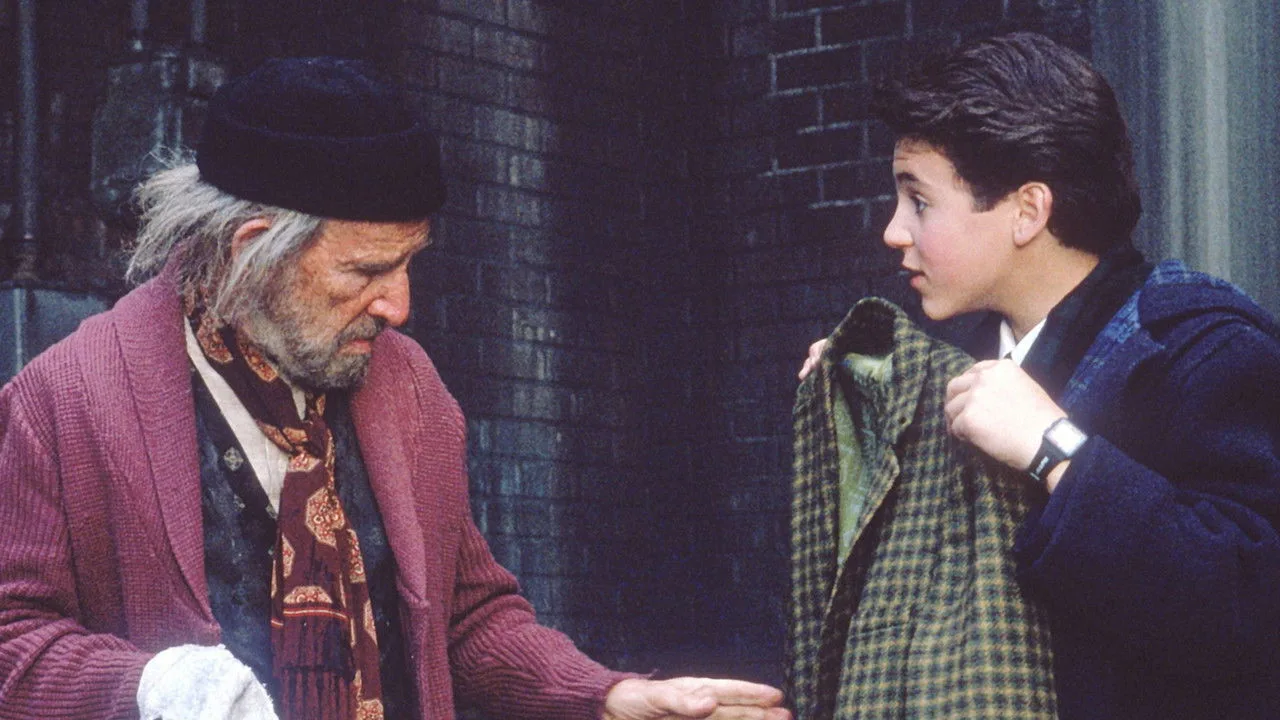
Christmas on Division Street aired on CBS in December 1991, during a moment when American television was briefly willing to look at homelessness without flinching. Fred Savage, then still riding the wave of his The Wonder Years fame, plays Reggie, a wealthy Chicago teenager who literally bumps into Hume Cronyn's homeless man, known only as Socks, near the elevated train tracks of Division Street. The movie that follows is not what the holiday TV slot typically promises. It earns the discomfort it creates.
The premise sounds like a Hallmark prototype: rich kid learns life lessons from unlikely friend. But the execution is less interested in leaving audiences feeling warm than in making them sit with something real. In 1991, homelessness in American cities had reached levels not seen since the Depression. The film doesn't pretend otherwise.
What Fred Savage Does With a Serious Role
Savage was 15 during production, and the casting makes strategic sense. His familiar face from The Wonder Years brought in younger viewers and their parents, which is presumably the point of putting a teen star in a film about social policy. But Savage doesn't coast on likability. Reggie starts the film as genuinely self-absorbed: he's annoyed by Socks, embarrassed by him, and slow to change. That reluctance is what gives the eventual friendship any weight.
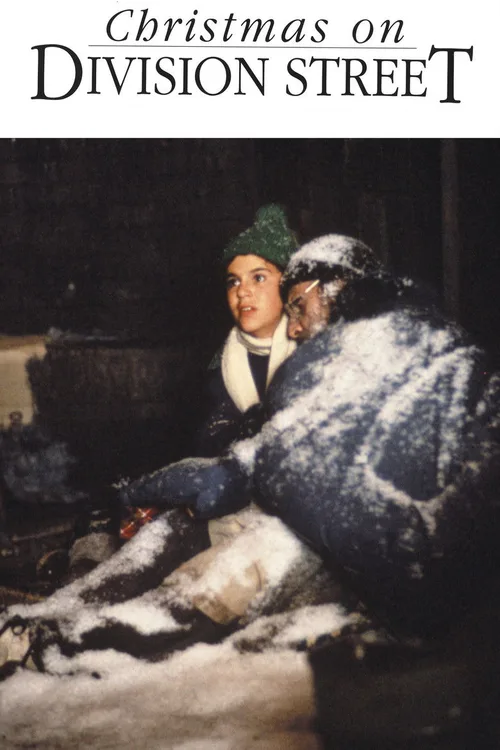
The performance is uneven in places, as teen acting in TV movies often is. But there's a scene where Reggie sits in Socks' makeshift shelter and finally stops talking long enough to listen that lands cleanly. No swelling music, no reaction shot held a beat too long. Just a kid figuring out that his discomfort is not the point.
Hume Cronyn and What He Brings to Socks
The film belongs to Cronyn. He was 80 years old during production and had spent decades performing Shakespeare and O'Neill on Broadway. Casting him as a homeless man is a choice that cuts against sentimentality: Socks is not a magical mentor figure with hidden wisdom, though the script occasionally nudges him in that direction. Cronyn plays him as simply a person who has lost his footing in the world and hasn't found a way back.
There's a stubbornness to Cronyn's performance that resists easy sympathy. Socks doesn't want to be saved. He wants to be treated like he exists. That distinction matters, and Cronyn holds onto it even when the script tries to pull him toward more comfortable territory.
His chemistry with Savage is the film's real engine. They are improbable screen partners and that improbability reads as authenticity. These two people would not normally share a scene. That's the whole point.
The Chicago Setting Does Real Work
Division Street is a real street on Chicago's Near Northwest Side, running through neighborhoods that in 1991 included significant poverty alongside gentrifying blocks. The production shot on location, and the film looks like Chicago in winter: overcast, grey, cold in a way that the camera registers. There are no prettified establishing shots of the city. The geography of where Socks sleeps and where Reggie lives is kept clearly in frame, and that spatial contrast between two worlds separated by a bus ride is central to what the film is arguing.
The street itself has a specific history. Studs Terkel titled a 1967 oral history of Chicago "Division Street: America," using the street as a metaphor for the divided nation. Whether the film's writers were directly invoking that, the resonance is there. Chicago in December is not a soft place to be without shelter.
Is This a Christmas Movie?
It qualifies, though not on the terms most Christmas movies use. The holiday season creates the narrative clock: Reggie has limited weeks before Christmas break ends and Socks faces the worst of winter. Christmas here is a deadline and a moral test, not a celebration. The film uses the season's rhetoric about goodwill and generosity to interrogate what those words actually require from comfortable people.
It's closer in spirit to Dickens than to anything else in the 1991 TV movie landscape. Not because it's particularly literary, but because it understands that Christmas stories about class and poverty have to be willing to actually depict both.
What the film doesn't do is resolve the structural problem it raises. Reggie's friendship with Socks doesn't fix homelessness. The ending is specific rather than triumphant, and that specificity is where the movie earns its modest but real distinction.
Fun Facts
The film aired on CBS on December 16, 1991, during the network's prime time holiday programming slot, pulling in a substantial family audience on the strength of Fred Savage's name recognition from The Wonder Years, which was then in its fourth season.
Hume Cronyn was 80 years old when he filmed Christmas on Division Street. He had made his Broadway debut in 1931 and was a Tony Award winner, making him one of the most decorated actors to headline a made-for-TV Christmas film.
Division Street on Chicago's Near Northwest Side was the title subject of Studs Terkel's 1967 book "Division Street: America," a landmark oral history of working-class Chicago. The street's symbolic weight in American urban literature was already established long before this film used it.
The early 1990s saw a surge in television movies addressing homelessness as the issue reached a peak in American public consciousness. The U.S. Conference of Mayors reported a 13 percent increase in requests for emergency shelter in 1991 compared to the previous year.
Fred Savage was 15 at the time of filming, making this one of his earliest television films outside of his regular role as Kevin Arnold in The Wonder Years, which ran from 1988 to 1993.
Cronyn's co-star in many of his most celebrated stage and film projects was his wife Jessica Tandy, who had won the Academy Award for Best Actress just two years earlier in 1989 for Driving Miss Daisy. He appeared in Christmas on Division Street without her.
The film was directed by George Kaczender, a Hungarian-born Canadian director who worked extensively in American television movies through the 1980s and 1990s, with credits including numerous CBS and NBC productions.
Cast