
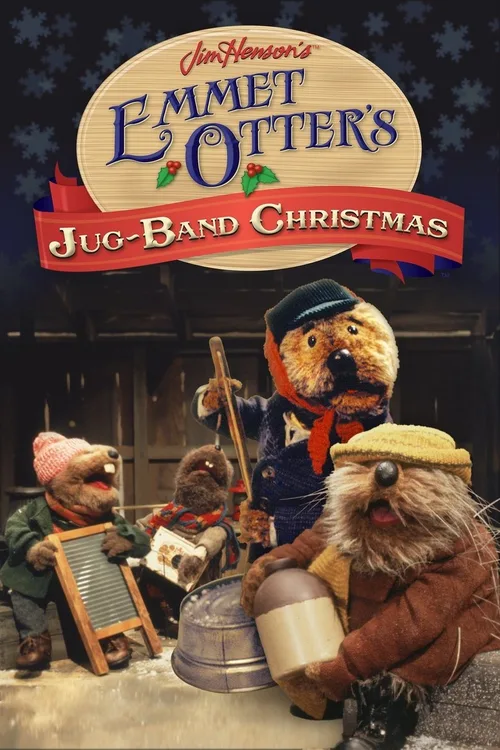
It's a Toe-Tapping Christmas in Frogtown Hollow!
Emmet Otter's Jug-Band Christmas (1977)
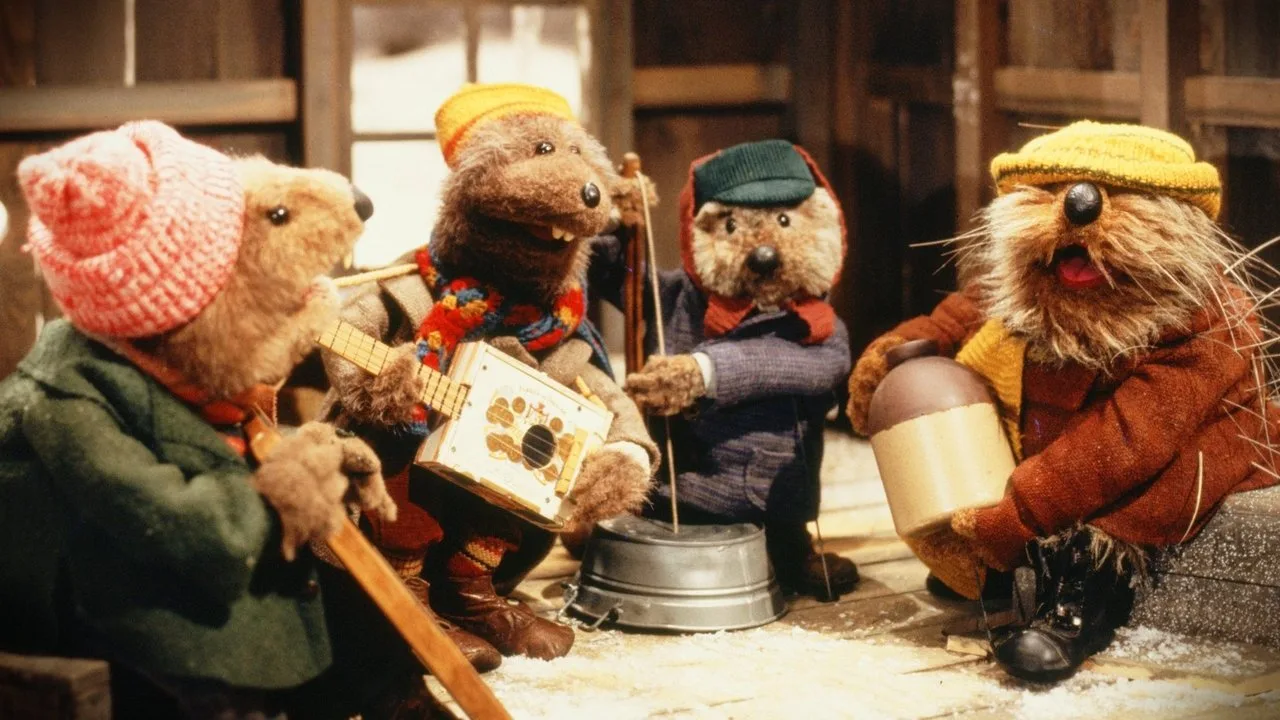
A poor otter family risks everything for the chance to win the cash prize of a talent contest for Christmas.
 rating 9/10 User rating 78 votes 69%
 ❄ Christmas Connection
The entire story takes place at Christmas and revolves around a mother and son each secretly sacrificing their most prized possessions to enter a talent contest and buy each other Christmas gifts. It's a direct retelling of O. Henry's "The Gift of the Magi" through Muppet puppetry.
Where to Watch


Our Review
In 1977, Jim Henson took a 32-page children's book by Russell Hoban, added original songs by Paul Williams, and produced a half-hour TV special about otters playing homemade instruments. The result was Emmet Otter's Jug-Band Christmas, a work so quietly perfect that it has outlived most of the prestige television produced in the same decade. If you haven't seen it, you're missing one of the best things Henson ever made. And yes, that includes The Muppet Show.
The Gift of the Magi, with Fur
The setup borrows directly from O. Henry's 1905 short story "The Gift of the Magi." Emmet Otter and his Ma live in Frogtown Hollow, scraping by on odd jobs since Pa died. When a talent contest with a fifty-dollar prize is announced, both of them secretly enter, each planning to use the winnings to buy the other a Christmas gift.
The sacrifice is real. Ma puts a hole in Emmet's washtub (his tool for doing laundry, their income source) to make a washtub bass. Emmet trades Ma's piano (her sole comfort) for guitar strings. Neither knows what the other has done.
It's devastating in the gentlest possible way. Henson understood that the best children's stories don't protect kids from sadness. They teach kids that sadness and love often arrive together.
The Emmet Otter's Jug-Band Christmas Songs That Stick
Paul Williams wrote the songs, and they're the reason this special endures. "When the River Meets the Sea" is a genuine hymn, achingly simple, built on the idea that everything flows toward something larger than itself. Williams wrote it as a duet between Emmet and Ma, and it works as both a lullaby and a eulogy for the father they've lost.
"Our World" is the contest entry for Emmet's jug band, a sweet folk number about community and belonging. It sounds like something you'd hear at a real small-town talent show, which is exactly the point.
Then there's the Riverbottom Nightmare Band.
The Riverbottom Nightmare Band Steals the Show
Every great Christmas story needs a villain, and Henson delivered one of the most entertaining ones in the form of a leather-clad puppet rock band. The Riverbottom Nightmare Band crashes the talent contest with "River Bottom Nightmare," a genuinely hard-rocking number that sounds like Alice Cooper fronting a band of angry weasels.
They win the contest. That's the part people forget. The bad guys actually win.
Emmet and Ma don't get the fifty dollars. They go home broke, with a ruined washtub and a missing piano. The resolution comes not from triumph but from community: Doc Bullfrog, who runs the local restaurant, hires the jug band to play there regularly. It's a more honest ending than most holiday specials dare to offer. The problem isn't magically solved. It's met with persistence and a little help from neighbors.
Jim Henson's Puppetry at Its Most Ambitious
The puppetry in Emmet Otter's Jug-Band Christmas was a technical leap for Henson's workshop. The special was filmed on location in a real outdoor set built beside a lake in Ontario, Canada. Puppeteers worked from underwater rigs, inside fake tree stumps, and beneath false ground surfaces.
Jerry Nelson performed Emmet. Frank Oz performed Ma. Dave Goelz handled several supporting characters, including Wendell Porcupine. This was the A-team of Muppet performers, giving full emotional weight to creatures made of foam and fabric.
The marionette work for the musical performances is especially impressive. Watch Emmet's fingers on the guitar. Watch the Nightmare Band's drummer. These aren't just puppets moving in time to music. They're performing.
Why This Special Still Matters
Most Christmas specials from the 1970s survive on nostalgia alone. Emmet Otter survives because it's genuinely well-crafted. The story has real stakes. The songs have real emotion. The villains are fun. The ending is bittersweet in a way that respects the audience.
It's also one of the few holiday specials that takes poverty seriously without making it sentimental. Emmet and Ma are poor. They stay poor at the end. What changes is that they're no longer alone in it.
Henson considered this one of his personal favorite projects. He returned to it throughout his career, and a longer version was re-edited and re-released in 1980 with additional Kermit the Frog linking segments. The original version, without Kermit, is the stronger cut. It doesn't need a celebrity host. The otters carry it.
Fun Facts
Paul Williams, who wrote the songs, also wrote "Rainbow Connection" for The Muppet Movie two years later. Henson hired him for that film based on the strength of his Emmet Otter work.
The special was filmed at a custom-built outdoor set near Toronto, with puppeteers operating from beneath water, inside hollowed-out logs, and through slits in the ground. Some performers spent hours in wetsuits under the lake surface.
Jerry Nelson, who performed Emmet, also voiced Floyd Pepper, Robin the Frog, and Count von Count on Sesame Street. He considered Emmet one of his favorite characters.
The Riverbottom Nightmare Band's look was inspired by 1970s glam rock. Their lead singer, Chuck, was designed to resemble a weasel crossed with Alice Cooper.
Russell Hoban's original 1971 picture book was illustrated by Lillian Hoban. The story had no songs and no Nightmare Band; both were Henson's additions.
When the special was re-released in 1980, Kermit the Frog was added as a narrator and host. Many fans consider the Kermit-free original cut the definitive version.
The fifty-dollar talent contest prize in 1977 would be roughly $250 in today's money, which makes the stakes feel even more heartbreakingly small.
Cast