
Welcome to the jingle.
Klaus (2019)
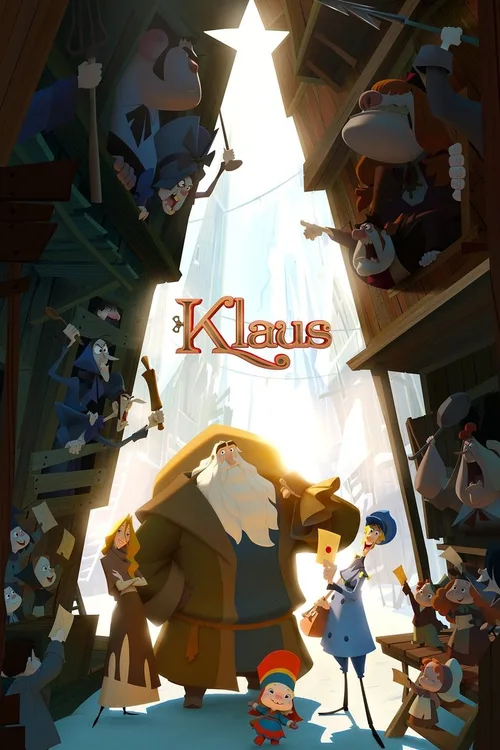
A selfish postman and a reclusive toymaker form an unlikely friendship, delivering joy to a cold, dark town that desperately needs it.
 rating 9/10 User rating 4,558 votes 82%
 ❄ Christmas Connection
Klaus is a Christmas origin story at its core. It reimagines how Santa Claus, gift-giving, and holiday traditions came to be, weaving these elements into every plot point. The entire film builds toward the birth of Christmas customs.
Where to Watch


Our Review
In 2019, a first-time feature director named Sergio Pablos convinced Netflix to bankroll a hand-animated Christmas film at a time when every major studio had abandoned the technique. The result, Klaus, became the first Netflix original to earn an Academy Award nomination for Best Animated Feature. It also happens to be one of the most genuinely affecting Christmas movies made this century.
A Santa Claus Origin Story That Actually Works
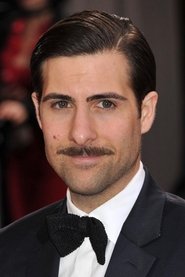
The premise sounds like a pitch meeting gone sideways. Jesper (voiced by Jason Schwartzman), a spoiled postman's son, gets banished to Smeerensburg, a frozen outpost above the Arctic Circle where two feuding clans have made letter-writing obsolete. To hit his mail quota and escape, he befriends Klaus (J.K. Simmons), a reclusive woodsman with a barn full of handmade toys.
What follows is an origin story for Santa Claus built from the ground up. Every piece of the mythology gets an explanation: the red suit, the chimney deliveries, the naughty-and-nice list, the flying reindeer. But Pablos earns each one through character logic rather than checklist obligation. Klaus delivers toys through chimneys because the feuding families have boarded up their front doors. Children write letters because Jesper needs the postage numbers. The traditions emerge from messy human behavior, not divine decree.
That structural trick is what separates Klaus from dozens of other "how Santa began" stories. It never winks at the audience. It plays every revelation straight.
The Animation That Broke the Rules
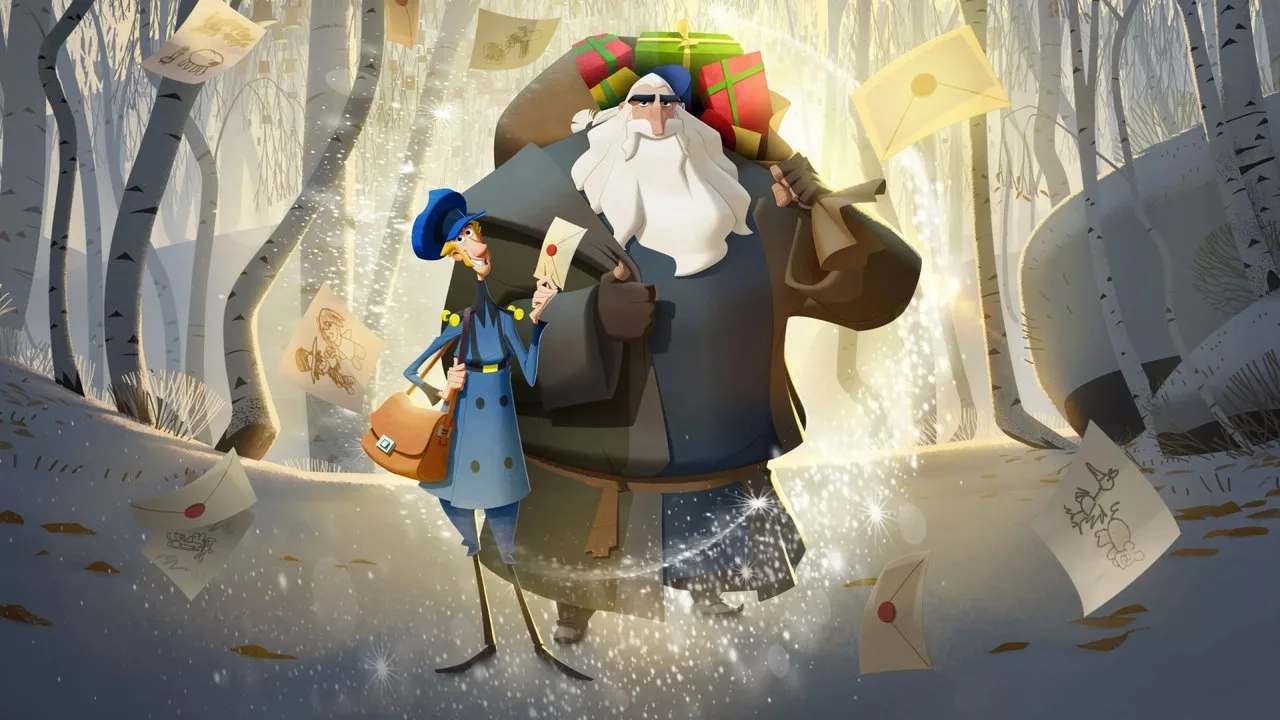
Pablos spent over a decade developing a technique he calls "painting with light." Traditional 2D animation looks flat by design. Klaus uses custom software to apply volumetric lighting and texture maps onto hand-drawn characters, giving them the depth of 3D models while keeping the warmth of pencil lines on paper.
The effect is immediately visible. Snow catches torchlight. Fabric folds have weight. Klaus himself looks carved from wood and shadow, his face a topography of creases that shift with each expression. The animators at Pablos' Madrid studio, SPA Studios, drew every frame by hand, then layered the lighting digitally.
When the film screened at Annecy International Animation Film Festival in 2019, the audience gave it a standing ovation. It was the look as much as the story. Nobody had seen 2D animation that resembled this before.
Jason Schwartzman and J.K. Simmons as an Unlikely Duo
Schwartzman's Jesper is peak entitlement: a pampered aristocrat who has never worked a day in his life. Schwartzman plays him with the same deadpan irritation he brought to Rushmore, all sighs and muttered complaints. It's a casting choice that makes Jesper's transformation actually land, because the starting point is so precisely calibrated.
Simmons, meanwhile, barely speaks for his first twenty minutes on screen. Klaus communicates in grunts, silences, and the occasional sentence fragment. When Simmons finally opens up about his late wife Lydia, the shift in register hits hard precisely because it's been so restrained. There's a scene where Klaus holds one of Lydia's drawings and Simmons delivers a single line that does more emotional work than most animated films manage in their entire runtime.
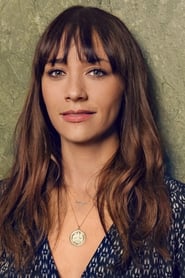
Rashida Jones rounds out the cast as Alva, a former teacher turned fish seller, and Joan Cusack voices the matriarch of one feuding clan with unhinged relish.
Why Klaus Deserves Its Reputation
The film's trick is that it works on two completely separate levels. For children, it's a colorful adventure where a grumpy guy and a mysterious toymaker accidentally invent Christmas. For adults, it's a story about grief, selfishness, and the possibility that doing good things for bad reasons can still change you.
Pablos never lets the sentimentality run unchecked. The feuding Ellingboe and Krum families are genuinely unpleasant. Jesper's initial motivation is pure self-interest. The film earns its warmth by starting cold and letting the thaw happen gradually, scene by scene, until a town that communicated exclusively through violence starts writing thank-you letters.
The final ten minutes take a turn that most children's films wouldn't dare attempt. Without spoiling it: the film addresses loss and letting go in a way that respects its audience. It doesn't sugarcoat. It trusts that kids can handle a bittersweet ending, and it's right.
Where Klaus Sits Among Animated Christmas Movies
Since its Netflix debut on November 15, 2019, Klaus has quietly become a modern classic. It doesn't have the cultural footprint of Frozen or the brand recognition of Rudolph, but among people who watch it, the devotion is fierce. Netflix reported it was streamed in 30 million households in its first month.
For a film that almost didn't get made, that's a fitting legacy. Pablos had shopped the concept around Hollywood for years. Every studio wanted it in 3D CGI. He refused. Netflix said yes. The result is the rare Christmas movie that invents a mythology while also being genuinely, specifically beautiful to look at, frame by frame.
Fun Facts
Sergio Pablos originally created the concept for Klaus in 2006 and spent over a decade getting it produced. He previously co-created the story for Despicable Me at Illumination.
Klaus was the first Netflix original film to receive an Academy Award nomination for Best Animated Feature, at the 92nd Academy Awards in 2020. It lost to Toy Story 4.
The animation was produced at SPA Studios in Madrid, Spain, with a team of roughly 300 artists. Every character was hand-drawn before digital lighting was applied.
J.K. Simmons recorded his dialogue for Klaus in just four sessions. Director Pablos said Simmons' performance was so precise that almost no alternate takes were needed.
The fictional town of Smeerensburg was inspired by real Scandinavian and Finnish Arctic settlements. The production team traveled to Norway and Finnish Lapland for visual research.
Netflix reported that Klaus was watched by over 30 million households worldwide in its first 28 days of release, making it one of the platform's most-watched animated originals at the time.
The film's lighting technology was so novel that SPA Studios developed proprietary software called KLaS (Klaus Lighting and Shading) to achieve the painted 3D look on 2D drawings.
Cast