
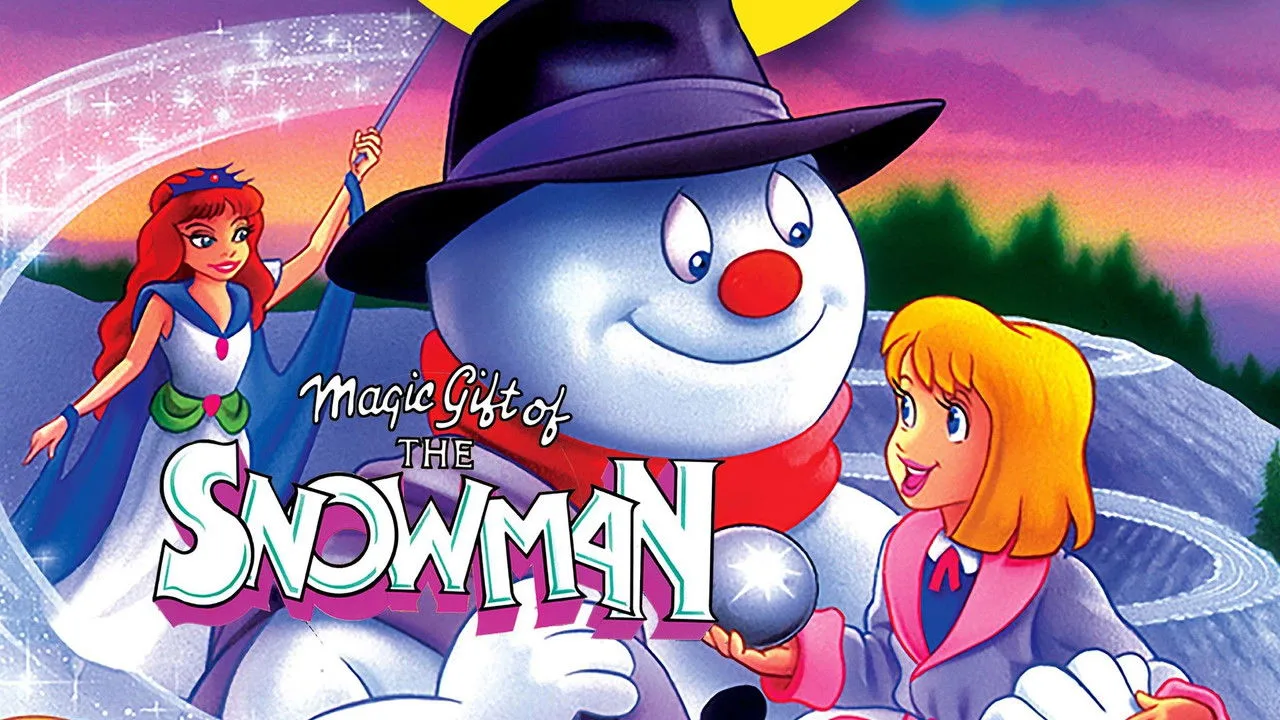
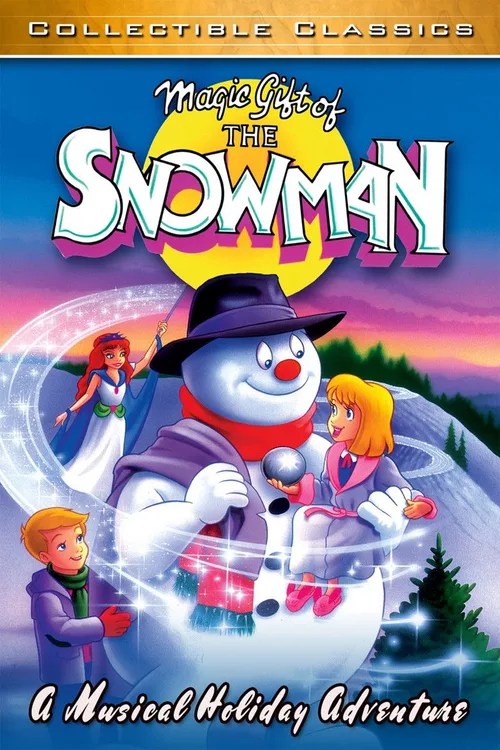
A magical snowman takes two children on the adventure of a lifetime.
Magic Gift of the Snowman (1995)
Everybody knows that Christmas is the time when miracles happen. And this exciting new tale is about a cool snowman who brings a very special gift to a little girl and her family. This heartwarming original feature is a beautiful reminder that a positive attitude can help us soar on wings of imagination and keep us hopeful and happy–no matter how old we are!
 rating 5/10 User rating 14 votes 66%
 ❄ Christmas Connection
The entire film centers on a boy's quest to find a Christmas star, with a snowman companion brought to life by Christmas magic. The holiday setting, gift-giving themes, and winter adventure are not incidental - they are the whole movie. This is as Christmas-specific as animated films get.
Where to Watch


Our Review
GoodTimes Entertainment had a business model that made perfect sense on paper: produce low-cost animated films and sell them in bargain bins at video rental stores, timed to compete with expensive theatrical releases. For most of the 1990s, they were very good at this. Magic Gift of the Snowman, released in 1995, sits comfortably in that catalog - a short, earnest, modestly animated holiday film aimed squarely at children under ten who don't yet notice limited frame rates.
The setup is simple. Emmet is a lonely boy who builds a snowman and, through some unspecified Christmas magic, the snowman comes to life. The two of them then set off on an adventure to find a Christmas star. That's essentially the whole premise. GoodTimes didn't overload the story with subplots or competing character arcs - which, given the budget, was probably the right call.
What the Film Actually Gets Right
The casting of Jim Cummings as the snowman is the film's strongest asset. Cummings has voiced more beloved animated characters than almost anyone else in the industry - Winnie the Pooh, Tigger, Pete from Disney's Goof Troop, Darkwing Duck - and he brings that same warm, slightly rumbling presence to the snowman. Even with thin dialogue to work with, Cummings makes the character feel genuinely good-natured rather than saccharine.
Justin Shenkarow, who voiced Elliot on Picket Fences around this same period, gives Emmet a believable loneliness in the early scenes. The kid doesn't want much. He just wants a friend and, by extension, a Christmas that feels like something. For children watching in the same boat, that's a connection the film earns honestly.
The film's pacing moves quickly, which is a genuine virtue for something aimed at small children. At under an hour, it doesn't overstay its welcome. The Christmas star quest gives the story a clear objective, and the ending delivers what it promises. Nobody watching this is going to be confused about what they're supposed to feel at the closing scene.
The GoodTimes Animation Problem
GoodTimes Entertainment released dozens of direct-to-video animated features through the late 1980s and 1990s, and Magic Gift of the Snowman shows the typical limitations of their production approach. The animation is functional but not fluid. Characters move in ways that suggest the studio was working with fewer frames per second than a Saturday morning cartoon. Backgrounds are simple. The color palette stays safe.
None of this is a surprise, and none of it is hidden. GoodTimes films were never trying to be Disney. They were trying to be something a parent could put on for a child on a December afternoon without much complaint. On that specific metric, the film succeeds.
The musical numbers - and there are a few - are forgettable in the way that only cheap 1990s animation music can be. Not offensive. Not memorable. They exist, they happen, and they end. The songs do what they need to do in terms of moving the narrative forward without requiring anyone to remember them the following day.
Is This a Christmas Movie Worth Watching?
The honest answer depends entirely on who is doing the watching. For adults revisiting this with any critical eye, Magic Gift of the Snowman is a minor curiosity - a window into a particular era of low-cost holiday content production that the video rental market generated in enormous quantities. It's not bad enough to be genuinely amusing and not good enough to be a discovery.
For children between four and eight, especially those who have already exhausted Rudolph and Frosty and need something new on a snow day, the film delivers. Jim Cummings carries scenes that would otherwise flag. The snowman is warm. The adventure, such as it is, holds together.
GoodTimes Entertainment was eventually acquired by a company called Anchor Bay and then largely faded from the market as home video itself changed. Their catalog of holiday titles - this one among them - now circulates on streaming platforms and discount DVD collections, where small children continue to find them and adults continue to have no memory of them whatsoever.
The Christmas star, when Emmet finally finds it, glows the way Christmas stars in low-budget animation always glow: warmly, simply, without much technical sophistication. It does the job.
Fun Facts
GoodTimes Entertainment, co-founded by the Cayre family, released more than 50 direct-to-video animated features between 1987 and the late 1990s, deliberately timing releases to coincide with major Disney and Don Bluth theatrical films to capture rental store shelf space.
Jim Cummings, who voices the snowman, holds a Guinness World Record recognition for being one of the most prolific voice actors in animation history, having voiced well over 400 characters across film, television, and video games.
Justin Shenkarow, who voices Emmet, was best known at the time for playing Elliot Weston on the CBS legal drama Picket Fences, which ran from 1992 to 1996 and won multiple Emmy Awards during its run.
GoodTimes Entertainment's business model relied heavily on the video rental market. When Blockbuster and similar chains declined in the 2000s, the direct-to-video animated film market that had supported companies like GoodTimes essentially collapsed.
The film was produced under the Cayre Brothers banner, named for the brothers who built GoodTimes into a prolific production company. At their peak, they were releasing several animated titles per year, covering holidays, fairy tales, and public domain stories.
Direct-to-video animation in the early 1990s was typically produced at significantly lower frame rates than theatrical animation - often 12 frames per second compared to Disney's 24 - which is visually detectable and accounts for much of the "budget" look common to films like this one.
The snowman character design in the film follows a well-worn visual tradition: round base, round body, top hat, carrot nose, button eyes. The template dates back at least to the 19th century, when snowman-building became a popular winter leisure activity for middle-class families with the time to do it.
Cast