
Get on, or GET OUT THE WAY!
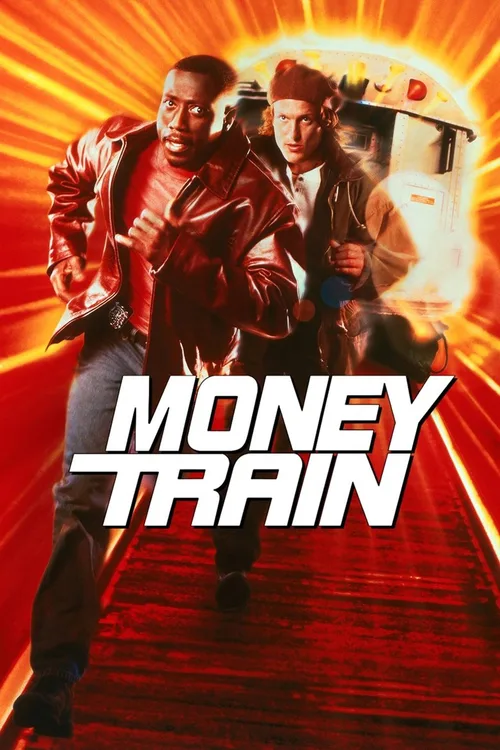
Money Train (1995)
When a vengeful New York transit cop decides to steal a trainload of subway fares, his foster brother—a fellow cop—tries to protect him.
 rating 6/10 User rating 840 votes 58%
 ❄ Christmas Connection
Money Train unfolds against the backdrop of the New York City holiday season, with Christmas lights, decorations, and the pre-Christmas rush providing constant visual texture throughout. The timing is not incidental: the holidays bring peak subway ridership and peak cash flow to the money train itself, which is the plot's engine. The film was released on November 22, 1995, deliberately targeting the Christmas moviegoing crowd.
Where to Watch


Our Review
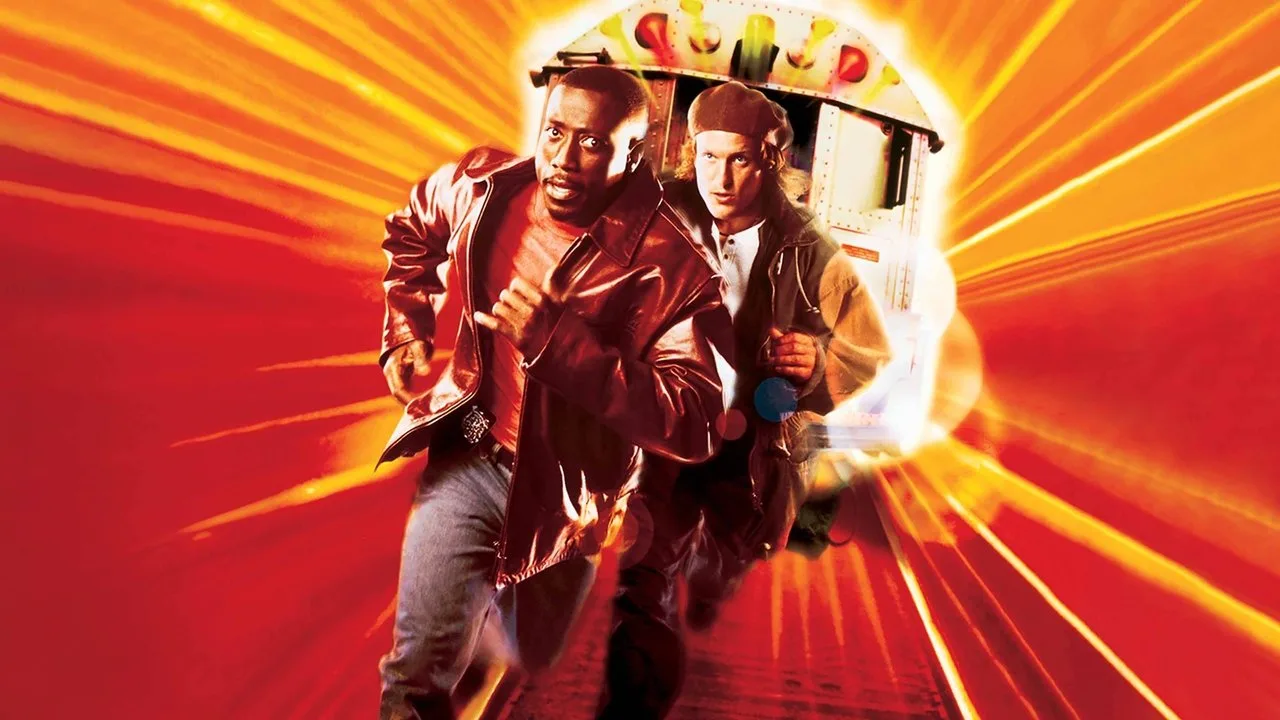
Money Train came out in November 1995 with the exact confidence of a guy who shows up to a job interview twenty minutes late and expects to get hired anyway. The movie knows it's not art. It knows the plot is thin. It knows the buddy-cop formula has been done to death. And then Wesley Snipes and Woody Harrelson show up together on screen and you stop caring about any of that.
The premise is simple to the point of being blunt: Charlie (Harrelson) is a transit cop drowning in gambling debt. His foster brother John (Snipes) is the responsible one who keeps bailing him out. The "money train" is the armored subway car that sweeps through the New York City transit system collecting cash from station booths, and it hauls millions of dollars during the holiday season when ridership spikes and farebox revenue peaks. Charlie's plan is to rob it. John's plan is to stop him. Eventually, John's plan becomes robbing it together.
Why the Christmas Setting Actually Matters
The holiday backdrop in Money Train isn't window dressing, though it's tempting to dismiss it as such. The entire heist depends on timing: the money train carries substantially more cash during the Christmas rush, and the plot's ticking clock runs up against the holiday schedule. Director Joseph Ruben shot extensively in and around the New York City subway system during the winter of 1994-95, and the footage captures something real about December in that city.
Christmas lights string through station tunnels. Buskers play carols on platforms. Transit cops in the film spend their shifts amid shoppers hauling bags of gifts. The holiday isn't the point of Money Train, but it gives the movie its atmosphere and its stakes. A heist set in August would need a different justification for why the timing matters.
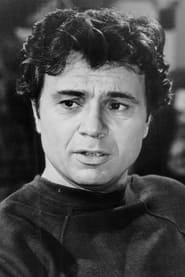
Robert Blake plays Kowalski, the obsessive transit authority boss who treats the money train like his personal obsession. He's a villain constructed entirely out of bureaucratic menace, and Blake plays him with genuine unease. His scenes carry more weight than they probably should in a movie this breezy.
The Snipes-Harrelson Chemistry That Carries Everything
Snipes and Harrelson had just come off White Men Can't Jump (1992), where their comic timing became the whole point of the movie. Columbia Pictures bet that lightning would strike twice. It mostly did, though Money Train is a lesser film than White Men in almost every way that matters. The jokes land less often. The action sequences are noisier but less clever. The emotional beats feel obligatory.
What survives is the physical presence of two actors who genuinely seem to enjoy being in scenes together. Their arguing feels like real arguing. Their loyalty to each other feels earned rather than scripted. Harrelson in particular does a lot of work making Charlie likable despite the character being objectively a disaster at life. He brings a specific kind of shambling warmth that papers over plot holes by sheer charisma.
Jennifer Lopez plays Grace, a fellow transit cop and the love interest both brothers pursue. It's not a complex role. Lopez plays it with enough edge to make Grace feel like a real person rather than a prize, which is more than the script gives her credit for. She was 26 when the film was shot, and already had the quality that would make her a star: she commands the frame when she's in it.
The Controversy Nobody Talks About Anymore
When Money Train was released, it attracted a specific kind of news coverage that had nothing to do with the movie's quality. Within a month of its release, a series of attacks on New York City subway token booths mirrored a scene in the film where a character sets a booth on fire with an accelerant. The film was blamed in the press, politicians called for boycotts, and Columbia Pictures briefly considered pulling it from theaters.
The connection between the film and the real attacks was disputed at the time and never established conclusively. But the controversy gave Money Train a notoriety that probably exceeded what the film would have earned on its own terms. It's been largely forgotten since, which means the movie now exists in an odd limbo: remembered fondly by people who liked it, barely known by anyone born after 1990.
The heist sequence itself, when it finally arrives, is genuinely tense. Ruben shoots the subway tunnels like they're alive, and the logistics of robbing a moving armored train that only stops at specific intervals is the kind of problem that actually generates suspense when you pay attention to it. The film earns its climax.
Is Money Train Worth Watching?
If you want a Christmas movie that will fill you with holiday warmth, Money Train is the wrong choice. If you want 110 minutes of two charismatic actors doing their thing while New York City looks appropriately gritty and festive in the background, it holds up better than its reputation suggests.
The film made $35 million domestically against a $50 million budget, which counts as a disappointment by studio math. Critics were largely unkind. Roger Ebert gave it two out of four stars and called it a "dumb movie about not very interesting people." He wasn't wrong. He also wasn't entirely right. Dumb movies about not very interesting people are sometimes exactly what you want, and Snipes and Harrelson understood that assignment.
Watching it now, what stands out is the New York City subway system itself as a setting. The film was made before the major MTA renovation projects of the late 1990s and 2000s, and the stations, cars, and tunnels look like a different city. That alone makes it a useful artifact for anyone interested in what urban infrastructure actually looked like before a generation of renovation. The Christmas lights strung through the grime of a 1994 subway station have their own kind of charm.
Fun Facts
Wesley Snipes and Woody Harrelson reunited for Money Train three years after White Men Can't Jump (1992), making it one of the faster buddy-comedy reunions in Hollywood history for a film that wasn't a direct sequel.
Jennifer Lopez had appeared in My Family earlier in 1995 and was cast in Selena the following year, making 1995-1996 the period when she transitioned from supporting roles to leading actress.
The money train referenced in the film is based on a real New York City Transit Authority vehicle called the "money train" or "revenue train," which actually does collect cash from station fare boxes and transport it to central counting facilities.
Director Joseph Ruben, who previously directed The Sleeping with the Enemy (1991) and The Good Son (1993), secured unusual access to the New York City subway system for filming, shooting on actual trains and in active tunnels during off-peak hours.
The film was released on November 22, 1995, Thanksgiving week, as a deliberate placement to capture the holiday moviegoing market, though it opened in third place behind GoldenEye and Ace Ventura: When Nature Calls.
Within weeks of the film's release, New York City officials and police representatives publicly blamed it for a series of token booth attacks. Columbia Pictures rejected any connection, and no legal link between the film and the attacks was ever established.
Robert Blake, who plays the obsessive transit chief Kowalski, was best known at the time for starring in the 1970s TV series Baretta. He would later become infamous for reasons entirely unrelated to subway heists.
The production budget of approximately $50 million made Money Train one of the more expensive films of 1995, and its domestic gross of around $35 million meant it needed strong international and home video performance to break even.
Cast