
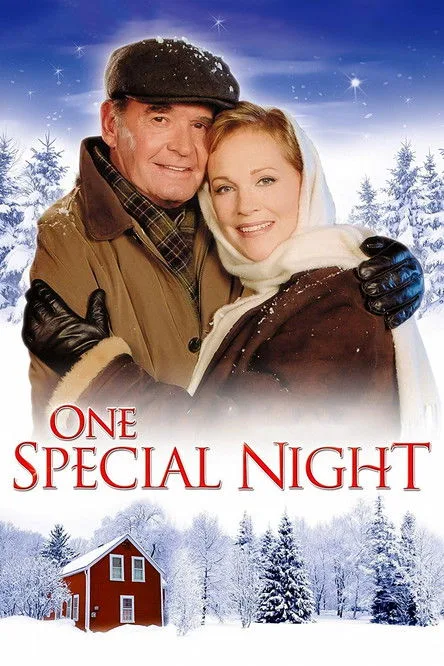
One Special Night (1999)
Builder Robert is visiting his ailing wife in a nursing home and is having problems getting a taxi home due to an intense snow storm. One of the doctors, Katherine offers him a lift home however their car gets stuck and they have to spend the night in an empty cabin nearby. They talk and bond, but afterwards seem to have difficulty beginning a relationship.
 rating 7/10 User rating 22 votes 69%
 ❄ Christmas Connection
One Special Night is set during Thanksgiving rather than Christmas, but a howling blizzard, a remote cabin, and two people facing grief and mortality give it the emotional texture of a midwinter story rather than a harvest celebration. The snow is relentless, the warmth is hard-won, and the whole film operates on that specific late-November feeling when winter announces itself for the first time and you realize the year is almost gone. It sits comfortably alongside quiet holiday films that are really about loneliness and human connection.
Where to Watch


Our Review
There is a sub-genre of TV movies that gets almost no critical attention: the quiet, two-hander drama where the entire film is essentially two people in a room talking. No car chases, no subplot about a missing diamond, no third-act misunderstanding resolved by running through an airport. Just dialogue, performance, and the slow work of two people deciding whether to trust each other. One Special Night, a 1999 CBS TV movie directed by Roger Young, is one of the best examples of that form. The fact that most people haven't seen it is a genuine loss.
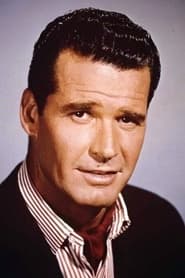
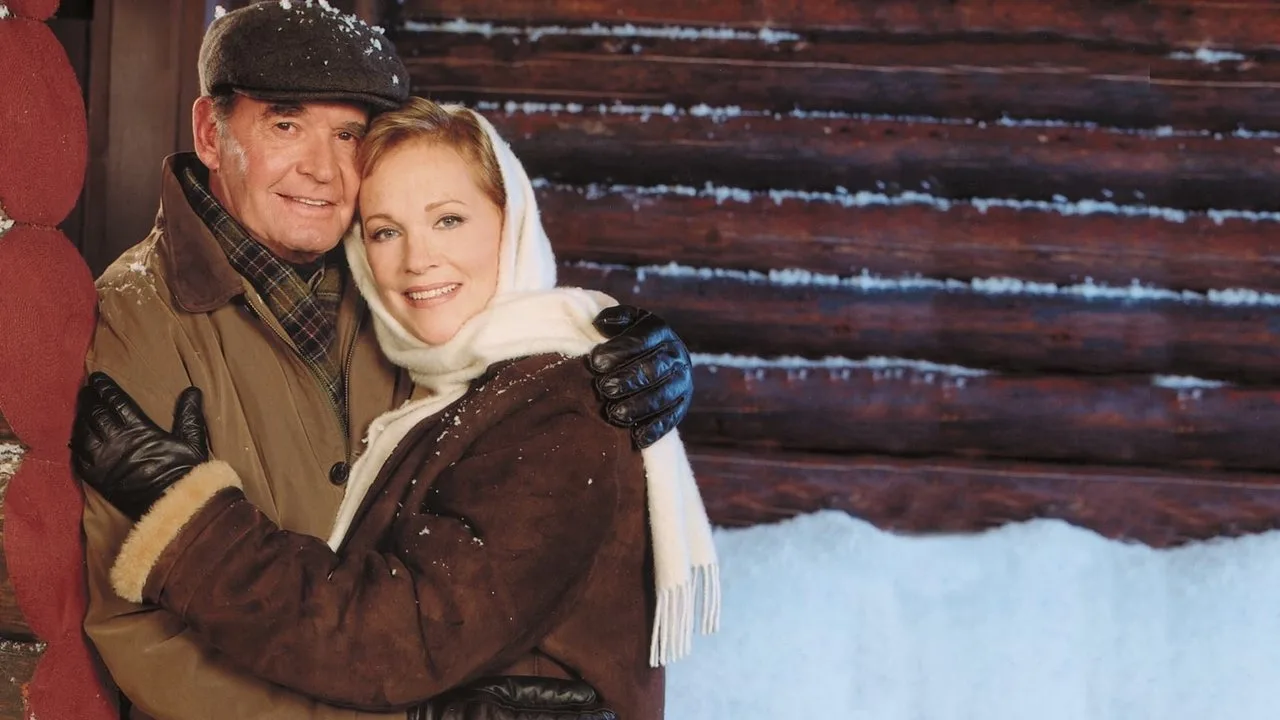
The setup is simple to the point of being almost a writing exercise. Robert (James Garner) is at a care facility visiting his wife, who has advanced Alzheimer's. Catherine (Julie Andrews) is there visiting a friend. A Thanksgiving blizzard hits, the roads close, and the two strangers end up sheltering together overnight in an abandoned cabin. By morning, they know each other in ways that people who've shared twenty years of office parties never do.
What the Film Gets Right About Grief
Robert is not technically a widower, but he's been grieving his wife for years. His marriage exists on paper and in obligation. He visits out of love and guilt in proportions he can't quite sort out himself. Catherine has lost her husband and carries that loss differently: more cleanly processed, but no less present. The film understands that grief doesn't follow a schedule and that two people can be at entirely different stages while still recognizing something in each other.
The cabin forces honesty. There's no social armor available when you're cold and stuck and trying to figure out if the chimney draws. The screenplay, adapted from Jan Hartman's stage play "A Winter Visitor," gives both characters things to say that actually matter. Robert admits things he'd never say at a dinner party. Catherine listens in a way that doesn't signal judgment. The writing trusts that audiences can tolerate a scene where two older adults simply talk about their lives without anything blowing up.
That trust is rare in TV movies. It's the thing that separates this one from the pack.
Andrews and Garner: The Chemistry Question
Julie Andrews in 1999 was still several months away from the throat surgery that would damage her singing voice, though that's not relevant here. She doesn't sing. What she does is act, with specificity and intelligence, in a role that gives her real material to work with. Catherine is proper without being rigid, warm without being saccharine. Andrews finds the places where the character's composure slips and plays them without pushing for sympathy.
Garner is doing something slightly different. Robert is rougher, more self-deprecating, quicker to deflect with humor. Garner spent decades perfecting that particular mode of American masculinity: the man who uses charm as a kind of shield, who jokes when he means something serious. Here he gets to let the shield down, and the scenes where he does are the film's best.
The chemistry between them is genuine. Not romantic in the breathless sense, but the chemistry of two people who are actually listening to each other. That's harder to manufacture than passion. Directors can fake intensity. They cannot fake two actors who are genuinely interested in what the other person is saying.
Thanksgiving vs. Christmas: Does the Setting Matter?
The film is set at Thanksgiving, which is an interesting choice for a story about two people at the tail end of their lives reconsidering what's still possible. Thanksgiving sits right at the edge of winter. The year is winding down. Christmas is coming. There's a particular weight to late November that Christmas itself, with all its noise and expectation, can drown out. "A Winter Visitor" was the original title of Hartman's play, and that title captures the film's mood better than the TV-movie title CBS chose.
The blizzard isn't metaphor. It's just weather. But weather shapes what people do and say, and stranding two people in a cabin for a night is as old a dramatic device as the theater itself. It works here because the writing fills the time with real content rather than contrived conflict.
The Limits of the Form
This is still a TV movie, and it operates within those limits. The cabin looks like a cabin on a soundstage. The storm outside is occasionally unconvincing. Some scenes feel slightly stage-bound in ways that a bigger budget or more adventurous direction might have addressed. Roger Young is a competent director who mostly stays out of the way of his actors, which is the correct call here, but the film doesn't do much that's cinematically interesting.
None of that sinks it. The limitations of the form are visible but not fatal, because the thing the film is actually doing, which is getting two world-class actors to perform a two-character play for television, it does that very well.
Catherine and Robert part at dawn with the road cleared. What they've shared has changed something in both of them, though the film is wisely specific rather than vague about what that change is. There's no declaration. There's an exchange of information. A possibility opens. The film ends there, before the possibility can be tested, which is exactly right.
Fun Facts
The film is based on Jan Hartman's stage play "A Winter Visitor," which was written specifically as a two-hander for older actors, a format that was common in regional theater but rarely adapted for television.
Julie Andrews underwent surgery on her throat in 1997 to remove non-cancerous nodules, and a second surgery in 1997 left her unable to sing professionally. She has spoken publicly about the loss of her singing voice as one of the most significant events of her later career, making her 1999 dramatic work particularly notable.
James Garner, who played Robert, was already in his early seventies during production and had undergone quadruple bypass surgery in 1988, making his portrayal of a man confronting mortality and the limits of his physical life particularly grounded.
Roger Young directed over a dozen TV movies during the 1990s and 2000s, including several biblical miniseries. His work on "One Special Night" was considered one of his more intimate projects.
The film aired on CBS on November 28, 1999, which was the Sunday of Thanksgiving weekend, timing it to the exact holiday depicted in the story.
James Garner and Julie Andrews had not worked together before this film, despite both being major stars since the 1960s. Garner had been nominated for a Golden Globe for "The Rockford Files" and Andrews had won the Academy Award for "Mary Poppins" in 1964.
The play "A Winter Visitor" takes its title from a British idiom, reflecting Hartman's theatrical background, though the TV adaptation is set firmly in an American context with American characters.
Cast