
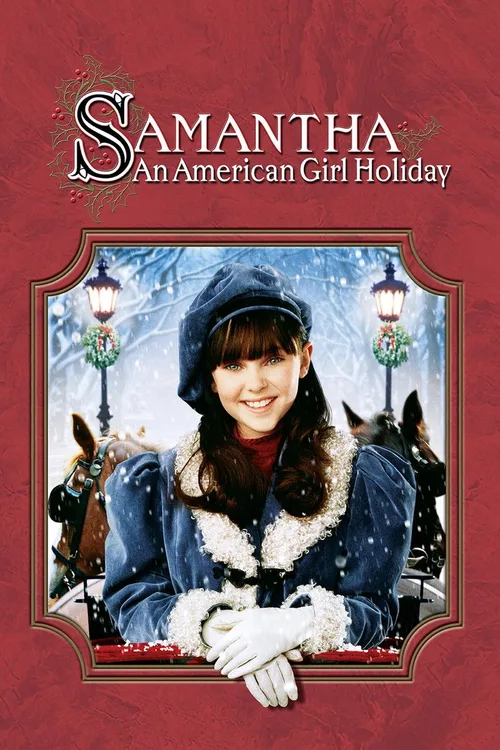
Samantha: An American Girl Holiday (2004)
Kindhearted Samantha Parkington's world starts to change the day Nellie O'Malley walks into her life. Nellie, her father, and her two little sisters have moved in next door to be servants for the Ryland family. Though they come from completely different backgrounds, Samantha and Nellie become fast friends. The girls turn to each other in happiness and sorrow, adventure and danger.
 rating 7/10 User rating 52 votes 65%
 ❄ Christmas Connection
Christmas appears as the emotional climax of a four-season story set in 1904, with Victorian gift-giving, a decorated tree, and a school holiday program where the protagonist delivers a speech against child labor.
Where to Watch


Our Review
Victorian Manners, Factory Smoke, and One Very Determined Nine-Year-Old
Samantha: An American Girl Holiday arrived on The WB on November 23, 2004, and it had a lot riding on it. This was the first American Girl property ever adapted for screen, the debut of a then-unknown child actress named AnnaSophia Robb, and a TV movie produced in part by Julia Roberts through her Red Om Films company. That is a lot of pressure for an 86-minute holiday special set in 1904. Against the odds, it mostly delivers -- and it does so without softening the edges the way holiday movies usually do.
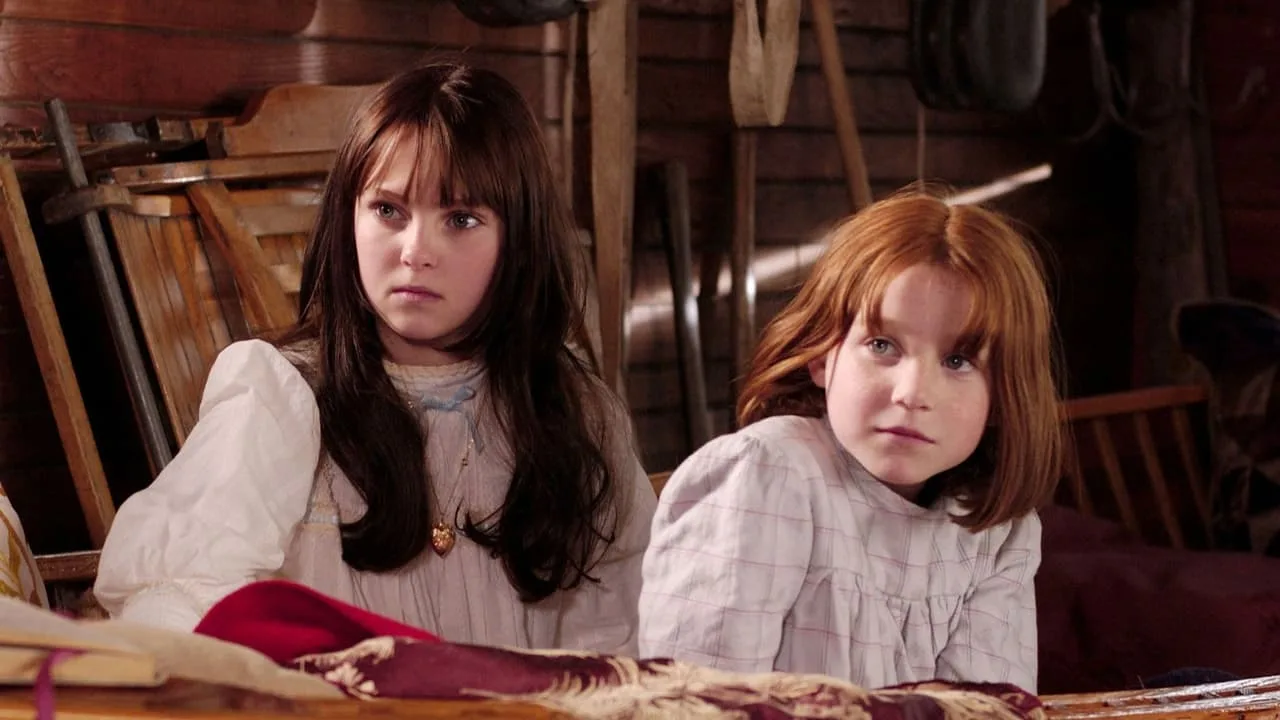
The story follows Samantha Parkington, a nine-year-old orphan living with her wealthy grandmother Grandmary (Mia Farrow) in the fictional upstate New York town of Mount Bedford. Samantha's life is frills, etiquette lessons, and loneliness until Nellie O'Malley (Kelsey Lewis) arrives next door as a servant for the insufferable Ryland family. The friendship that forms between them is the engine of the entire film. When Nellie's father dies of influenza and the three O'Malley sisters are sent to a corrupt orphanage in New York City, Samantha sets out to fix it -- and her solution involves a stolen speech, a hidden attic, and more spine than most adults in the film manage to show.
Where Christmas Actually Lives in This Film
The movie structures itself across the four seasons, which means Christmas does not arrive until the final act. That is an unusual choice for a holiday film, and it is worth noting upfront: this is not a wall-to-wall Christmas movie in the way that, say, a Hallmark production is. Christmas here is the destination, not the landscape. When it finally arrives, it lands with genuine weight because the film has spent its runtime building toward it.
The holiday sequence centers on a school Christmas program where Samantha is expected to give a rehearsed speech about American progress. She tears it up and replaces it with something she wrote herself -- a direct challenge to the adults in the room about the children working in factories they profit from. It is a genuinely striking scene for a holiday family movie. The decorated tree, the gift-giving, and the warmth of the season all register as earned rather than assumed. Victorian Christmas trappings are rendered with care: the set dressing is meticulous, the costumes draw directly from the original American Girl book illustrations, and the overall visual palette treats 1904 Christmas as something worth lingering over.
Mia Farrow and the Weight of the Room
Mia Farrow plays Grandmary as a woman who genuinely loves her granddaughter while being deeply wrong about nearly every social question of the era. It is a subtle performance for a children's film, and it keeps the character from becoming a cartoon obstacle. Grandmary is not cruel -- she is simply a product of her class and time, and the film respects that complexity. When she finally comes around, the moment earns its warmth because the film did not cheat to get there.
Jordan Bridges and Rebecca Mader play Samantha's progressive uncle and his new wife Cornelia, and they serve as the film's moral compass without feeling like mouthpieces. Cornelia in particular has a quiet fierceness that the film uses well. The adult cast clearly understood they were in something with more on its mind than toy tie-ins.
AnnaSophia Robb: Watching a Career Begin
This was AnnaSophia Robb's first major screen role, and within a year she would go on to Because of Winn-Dixie and Tim Burton's Charlie and the Chocolate Factory. Watching the film now, the talent is obvious. Robb plays Samantha with real conviction -- not the performed sincerity that child actors often default to, but something more interior and watchful. She is particularly good in the factory scene, where Samantha witnesses child labor firsthand and the camera stays on her face long enough to let the reaction breathe. Director Nadia Tass trusted a ten-year-old actress with that moment, and Robb does not waste it.
The screenplay by Marsha Norman -- a Pulitzer Prize-winning playwright who won for 'night, Mother in 1983 -- is ambitious for the format. Norman weaves child labor, class inequality, and the beginnings of the Progressive Era into a story that never lectures while still making its points clearly. The writing occasionally strains under the weight of adapting multiple books into a single film, and some transitions feel rushed, but the bones are strong.
Production Values That Punch Above Their Weight
The film was shot in Toronto, Ontario, and the production design team did careful work recreating turn-of-the-century American domesticity. The Queen Anne Victorian house interiors are layered with period detail. Costume designer Wendy Partridge pulled directly from American Girl catalog illustrations for key garments, including Samantha's nightgown and her pink talent show dress. Early DVD editions came packaged with a locket matching the one Samantha wears in the film -- a marketing move, yes, but one that shows how seriously American Girl took the adaptation.
The film earned three Young Artist Award nominations and took home one win. For a first-time franchise entry produced on a television budget, that recognition reflects how much craft went into the final product.
The Christmas Vibes Question
If you are coming to this film expecting a cozy, wall-to-wall Christmas experience, adjust your expectations. The holiday content is concentrated in the final 20 minutes, and the film earns its emotional payoff through a story that takes child poverty seriously. The Christmas sequence is genuinely beautiful and has real warmth -- the decorated tree, the gifts, the reconciled family -- but this is fundamentally a period drama about social conscience that ends at Christmas rather than a Christmas movie that happens to have a plot.
That said, the final act captures something true about what Christmas can mean at its best: a moment where what is wrong with the world becomes impossible to ignore, and people choose to do something about it anyway. The Victorian setting frames gift-giving and holiday tradition within a world of stark inequality, which gives both the darkness and the warmth more resonance than either would have alone.
Fun Facts
This was the first American Girl property ever adapted for screen, making it the origin point of an entire franchise of films that followed over the next two decades.
AnnaSophia Robb is naturally blonde and wore a brunette wig throughout production to match Samantha Parkington's appearance in the original books and doll line.
Kelsey Lewis, who plays the red-haired Irish immigrant Nellie O'Malley, is naturally brunette and dyed her hair for the role -- meaning neither lead actress appeared with her natural hair color.
Julia Roberts served as an executive producer through her Red Om Films production company, though she does not appear on screen.
The teleplay was written by Marsha Norman, who won the Pulitzer Prize for Drama in 1983 for 'night, Mother -- an unusual pedigree for a children's holiday TV movie.
Several key costumes and props were sourced directly from the original American Girl book illustrations and catalogs, including the doll Samantha carries alongside a nutcracker.
Principal photography began on May 3, 2004 in Toronto and wrapped just 34 days later on June 6, 2004.
The first-edition DVD release came bundled with a silver locket designed to match the one Samantha wears in the film, making it one of the more literal tie-in merchandise packages in holiday movie history.
Cast