
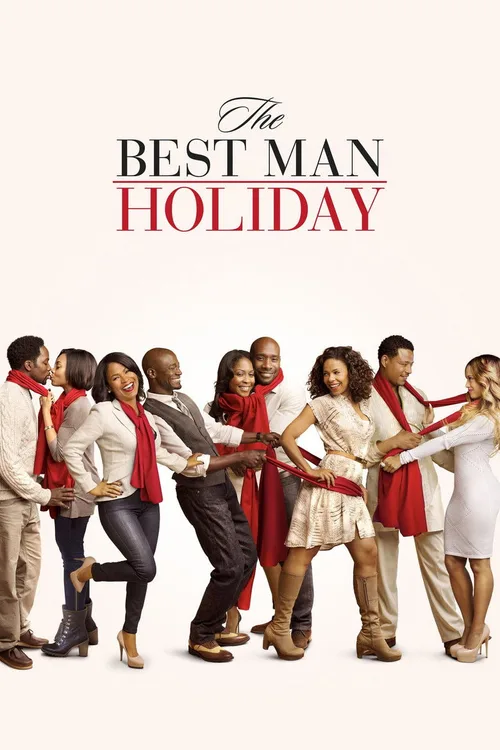
Times change. Friendship doesn't.
The Best Man Holiday (2013)
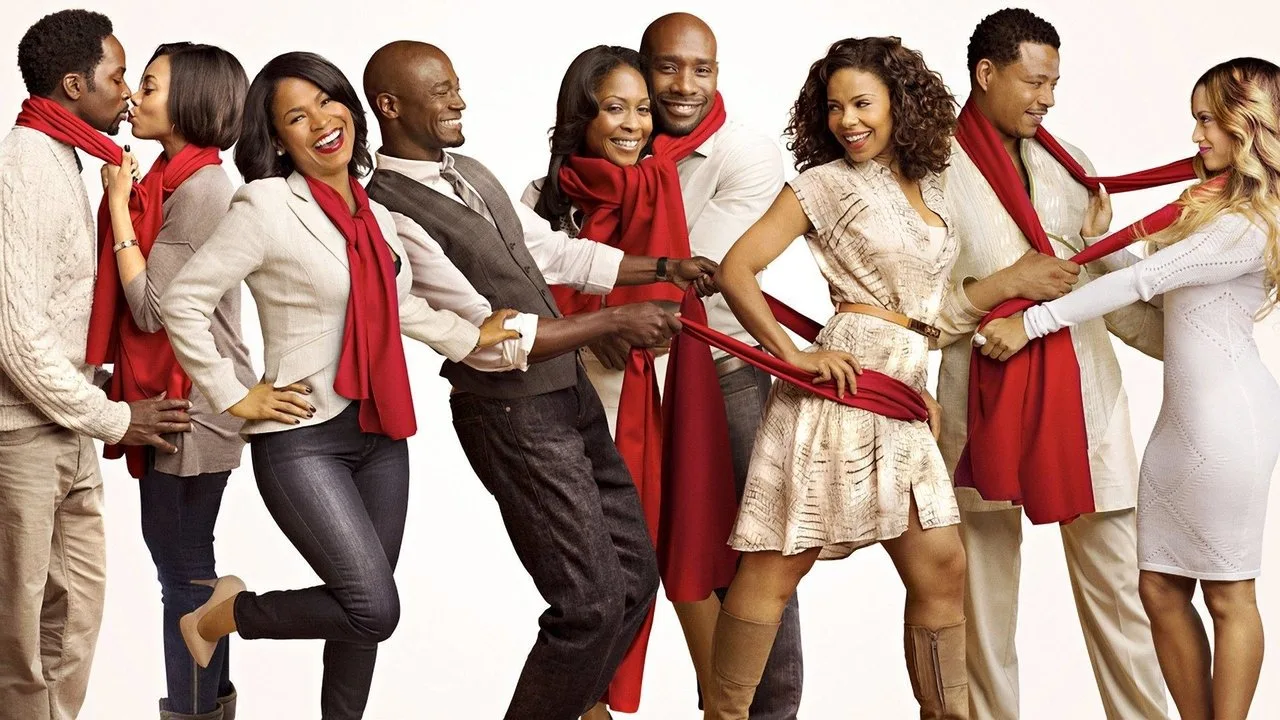
When college friends reunite after 15 years over the Christmas holidays, they discover just how easy it is for long-forgotten rivalries and romances to be reignited.
 rating 8/10 User rating 277 votes 65%
 ❄ Christmas Connection
The entire film is set over a Christmas holiday weekend, with decorations, gift exchanges, and holiday gatherings serving as the backdrop for both comedy and drama. The Christmas setting is not incidental — the season's themes of family, forgiveness, and gathering after long absences are load-bearing elements of the plot. A climactic Christmas Eve scene is among the most emotionally affecting in any holiday film of the 2010s.
Where to Watch


Our Review
The Best Man Holiday came out in November 2013 and beat Thor: the Dark World at the box office its opening weekend. It earned $30.6 million in three days against a $17 million budget. USA Today, attempting to contextualize this, described it as a "race-themed" film. The backlash was immediate and merciless, and the paper changed the headline twice before the news cycle moved on. The whole incident said more about the gatekeepers than the movie.
What the film actually is: a sharply written ensemble comedy-drama about eight college friends who reunite for Christmas at the New York mansion of retired NFL star Lance Sullivan (Morris Chestnut) and his wife Mia (Monica Calhoun). There is unresolved history between almost every pair of characters. There are secrets nobody planned to keep this long. And there is a medical diagnosis hanging over the weekend that most of the characters don't yet know about.
What the Best Man Holiday Gets Right About Old Friends
Director Malcolm D. Lee is working with a cast that had already played these characters together in 1999. That fourteen-year gap is built into the texture of the film. These actors don't have to pretend they know each other. The shorthand between Taye Diggs and Harold Perrineau, between Sanaa Lathan and Nia Long, feels earned in a way that no amount of screenwriting setup could manufacture.
Lee encouraged improvisation throughout the shoot, and you can feel it in the best scenes. The dinner table arguments have the overlapping, talking-past-each-other quality of real group conversations. The characters interrupt each other, change the subject, circle back. Nobody waits their turn the way characters do in lesser ensemble films.
The weakest link is Terrence Howard's Quentin, who functions mainly as a chaos agent and comic relief. Howard commits fully, but the character's provocations wear thin by the third act. He's there to stir pots when the script needs momentum, which is a different thing from being a real person.
The Christmas Setting Does Real Work
A lot of films use Christmas as set dressing: tinsel in the background, carols on the soundtrack, nothing more. The Best Man Holiday is not that. The holiday framework is structurally essential. The reason these eight specific people are all in the same house at the same time, after years of geographic and emotional drift, is that Christmas demands it. The gathering is obligatory in the way that holiday gatherings actually are.
This matters because the drama needs forced proximity. Characters who would otherwise maintain safe distances from each other have nowhere to retreat. Marriages that have calcified into politeness are cracked open again. Old resentments that everybody agreed not to discuss have to be discussed, because there's a snowstorm outside and nobody is going anywhere.
The final third of the film earns its emotional weight honestly. When it arrives, you are not watching actors hit marks. You are watching people who have known each other since college say things they cannot unsay, in a house full of Christmas lights, in the middle of winter.
The "Can You Stand the Rain" Scene
The film's most celebrated sequence is a lip-sync performance where the four male leads, Chestnut, Diggs, Perrineau, and Howard, perform New Edition's "Can You Stand the Rain" in front of their partners. The women's reactions are genuine: Lee deliberately did not tell the actresses which song the men had chosen. What you see on screen is real surprise.
Behind the scenes, the rehearsal process was chaotic. Morris Chestnut has said it took him five hours to learn the choreography, while Taye Diggs picked it up in about five minutes. Howard barely attended rehearsals and winged most of his performance. Chestnut later called Harold Perrineau the best natural dancer among the four, which tracks if you watch the clip.
The scene works because it is embarrassing in the right way. These are middle-aged men with professional accomplishments and complicated lives doing a boy-band routine in somebody's living room. It's funny, but it's also genuinely sweet, which is harder to pull off than funny.
The Cast, Fourteen Years Later
Monica Calhoun carries the film's dramatic center with composure. The role required her to be strong, fragile, funny, and devastating, often within the same scene, and she manages all of it without telegraphing the transitions. Regina Hall gets the sharpest comic lines and lands them cleanly. Sanaa Lathan brings the most psychological complexity to her character's choices.
The film trusts its audience. It does not explain the backstory from 1999 in expository speeches. If you have not seen the original, you will catch up; if you have, you will notice the callbacks. Lee respects the continuity of these characters enough to let their history accumulate offscreen.
That's a rarer quality than it sounds. Most sequels treat audiences as newcomers who need everything explained. The Best Man Holiday assumes you've lived alongside these people, or that you're willing to.
Fun Facts
The film was produced on a budget of $17 million and earned $30.6 million in its opening weekend alone, beating Thor: the Dark World to take the number-one box office spot on Saturday of that weekend.
USA Today described The Best Man Holiday as a "race-themed" film in a box office headline, triggering an immediate public backlash. The paper changed the headline twice before settling on "ethnically diverse films soar."
Principal photography ran from April 4 to June 30, 2013, in Toronto, Ontario, which stood in for New York City throughout the film.
The women's reactions during the "Can You Stand the Rain" lip-sync scene are unscripted. Director Malcolm D. Lee did not tell the actresses which song the men had rehearsed, so the surprise on screen is genuine.
Morris Chestnut has said it took him five hours to learn the choreography for the "Can You Stand the Rain" scene, while Taye Diggs picked up the same routine in approximately five minutes.
Terrence Howard barely attended rehearsals for the "Can You Stand the Rain" scene and improvised much of his performance during filming.
The film received four nominations at the 45th NAACP Image Awards, including Outstanding Motion Picture and Outstanding Directing for Malcolm D. Lee.
The original score was composed by Stanley Clarke, a Grammy-winning jazz bassist who has scored dozens of films, including Boyz n the Hood and Passenger 57.
Cast