
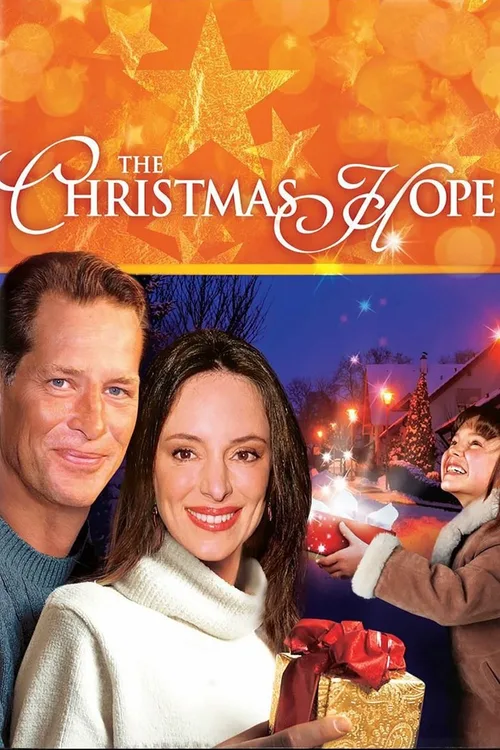
The Christmas Hope (2009)
After the recent loss of her son Sean, Patty Addison devotes herself to finding homes for needy children. The loss of their son has strained Patty's relationship with her husband Mark, but they reconnect emotionally when they take in Emily, a 9-year-old orphaned in a car accident similar to the one that killed Sean. At the same time Dr. Nathan Andrews is trying to find the parents of a boy who died in the ER, and Mark is trying to help one of his son's friends.
 rating 6/10 User rating 20 votes 62%
 ❄ Christmas Connection
The Christmas Hope is set entirely in the weeks leading up to Christmas, with the holiday acting as both backdrop and emotional catalyst. A grieving mother's transformation, an orphaned girl's search for belonging, and a doctor's reckoning with an old promise all converge on Christmas Eve. The film leans hard on Christmas as a season of reckoning rather than celebration.
Where to Watch


Our Review
The Christmas Hope is the third film adapted from Donna VanLiere's "Christmas Hope" book series, and it arrives with the full weight of a franchise that began with a song no one could get out of their head. The 2002 CBS film of The Christmas Shoes drew the largest audience for any original CBS movie that season. By 2009, Lifetime had picked up the license and handed the third installment to Canadian director Norma Bailey with Madeleine Stowe as its lead. It is, by any objective measure, a midrange TV holiday drama. It is also, against most expectations, genuinely moving.
What The Christmas Hope Is Actually About
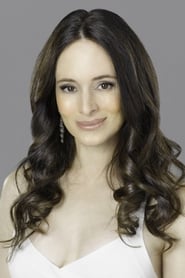
Patty Addison (Stowe) is a social worker who has thrown herself into placing children after the death of her college-aged son Sean in a car accident. Her husband Mark (James Remar), an airline pilot, is still grieving on his own terms, and the distance between them has become a fixture of their marriage. Then Emily arrives.
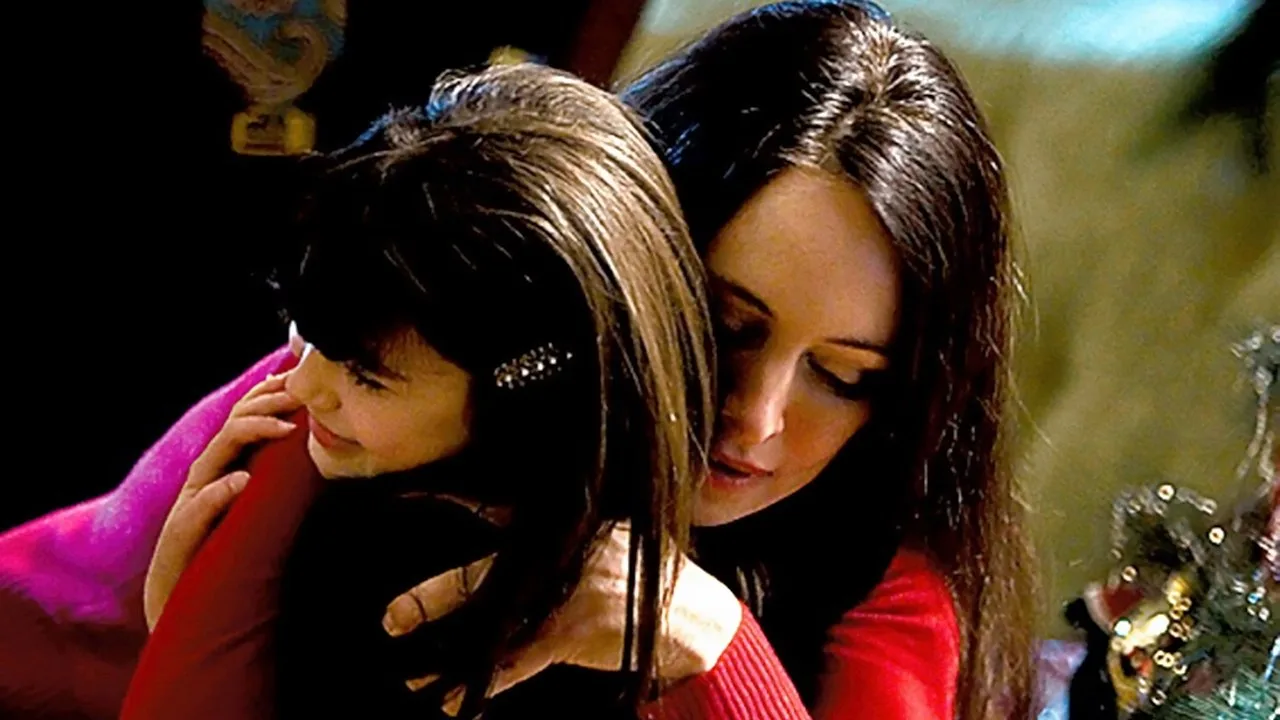
Emily is nine years old, recently orphaned when her mother dies in a car accident after promising the girl a special Christmas gift. Patty bends the rules and takes Emily home rather than leaving her in temporary care. The parallel between Emily's loss and the Addisons' is not subtle. The film doesn't try to make it subtle. It understands that grief, when recognized in someone else, doesn't need a clever metaphor.
Running alongside the main storyline, Dr. Nathan Andrews (Ian Ziering) discovers that a deceased patient had been carrying a gift meant for his parents. Andrews carries the guilt of never tracking them down. Mark Addison has his own subplot involving his late son's college friend. By the end, all three threads connect in a way that feels earned rather than contrived, which is a harder trick to pull off than it looks.
Madeleine Stowe Carries This Film
In 1992, Stowe was playing opposite Daniel Day-Lewis in The Last of the Mohicans. Three years later she was in Terry Gilliam's 12 Monkeys alongside Brad Pitt and Bruce Willis. By 2009, she was doing Lifetime movies, and critics who noticed seemed vaguely embarrassed on her behalf.
They shouldn't have been. Stowe gives Patty Addison a specificity that the script doesn't always earn. There's a scene where Patty watches Emily sleep and you see, in a single held expression, exactly what this child represents to her and exactly why that terrifies her. No dialogue. No swelling score cue. Just an actress who knows what she's doing.
James Remar, best known at the time for playing Harry Morgan in Dexter, matches her. Remar built a career on menace and authority. Mark Addison is neither menacing nor authoritative. He's a man who doesn't know how to grieve around someone else. Remar plays that quietly, without telegraphing the emotion before the scene earns it.
The Franchise Shuffle and the Nathan Problem
The Christmas Shoes franchise has a casting continuity problem that only completists will care about but is too strange to ignore. Nathan Andrews, who appears as a child in The Christmas Shoes (2002), was played as an adult by Neil Patrick Harris in The Christmas Blessing (2005). By The Christmas Hope, Harris was gone and Ian Ziering stepped into the role.
Ziering, most famous then for Beverly Hills 90210, plays Nathan with warm competence. He's fine. But the subplot he inhabits is the weakest thread of the film, more connective tissue for franchise fans than essential drama. The scenes involving Patty and Emily pull focus, and Bailey is right to let them.
What Norma Bailey Gets Right
Bailey, a Canadian director with a long resume in television drama, doesn't mistake sentimentality for emotion. The Christmas Hope has the structural DNA of Hallmark-adjacent television: a grief-laden setup, a child who changes everything, a marriage on the mend. Bailey resists the genre's worst impulse, which is to redeem everyone loudly and in full view of the camera.
The film was shot in Winnipeg, Manitoba, which is doing a great deal of atmospheric work here. Winnipeg winters are not decorative. The cold is real, the light is thin and gray, and the snow has weight. It makes the indoor scenes feel warmer by contrast and the outdoor scenes feel genuinely exposed. These are not people strolling through a Christmas card. They're people trying to stay warm.
The screenplay by Wesley Bishop adapts VanLiere's 2005 novel with fidelity to its emotional logic rather than its literal plot. The book's Emily is five years old. The film ages her up to nine, which allows the character to ask questions about heaven and loss that a five-year-old couldn't credibly articulate. It's a sensible change. Tori Barban plays Emily with the unsettling directness that good child actors have when they understand the scene without performing it.
The Franchise Context
VanLiere's Christmas Hope series began as a novel inspired by the 1999 song "The Christmas Shoes" by NewSong, a Christian music group. The song itself was written by Eddie Carswell and Leonard Ahlstrom, inspired by a story circulating on the internet about a child buying shoes for his dying mother. VanLiere turned those images into a novel, then a series, then a cottage industry of seasonal television films.
The Christmas Hope is the third film but not the last. The Christmas Secret (2014) and The Christmas Note (2015) continued the franchise, though without the same casting continuity. Taken together, the films form something like a secular Christmas catechism: grief acknowledged, connection restored, the holiday as the specific container in which ordinary people discover they are not as alone as they thought.
It's a formula. It works because the formula is built around a real human pattern. Most people who watch The Christmas Hope in December will have lost someone. That's not manipulation. That's just the math of adult life meeting a film that doesn't look away from it.
Fun Facts
The Christmas Hope was broadcast on Lifetime on December 13, 2009, as the third film adapted from Donna VanLiere's Christmas Hope book series, which began with the 2001 novel The Christmas Shoes.
Madeleine Stowe, who plays Patty Addison, had starred in major theatrical releases including The Last of the Mohicans (1992) and 12 Monkeys (1995) before taking the lead in this Lifetime TV movie. Two years after The Christmas Hope, she returned to prestige television as Victoria Grayson in ABC's Revenge.
James Remar, who plays Mark Addison, was simultaneously appearing as Harry Morgan, Dexter's adoptive father, in the Showtime series Dexter during the same period the film was released.
The role of Dr. Nathan Andrews, the character who connects all three films, was played by three different actors across the franchise: Max Morrow played the child Nathan in The Christmas Shoes (2002), Neil Patrick Harris played the adult Nathan in The Christmas Blessing (2005), and Ian Ziering took over the role for The Christmas Hope (2009).
The film was shot in Winnipeg, Manitoba, Canada, one of the coldest major cities in North America. Winnipeg's average December temperature is around minus 16 degrees Celsius, which gives the film's exterior scenes a quality of cold that is not easily faked.
Donna VanLiere's original Christmas Shoes song was written by Eddie Carswell and Leonard Ahlstrom of the Christian group NewSong and released in 1999. It reached number one on the Billboard Adult Contemporary chart and inspired VanLiere to write the first novel in the series.
The 2002 TV adaptation of The Christmas Shoes starred Rob Lowe and drew the largest audience of any original CBS movie that season, setting the commercial foundation that made The Christmas Hope possible seven years later.
Director Norma Bailey is a Canadian filmmaker who has directed dozens of television films and series episodes. The Christmas Hope was filmed in her home country, giving the production access to Manitoba's authentic winter conditions rather than manufactured snow effects.
Cast