
The Christmas Tree (1996)
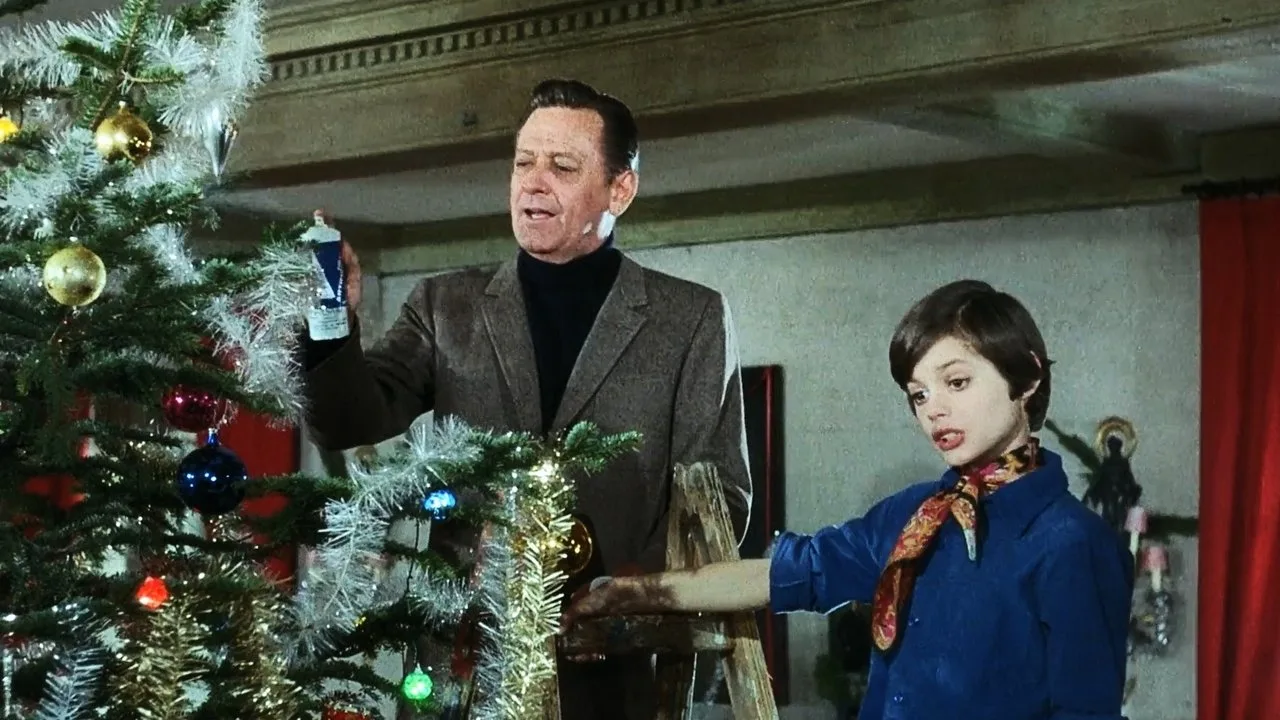
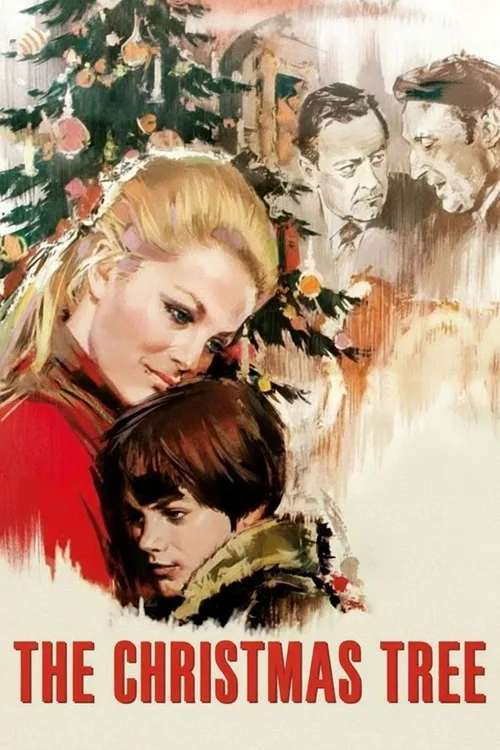
A story about a forming friendship between an elderly nun, Sister Anthony, and New York's Rockefeller Center's head landscape architect Richard Reilly, who wants to fell a tree she's been growing for decades and move it to New York for Christmas display.
 rating 2/10 User rating 7 votes 61%
 ❄ Christmas Connection
The Christmas Tree is set entirely during the Christmas season and centers on a magical pine tree that becomes a symbol of hope for a group of orphans. Christmas is not backdrop but the entire premise, with the tree, decorating, holiday cheer, and festive imagery present in virtually every scene. You cannot accidentally stumble into this film without knowing it is a Christmas special.
Our Review
There is a specific tier of badness that goes beyond mere incompetence and becomes something almost mythological. The Christmas Tree, a 1996 animated TV special directed by a company called Flamarosa, occupies that tier. It is not bad the way a rushed holiday cash-in is bad. It is bad the way a fever dream is bad, where the internal logic has collapsed and something uncanny has taken its place. People have been sharing clips of this special for years not to mock it, exactly, but because they genuinely cannot believe it exists.
The plot, such as it is, follows a group of orphans at a strict and joyless orphanage run by a cruel woman named Mrs. Mavilda. A magical pine tree provides the children with comfort and holiday spirit. Mavilda wants to cut down the tree. Good eventually triumphs. If that summary sounds straightforward, nothing about the actual viewing experience confirms it. The story lurches between scenes with no apparent connective tissue, characters disappear and reappear without explanation, and at least one subplot involving a dog seems to be missing several minutes of footage that would make it coherent.
The Animation That Launched a Thousand Screenshots
The animation in The Christmas Tree is not merely cheap. Cheap animation still moves. This special operates on a different principle entirely. Characters slide across backgrounds as though they are cardboard cutouts being pushed by an off-screen hand. Mouths open and close with a relationship to the actual dialogue that can only be described as aspirational. At several points, backgrounds repeat in ways that suggest the production ran out of assets and hoped no one would notice.
Facial expressions are the real attraction. The characters cycle through a small library of expressions that do not match the emotional content of any given scene. A child receiving terrible news may be drawn with a placid, faintly pleased look. Mrs. Mavilda delivers her villainous monologues with the affect of someone reading a grocery list. The tree itself, supposedly magical and beloved, is rendered with all the warmth of a clip-art file from 1994.
What makes this genuinely interesting from a production standpoint is that Flamarosa was an Italian studio producing content for international television distribution. The special was dubbed into English for the American market, and the dubbing session sounds like it was completed in a single afternoon by people who had not read the script in advance. Voice actors pause in strange places, rush through others, and occasionally seem to be performing a different scene from the one on screen.
Why "The Christmas Tree" Became a Bad Movie Legend
Bad media requires a discovery mechanism to become legendary. The Christmas Tree found its audience through early internet sharing, specifically through compilations of its most disorienting moments. The clip of Mrs. Mavilda announcing her evil intentions while the animation stutters around her has been watched by people who have never heard of the special and will never seek it out deliberately. That clip alone captures something genuinely hard to manufacture: the specific texture of a production where no one was watching.
It earned comparisons to the Rapsittie Street Kids specials, the 2002 animated disasters that similarly achieved a cult following by being technically incoherent. Both represent a category of holiday entertainment where the ambition of the project vastly exceeded the resources and, apparently, the quality control. The difference is that The Christmas Tree predates YouTube by nearly a decade, which means it was already circulating on early video sharing sites and forum posts before the platform that would cement its legend even existed.
The special runs approximately 60 minutes. That is a long time to sustain this level of wrongness, and the film mostly manages it. There are stretches of relative calm where the animation merely looks poor rather than actively disorienting. Then something happens, a character's proportions change between shots, or the sound design introduces a piece of music that belongs in a completely different genre of content, and the audience is reminded why they are watching.
Is It Worth Watching?
The honest answer is yes, under specific conditions. The Christmas Tree is not a film you watch for Christmas spirit, craft, storytelling, or any conventional reason to watch a holiday special. It is a film you watch to understand what complete production failure looks like when applied to a sincere subject. Whoever made this special presumably intended to create something children would enjoy and remember fondly. The gap between that intention and the result is the entire point.
Watched alone, it's baffling. Watched with a group of people who enjoy cataloguing the specific ways a piece of media can go wrong, it becomes genuinely entertaining. The running commentary writes itself. There is also something to be said for the fact that, unlike competent holiday specials that have been forgotten entirely, The Christmas Tree is still being watched in 2026 by people who weren't born when it aired. Longevity through infamy is still longevity.
Mrs. Mavilda, for what it's worth, remains one of the more memorable animated villains of the 1990s, purely because her scenes have no consistent internal logic. She is evil in the way a random number generator might produce evil: without pattern, without escalation, without the kind of coherent menace that makes a good antagonist. In one scene she threatens the tree. In the next she seems to have forgotten it exists. It is, in its own way, a bold creative choice.
Fun Facts
The special is also distributed under the title A Christmas Tree, which has caused significant confusion among viewers trying to locate it, since the title sounds generic enough to describe dozens of holiday specials.
Flamarosa was an Italian animation company that produced content for international TV distribution. The Christmas Tree was originally produced in Italian and then dubbed into English for the American broadcast market.
The special has been cited alongside the 2002 Rapsittie Street Kids: Believe in Santa as one of the worst animated Christmas specials ever produced, with both frequently appearing on "worst of" lists compiled by animation critics and bad-movie enthusiasts.
Despite its reputation, the full special is difficult to find through official channels, which has made bootleg uploads and fan archives its primary means of distribution for most of its post-broadcast life.
The dog character in the special, who plays a supporting role in the orphans' story, has several scenes that appear to be missing context from an earlier version of the script, leading viewers to theorize that significant footage was cut before broadcast.
The English voice cast for the special has never been officially documented, and no cast credits appear on screen, meaning the identities of the actors who performed the dubbed dialogue have remained unknown to fans attempting to research the production.
Clips from The Christmas Tree began circulating on early internet video platforms in the mid-2000s, years before YouTube made video sharing mainstream, suggesting the special had already developed a cult following among early internet users who sought out unusual media.
Cast