

Where’s your bitch?
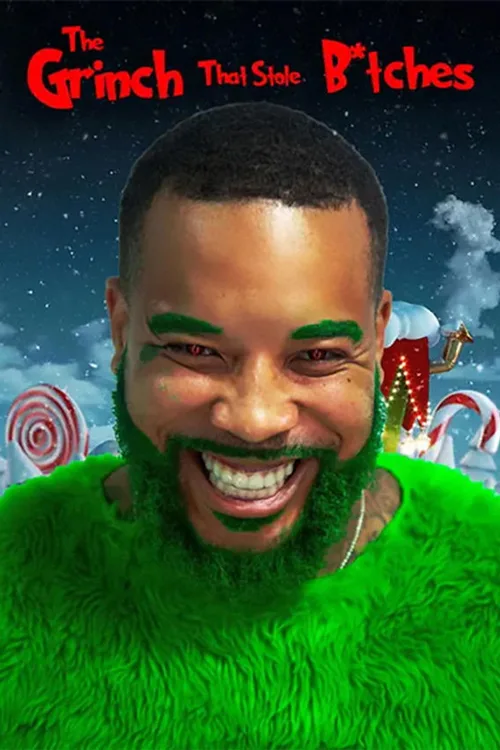
The Grinch That Stole B*tches (2024)
The Grinch has to settle the score with Santa, so he decides to take a different approach.
 rating 3/10 User rating 6 votes 55%
 ❄ Christmas Connection
The film is set entirely around Christmas, pits the Grinch against Santa Claus, and was released on December 21, 2024 to capitalize on the holiday season. Santa, Mrs. Claus, elves, and the revenge-on-Christmas plot are the entire engine of the story.
Where to Watch


Our Review
The Grinch That Stole B*tches is a real movie. It exists. It was released on December 21, 2024, shot on a reported budget of $55,000, and is currently streaming free on Tubi. These are facts. What you do with them is your own business.
Directed and co-written by Malik Marcell in his feature directorial debut, the film runs 68 minutes and wastes very little of that time on subtlety. The premise, stated plainly: the Grinch gets out of jail after serving 32 months. Santa set him up. The Grinch wants revenge. His chosen method is not destroying Christmas decorations or stealing presents but targeting Santa where it actually hurts, his women. The tagline is "Where's your bitch?" This is not a family film.
What The Grinch That Stole B*tches Actually Is
The movie belongs to a specific micro-genre that the internet has started calling "hood holiday" cinema, low-budget R-rated comedies that take a well-known holiday property and apply a very different cultural context to it. Think of it as the Asylum Films model but with a more specific audience in mind and considerably more rap music on the soundtrack.
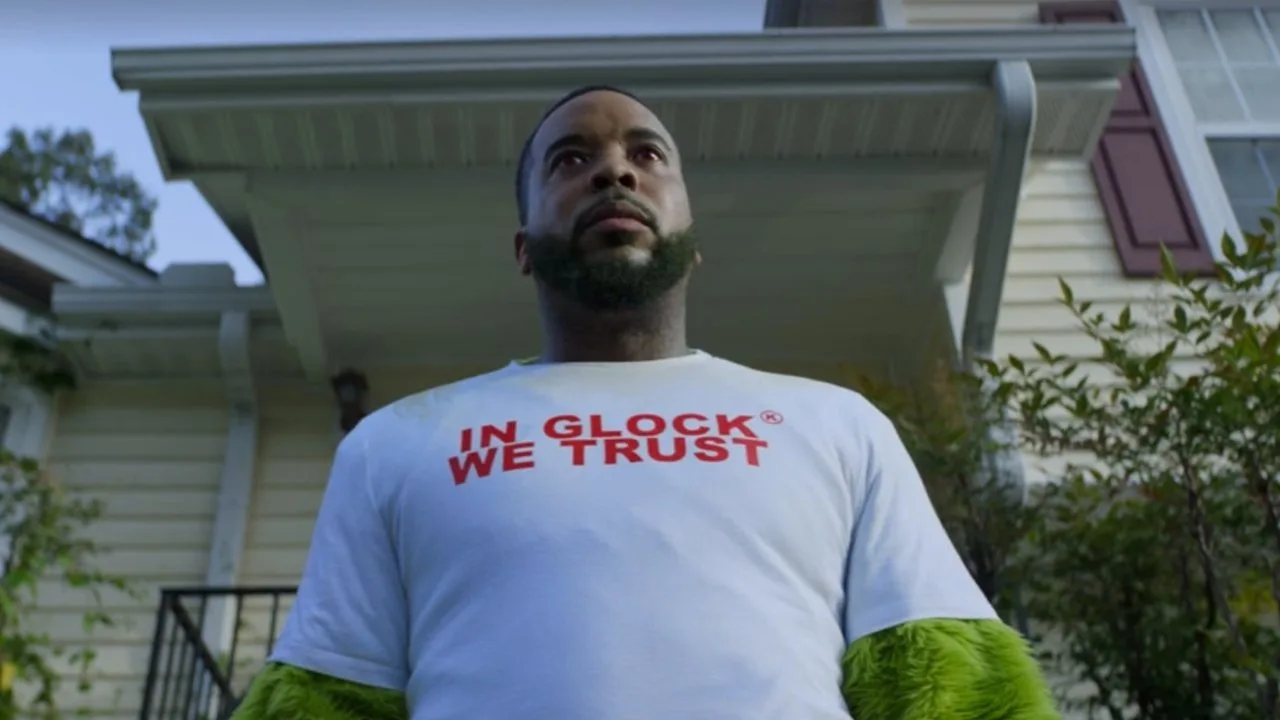
Otis "Moneybag Mafia" McIntosh plays the Grinch. He is not a green furry creature here. He is a man. A man who just did 32 months and wants Santa's girl. The costume design commits more than you'd expect for the budget: the Grinch look is functional and recognizable. Navv Greene, who appeared in Coming 2 America (2021), plays Martin Luther Santa, which is a name that demands respect simply for existing. Christianne "Chrissy Cindy" Jones plays Mrs. Claus, who becomes the center of the Grinch's revenge scheme.
The script, co-written by Marcell and Urick Hopkins, understands what it is. It does not reach for emotional depth or redemptive arcs. The Grinch came out of jail angry and he stays angry until the plot requires otherwise. The humor is broad and relies heavily on the absurdity of the premise rather than on crafted jokes, which is both its main limitation and its main defense.
Is It Good? No. Is It Watchable? Surprisingly, Sort Of.
The acting ranges from serviceable to genuinely rough. The sound design has that particular low-budget quality where indoor scenes feel slightly echo-y and outdoor scenes feel slightly underwater. The cinematography is functional. These are the known deficits of a $55,000 production, and pointing them out feels like complaining that a food truck lacks a Michelin star.
What works better than expected is the movie's commitment to its own absurd logic. Marcell does not try to make a prestige film or a polished studio parody. He made the movie he had the budget to make, on a specific premise, for a specific audience, and delivered that product in under 70 minutes. There is something almost admirable about the clarity of that goal.
The soundtrack is the film's most consistent asset. Multiple reviewers who otherwise had little positive to say singled out the music, which draws on hip-hop and R&B and fits the film's tone better than most of its other elements do. For a $55,000 movie, having a good soundtrack is not nothing.
The Grinch Myth Remixed
The original Grinch, as created by Dr. Seuss in 1957, is a story about a character who hates Christmas because he has been excluded from its warmth, and who is eventually brought back in by the very community that rejected him. It is a story about belonging. Marcell's version replaces that emotional engine with a street-level grievance: the Grinch was set up, he did the time, now he wants payback. That is a coherent premise for a certain kind of crime comedy. The Christmas setting is essentially a backdrop and a costume rack rather than a thematic concern.
The film has no interest in what Christmas means or in the mythology of Santa Claus beyond using Santa as an antagonist. Martin Luther Santa is just a rival. The holiday is just the arena. This is not a critique, just an observation about what kind of Christmas movie this is. It sits closer to "movie that happens to be set at Christmas" than to genuine holiday cinema.
It scored a 3.6 out of 10 on IMDb from a small number of voters, which is roughly where you'd expect it to land. The people who watched it expecting something bad and finding it entertainingly bad rated it higher. The people who wanted a competent film rated it lower. Both responses are correct.
Malik Marcell has credits as producer, cinematographer, director, and editor across multiple projects. His earlier work includes TGFU (2023) and Sanguis. He is clearly learning his craft in public, which takes a certain kind of confidence. The Grinch That Stole B*tches is what happens when that confidence meets a $55,000 budget and a very specific concept, and the result is the kind of movie that will find its audience on free streaming platforms at 1am in December, which is exactly where it belongs.
Fun Facts
The film's reported production budget was $55,000, placing it firmly in micro-budget territory. The entire Running Man series, by comparison, cost Universal roughly $27 million per episode in the 1980s.
Malik Marcell served as director, co-writer, and producer on the film, his first feature-length directing credit, after previously working in production and cinematography on smaller projects including TGFU (2023).
The film was released on December 21, 2024, just four days before Christmas, and was made available for free on Tubi, which has become a significant platform for micro-budget genre films targeting specific niche audiences.
Navv Greene, who plays Martin Luther Santa, appeared in the Eddie Murphy sequel Coming 2 America (2021), giving the film its most recognizable credit outside of Moneybag Mafia's fanbase.
The film's tagline, "Where's your bitch?", is listed in its official marketing materials on TMDB, which does not appear to have had any objection to publishing it alongside the poster art.
Dr. Seuss published the original "How the Grinch Stole Christmas!" on October 12, 1957. In the 67 years since, the character has been adapted into a beloved 1966 TV special, a 2000 Jim Carrey film, a 2018 animated feature, and now a 2024 R-rated revenge comedy where the Grinch steals women instead of presents.
The film's co-writer Urick Hopkins also appears in the cast, a common arrangement in low-budget productions where every person on set fills multiple roles to keep costs down.
Cast