
The House Without a Christmas Tree (1972)
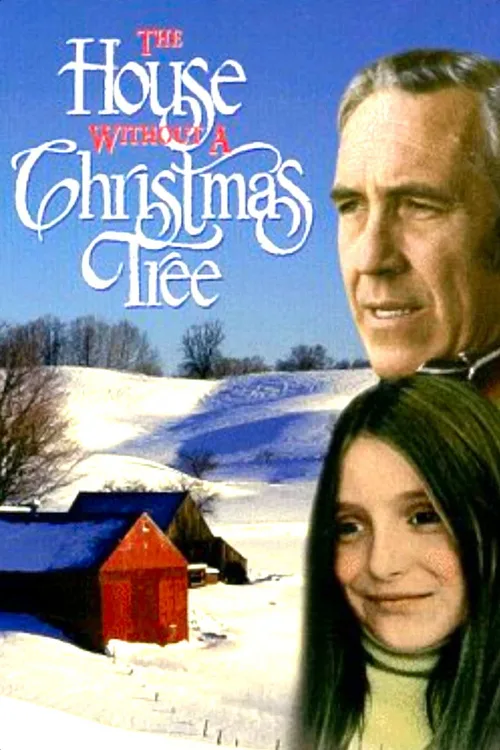
A young girl named Addie, living in Nebraska in 1946 wants nothing more for the holidays than a Christmas tree, but her widowed father, is bitter and refuses due to events from the family's past.
 rating 8/10 User rating 8 votes 62%
 ❄ Christmas Connection
The entire story pivots on whether a Christmas tree will or won't appear in a Nebraska farmhouse during the holiday season of 1946. The tree itself is not decoration but a symbol of grief, stubbornness, and the slow possibility of healing. Christmas is not backdrop here; it is the engine of every conflict in the story.
Our Review
Most Christmas movies want you to feel warm before the credits finish rolling. The House Without a Christmas Tree makes you wait, and the waiting is the point. This 1972 CBS television film, directed by Paul Bogart and adapted from Gail Rock's autobiographical novel, runs 90 minutes and earns every uncomfortable minute of them.
The setup is simple. It is Christmas season, 1946, in a small Nebraska town. Ten-year-old Addie Mills wants a Christmas tree more than anything. Her father, James Mills, played by Jason Robards, will not have one in the house. He lost his wife, Addie's mother, around the time of Christmas years earlier, and the tree has become tangled up in his grief in a way he cannot explain and will not discuss. Addie presses. He refuses. Their battle of wills is the entire movie, and it is quietly devastating.
Jason Robards and What Television Could Do in 1972
Robards won two Academy Awards for his film work in the late 1970s, but his performance as James Mills in this TV movie deserves to be part of any serious discussion of his career. He plays a man who has collapsed inward. He is not cruel to Addie, not exactly. He feeds her, keeps the house, goes to work. But he has gone still in a way that a child cannot understand and an adult recognizes immediately as a kind of living avoidance.
There is a scene where Addie wins a Christmas tree at school, lugs it home with help, and sets it up while her father is out. His reaction when he comes home is not a rage. It is something quieter and worse. Robards plays it in the space between anger and collapse, and the scene lands like a weight dropped from a height.
Lisa Lucas plays Addie, and she does not play the role as a precocious TV-movie child. Addie is stubborn and sometimes selfish and consistently wrong about what her father needs, because she is ten. Lucas finds the real frustration of a kid who has to live inside an adult's unprocessed grief without being given any tools to understand it.
Gail Rock's Source Material and Why It Holds Up
Rock based the story on her own childhood in Nebraska, and the autobiographical roots show in the texture. The town feels accurate rather than nostalgic. The post-war period is not romanticized. The adults in Addie's life are tired people doing their best, and "their best" is frequently inadequate.
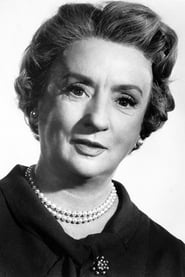
Addie's grandmother, played by Mildred Natwick, is the most functional adult in the story, but she is also the one who sees most clearly how stuck her son James has become. Rock's script does not give the grandmother a redemption speech. She says what she can, and it either reaches James or it doesn't. That restraint is unusual for holiday television, in 1972 or in any other year.
The novel appeared in 1974, two years after the film, which inverts the usual order. Rock wrote the screenplay first, then expanded it into prose. The story she was telling was personal enough that it took more than one form to contain it.
A Christmas Movie That Respects the Difficulty of Christmas
There is a reason the film won a Peabody Award in 1973. The Peabody is not given for warm feelings. It is given for work that demonstrates broadcast journalism or entertainment at a level of distinction. The judges saw something in this movie beyond its modest production and its TV-movie format, which at the time carried the stigma it has mostly shed since.
The difficulty the film takes seriously is this: Christmas amplifies whatever is already in your house. If your house contains grief, Christmas makes the grief louder. James Mills is not wrong that a tree will hurt him. He is wrong to think that keeping the tree out protects Addie from anything. The movie understands both positions simultaneously, which is more than most holiday films manage.
The resolution, when it comes, is not triumphant. It is careful. The film knows that a man who has been frozen for years does not thaw completely in one December. What Addie gets is a gesture, not a transformation. Rock knew, because she lived it, that the gesture was what mattered.
Fun Facts
The film aired on CBS on December 17, 1972, and won a Peabody Award in 1973, one of the few TV movies of its era to receive that distinction, which is typically reserved for documentary and journalism work.
Gail Rock wrote the screenplay before the novel. The book version of The House Without a Christmas Tree was published in 1974, two years after the film that brought the story to national attention.
The success of this movie led CBS to commission three sequels featuring the same characters: The Thanksgiving Treasure (1973), The Easter Promise (1975), and Addie and the King of Hearts (1976), all written by Rock and all starring Lisa Lucas and Jason Robards.
Lisa Lucas, who played Addie, was 14 at the time of filming despite playing a 10-year-old. She later earned an Academy Award nomination for Unmarried Woman in 1979 while still in her teens.
Director Paul Bogart directed over 300 television episodes across his career, including significant work on All in the Family and The Defenders. He was known for working efficiently with dramatic material on television budgets, which this film required.
Mildred Natwick, who plays Addie's grandmother, had been nominated for an Academy Award for Barefoot in the Park (1967), making the cast considerably more distinguished than a typical 1972 CBS holiday movie.
The story is set in Nebraska specifically because Gail Rock grew up in Strohsburg, Nebraska. The post-war small-town setting is not generic period decoration; Rock drew from specific memories of that place and time.
Cast