
The Snow Queen (1995)
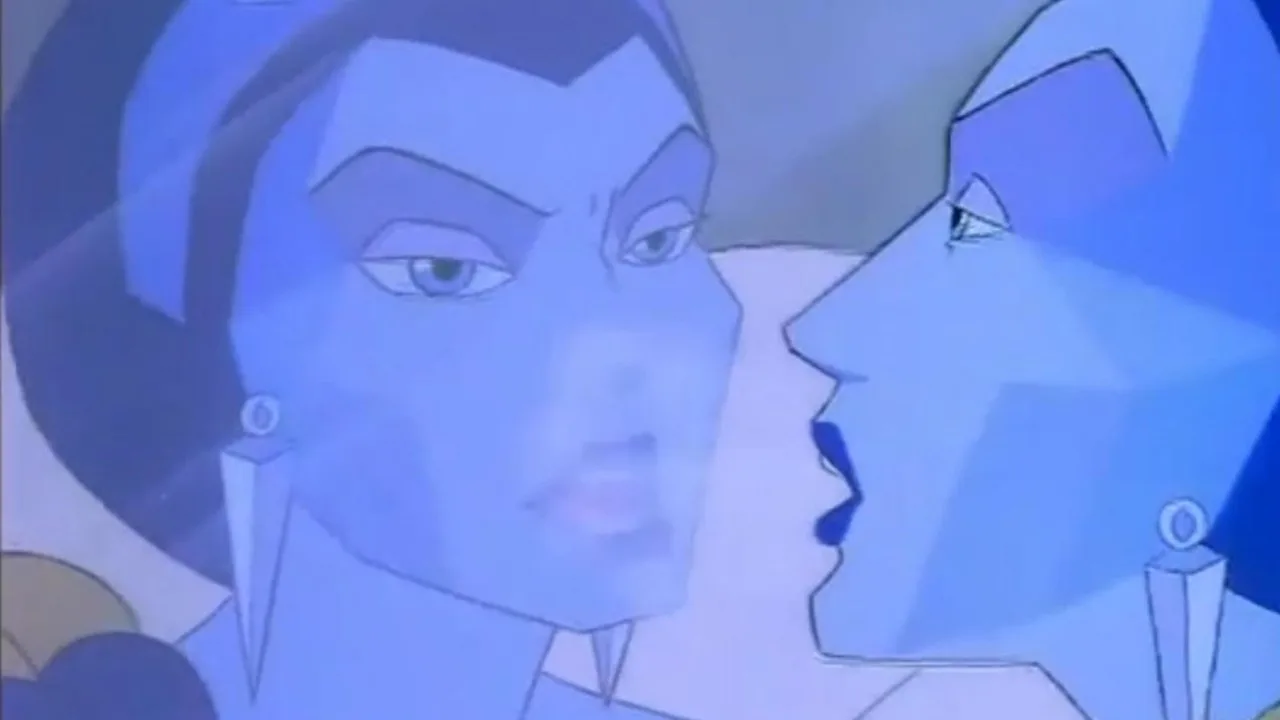
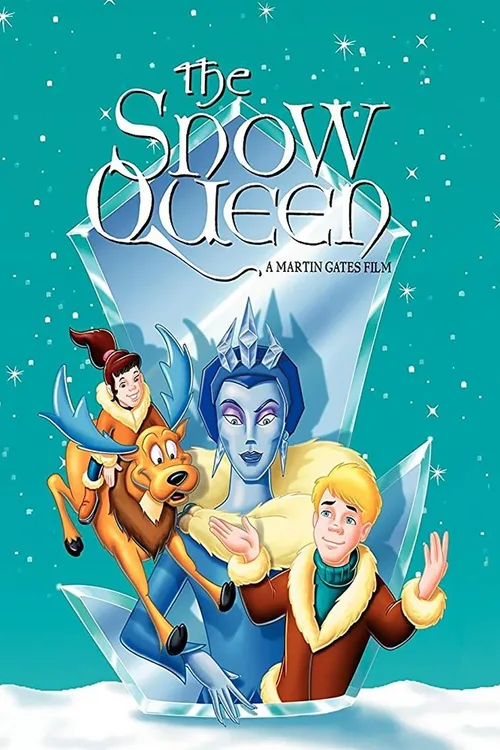
Far away, in her vast ice palace, the Snow Queen plots to rule the world by deflecting all the sun's warmth away from Earth so that it freezes over. But her mirror breaks, and on her mission to find all the missing pieces, she kidnaps Tom, who has part of the mirror in his body. Can his sister Ellie save Tom, and stop the evil Queen from achieving global dominance?
 rating 5/10 User rating 23 votes 63%
 ❄ Christmas Connection
"The Snow Queen" is not a Christmas story in origin, but Hans Christian Andersen published it on December 21, 1844, and its themes of a world frozen by a cold, remote power have made it a fixture of winter holiday viewing for generations. The 1995 film leans into its seasonal atmosphere with ice palaces, snow-swept wastelands, and a villain who literally wants to lock the world in permanent winter. It turns up in Christmas VHS collections and holiday streaming libraries for exactly that reason.
Our Review
Hans Christian Andersen published "The Snow Queen" on December 21, 1844, and it remains the longest fairy tale he ever wrote. It is also one of the darkest: a story about a devil's mirror that shatters and drives splinters into the eyes and hearts of those it infects, making them cold and cruel. Not exactly the cozy festive territory you might expect. Martin Gates tackled it in 1995 with a strong cast of British voice actors and production that spent four years stuck in development before finally reaching VHS shelves. The result is uneven, sometimes genuinely good, and buried under far more troll comedy than any fairy tale needs.
What the Snow Queen 1995 Film Actually Gets Right
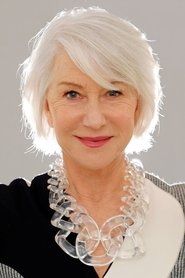
Helen Mirren is the reason to watch this. She plays the Snow Queen as a figure of cold, absolute certainty, which is exactly what the role demands. She is not cartoonishly evil. She is simply indifferent to warmth in every sense, and Mirren sells that quality without chewing the scenery. For a direct-to-video animated film aimed at children, it is a performance with real weight.
The film is also genuinely faithful to Andersen's structure in ways that later adaptations (looking at you, 2013) are not. The mirror shard that corrupts young Tom's eye and heart, the grandmother's prayers, the flower garden that steals Ellie's memories, the Robber girl, the reindeer guide north: all present, all recognizable. Gates and co-writer Sue Radley changed the names from Gerda and Kay to Ellie and Tom, which softens nothing about the story but does make it feel slightly more generically British. The bones of Andersen's seven-part epic survive the adaptation in reasonable shape.
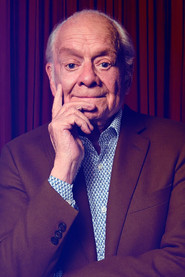
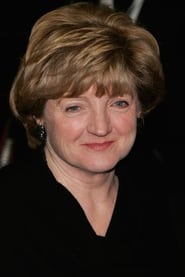
David Jason as Eric the troll leader, Rik Mayall as the Robber King, and Imelda Staunton in multiple supporting roles round out a cast that would be impressive for a theatrical release. Julia McKenzie plays three separate characters, including the well-meaning witch who traps Ellie in her garden. These performances are doing real work against animation that the 1995 trade press generously described as limited.
The Slapstick Problem
Here is where things fall apart. The bumbling troll servants who work for the Snow Queen are given enormous amounts of screen time, and almost all of it involves physical comedy that belongs in a Saturday morning cartoon from 1987. They fall down. They hit each other. They misunderstand simple instructions in ways that require lengthy sequences to resolve. Every time the film builds genuine tension around Ellie's quest, a troll gag interrupts it.
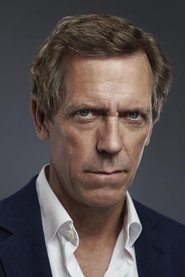
Hugh Laurie voices Peeps, a talking sparrow who accompanies Ellie as comic relief. This is not necessarily a bad idea: Andersen's original has its share of oddly humorous asides. But Peeps is relentlessly sarcastic in a way that undercuts the emotional stakes whenever they threaten to become real. The problem is not that the film has humor. The problem is that the humor is blunt and repetitive while the genuine emotional content is handled with far more restraint.
The animation quality itself is functional without being distinctive. Characters move with limited fluency and backgrounds, particularly the Snow Queen's palace, are visually striking in concept but flat in execution. For a production that began in 1991 and took four years to complete, partially due to difficulties with Philippine animation facilities, the final product looks like it cost less than its troubled production history might suggest.
The Christmas Question
Is this a Christmas movie? Not in any traditional sense. There are no presents, no carols, no nativity. What it has is winter as existential threat: a world in danger of becoming permanently cold and still, saved only by a child's persistence and love. Andersen first told this story to children on the winter solstice, and that timing was deliberate. The Snow Queen represents something older than Christmas as a holiday, the human fear of permanent darkness and cold, which is the same impulse that drives every winter fire and every year-end celebration.
In practical terms, this film lived on Christmas VHS collections throughout the late 1990s and early 2000s in the UK and elsewhere, programmed by parents who needed 78 minutes of something seasonal that wasn't Die Hard. That context shaped a generation's relationship with it. The film feels like a Christmas movie because many people first saw it at Christmas, which is not the same thing but is also not nothing.
Before Frozen Changed Everything
It is impossible to discuss this film in 2026 without acknowledging what Disney did with the same source material in 2013. "Frozen" kept almost nothing from Andersen except the ice palace and the vague shape of a relationship between two young women. It was a massive commercial success that retroactively redefined what "The Snow Queen" means in popular culture. The 1995 film now functions as a kind of archaeological artifact: here is what a reasonably faithful adaptation looked like before a billion-dollar franchise decided the story needed to be something else entirely.
For families who want their children to actually encounter Andersen's original story, the 1995 film, troll slapstick and all, does a more honest job than anything that came after it.
Fun Facts
Hans Christian Andersen first published "The Snow Queen" on December 21, 1844, the winter solstice, as part of his collection "New Fairy Tales." It is the longest fairy tale he ever wrote, structured across seven separate chapters he called "stories."
Helen Mirren agreed to voice the Snow Queen before she had won her Oscar for "The Queen" (2006) or her BAFTA for "Prime Suspect." In 1995 she was still best known to British audiences as a television actress, making this a less obvious casting choice than it might seem in retrospect.
Production on the film began in 1991 with an original plan to release in 1993 as a 90-minute film. Legal and logistical problems at the Philippine animation facility used for the project pushed the release back by two years and trimmed the runtime to 78 minutes.
The original Andersen story names the villain's mirror as a creation of a devil (described as a particularly bad goblin or troll), whose plan to carry the mirror up to mock heaven causes it to shatter. The 1995 film simplified this backstory considerably, dropping the theological framing entirely.
Rik Mayall, who voiced the Robber King, was at the peak of his fame in British comedy in 1995, having co-created "The Young Ones" in 1982 and starred in "Bottom" from 1991. His involvement gave the film an unusual cult credibility in the UK.
A sequel, "The Snow Queen's Revenge," was produced and released in 1996, bringing back most of the cast including Helen Mirren, despite the Snow Queen's apparent defeat at the end of the first film. Both films were released together as a DVD double pack in 2005.
The film was distributed on VHS by First Independent Films in the UK and Warner Bros. in other markets. Despite its modest critical reception (IMDb score of 5.8 from under 700 ratings as of 2025), it has retained a dedicated audience on streaming platforms, partly because faithful Andersen adaptations are rare.
Cast