
Star-struck at Christmas.
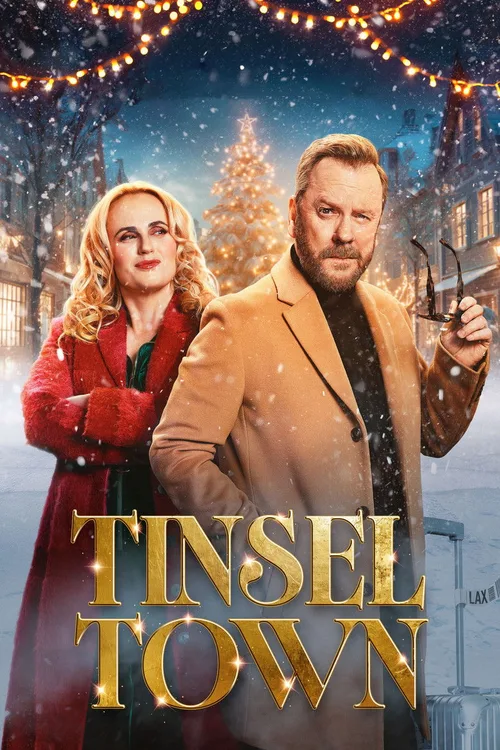
Tinsel Town (2025)
A washed-up Hollywood action hero is tricked into starring in a small English town’s chaotic Christmas pantomime, where a straight-talking dance instructor and his estranged daughter just might help him rediscover the magic of the season.
 rating 6/10 User rating 33 votes 59%
 ❄ Christmas Connection
Tinsel Town is built entirely around a Christmas pantomime production of Cinderella staged in a Yorkshire village. The setting, the plot, the arc of redemption, and the finale all hinge on the panto as a Christmas tradition. There is no version of this story that exists outside of December.
Where to Watch


Our Review
The title is a joke. Hollywood is Tinsel Town. The movie is about a Hollywood actor fleeing Tinsel Town for actual tinsel in a Yorkshire village. It is the kind of premise that collapses under inspection unless someone credible is standing in the middle of it. Kiefer Sutherland is more than credible. He is the reason this film works as well as it does, and he is not quite enough to make it work as well as it should.
What Tinsel Town Is Actually About
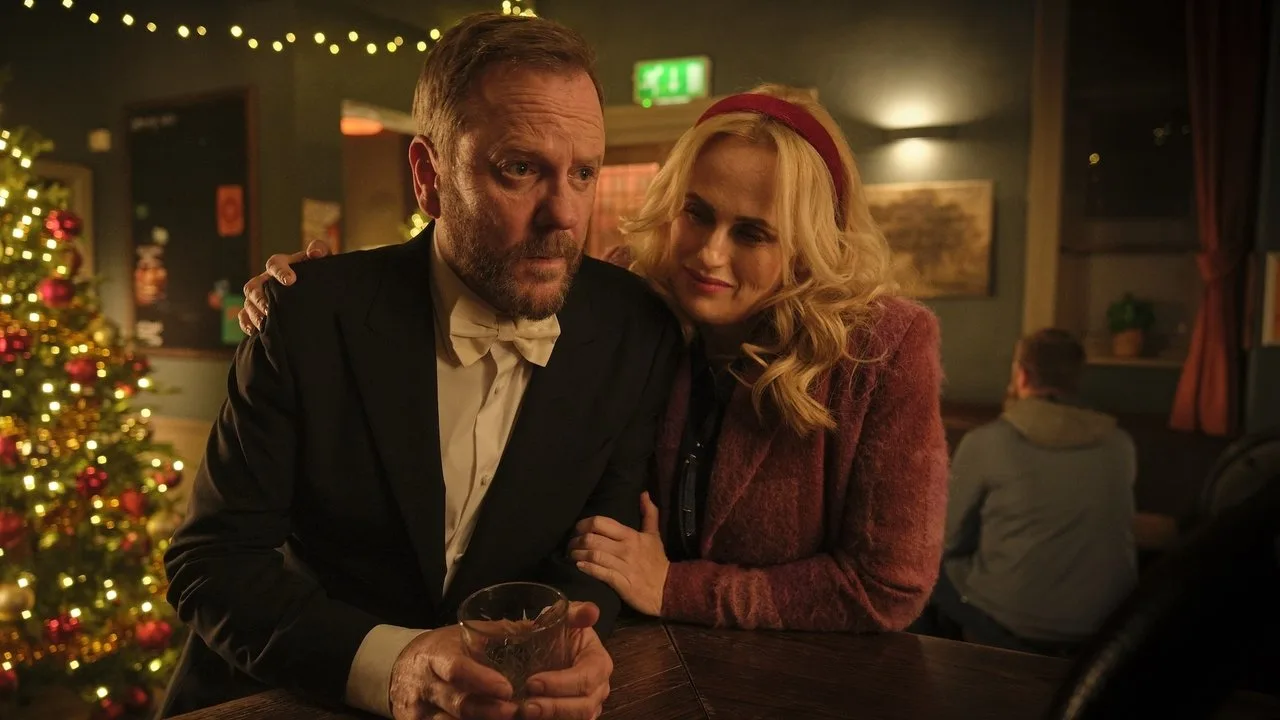
Bradley Apollo McDonald, former action hero, current liability, has been typecast out of Hollywood. His agent pitches him a theatre gig in England. Bradley assumes this means the West End. It means Stoneford, a fictional Yorkshire village, and a panto production of Cinderella in which he will play Buttons. Bradley's horror is earned. So is his eventual investment in the show.
The film sets up a familiar arc: reluctant outsider becomes the heart of the community. What makes it tolerable is that Chris Foggin, directing from a script by Kirstie Swain, does not lean on the formula as a crutch. The Stoneford production is genuinely chaotic. The panto tradition itself is treated with some affection rather than condescension. Bradley does not simply "discover the magic of Christmas" in any generic sense. He discovers something more specific: that performing for 200 people in a cold Yorkshire theatre requires real skill, and that he has been coasting on spectacle for twenty years without noticing.
Rebel Wilson plays Jill, the choreographer, whose subplot involves a contemptible ex-husband and a custody situation that the film does not have the time or depth to resolve properly. Wilson is sharp and funny in the role and deserves better material. The romantic thread between her and Bradley is the least convincing element in the film, not because of chemistry problems but because the script rushes it.
The Cast Around the Leads
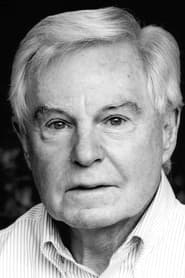
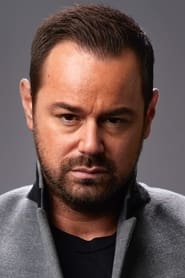
Tinsel Town assembled a remarkable British ensemble and then spread it too thin. Derek Jacobi plays Albert, a retired panto veteran who serves as stage door manager, and his brief emotional monologue about loss is the best ninety seconds in the movie. Jacobi does not need much screen time to anchor a scene. Danny Dyer, Meera Syal, Katherine Ryan, Jason Manford, Mawaan Rizwan, and Alice Eve all appear in various supporting capacities. The result is a film that feels constantly on the verge of interesting ideas it cannot commit to.
The romantic subplot between the panto's Prince Charming and the actress playing Cinderella is sweet, functional, and entirely expendable. It exists to fill out the village-cast ensemble. It does not need to.
Lucien Laviscount and Alice Eve show up in a Hollywood flashback framing that the film keeps returning to without building anywhere meaningful. These scenes are the weakest structural decision in the script.
What Sutherland Actually Does Here
Sutherland is 58, and there is a quality to his performance in Tinsel Town that feels like a working actor making deliberate choices rather than trading on a famous face. Bradley is not Jack Bauer in a Christmas jumper. He is slower, quieter, genuinely funny in a dry self-deprecating register that the role requires. The cane dance scene, filmed in half a morning on a Yorkshire stage, is the kind of moment that should not work and absolutely does. Sutherland had apparently rehearsed it extensively before shooting began.
The Katy Perry song sequence is a bigger, louder set piece. It lands. It is not subtle. In the context of a Christmas panto, subtlety would be the wrong call.
The Yorkshire Problem (Which Is Not Actually a Problem)
Foggin and his crew shot Tinsel Town in January and February 2025 across Knaresborough, Harrogate, Wetherby, and Harewood. The director was working with 25 days and Yorkshire winter light, which in February means roughly seven usable hours per day. The constraints show in the pacing. Several scenes feel compressed. A few transitions feel abrupt. None of this is fatal, but it gives the film an occasionally scrappy quality.
What the Yorkshire locations give back is texture. The "Welcome to Stoneford" sign is framed on Knaresborough's High Bridge. The exterior theatre is Wetherby Town Hall. Knaresborough Castle's bowling green becomes the Christmas fair. The film earns its visual warmth honestly rather than constructing it in a studio.
The Honest Assessment of a Mixed Picture
Tinsel Town has a 5.3 on IMDb and 47 percent on Rotten Tomatoes at time of writing. Both numbers are roughly correct and both are slightly unfair. The film is better than its IMDb score suggests as a seasonal watch. It is not better than its critical reception suggests as a piece of storytelling craft.
The problem is not that it is a Christmas panto movie. The problem is that it has four subplots when it needs two. Jill's ex-husband, the young panto romance, the Hollywood flashbacks, and Bradley's estranged daughter: all of these are present, none of them are fully developed, and only the daughter thread has genuine emotional payoff. Trim the ex-husband and the Hollywood sequences and you have a tighter film that trusts its central situation more.
As a Christmas movie, the vibes are unimpeachable. This is December all the way down: panto, mince pies presumably, Yorkshire, Derek Jacobi in a theatre, Kiefer Sutherland learning to enjoy himself. Put it on after dinner when no one wants a two-hour drama. It will do exactly what it sets out to do.
The best image in the film is Sutherland standing in the wings of the Stoneford theatre on opening night, watching the audience fill in, looking like a man remembering why he became an actor. Foggin holds on it for a beat too long, which is a directorial instinct that is entirely correct.
Fun Facts
Principal photography for Tinsel Town lasted only 25 days, shot in January and February 2025 across Yorkshire, England, when daylight in the north of England runs to roughly seven usable hours per day in midwinter.
The film was shot in five Yorkshire locations: Knaresborough, Harrogate, Wetherby, Harewood, and one short scene in London. The "Welcome to Stoneford" sign was filmed on Knaresborough's High Bridge.
Kiefer Sutherland's cane dance sequence was filmed in half a morning, but Sutherland had rehearsed the choreography extensively before the shoot began. He also performed his own singing throughout the film.
The supporting cast includes Derek Jacobi, Danny Dyer, Meera Syal, Katherine Ryan, Jason Manford, Mawaan Rizwan, Alice Eve, James Lance, and Lucien Laviscount. The full ensemble was confirmed by February 2025, just weeks before filming wrapped.
Tinsel Town was a Sky Original production, premiering in US theaters and on VOD on 28 November 2025, then on Sky Cinema in the United Kingdom on 5 December 2025, placing it squarely in the peak Christmas viewing window.
Director Chris Foggin previously directed Fisherman's Friends (2019), another film built around an unlikely performer finding community in a small English town. Tinsel Town is the second time he has used that template and the second time it has worked.
The UK pantomime tradition that the film is built around dates back to 18th-century theatrical forms combining commedia dell'arte with British music hall. Modern panto generates an estimated 2.5 million audience members per year in the UK, making it one of the few genuinely thriving live theatre traditions in the country.
Cast