

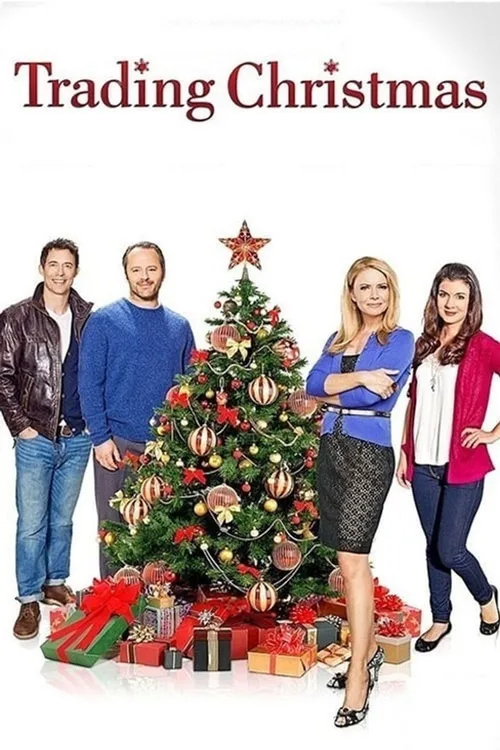
Trading Christmas (2011)
Emily misses her daughter Heather, who is attending college in Boston. Since her father died, Heather is sensitive to her mom’s dependence on long-standing holiday traditions. This Christmas, Heather has planned a trip to Phoenix with her boyfriend, but tells her mother she is staying on campus to study. After Emily arranges a house-swap with Charles, an English professor from Boston who wants Washington State’s solitude in order to finish his novel, Emily hops on a flight to Boston to surprise Heather for Christmas. Unaware of the house swap, Emily’s best friend, Faith walks in on Charles at Emily’s house and in Boston, Ray, Charles’ brother responds to a 911 call only to find Emily at Charles’ condo. Will Christmas travel calamities lead to cross-country romances? Or have there been one too many surprises already?
 rating 6/10 User rating 36 votes 66%
 ❄ Christmas Connection
Trading Christmas is built entirely around the holiday season, with both storylines revolving around Christmas plans, family expectations, and small-town holiday traditions. The home-swap premise exists specifically because the characters want different Christmas experiences, making the holiday inseparable from the plot.
Where to Watch


Our Review
Hallmark has adapted Debbie Macomber's novels so many times that the author has essentially become a one-woman content pipeline for the network. Trading Christmas, a 2011 TV movie based on Macomber's 2003 novel Trading Christmas (originally published as When Christmas Comes), is one of the quieter entries in that pipeline. It doesn't have a big twist. It doesn't have a royal disguise or an amnesia subplot. What it has is Tom Cavanagh and Faith Ford being more charming than any made-for-TV Christmas movie strictly requires.
What the Trading Christmas Movie Is About
The premise is simple. Emily Springer (Faith Ford), a recently empty-nested mother in the small town of Leavenworth, Washington, arranges a home swap with a professor named Charles Brewster (Tom Cavanagh) who lives in Boston. Emily wants a sophisticated city Christmas with museums and theater. Charles wants solitude and silence to work on his book.
The complication arrives immediately. Emily's college-age daughter Heather (Gabrielle Miller) decides to surprise her mother by coming home to Leavenworth for Christmas, only to find a bewildered stranger living in their house. Meanwhile, Charles's brother Ray (Gil Bellows) shows up in Boston expecting to stay with Charles, and finds Emily instead.
What follows is two parallel romantic comedies running on the same fuel: mismatched people stuck together during the holidays, slowly discovering they actually like each other. It's a structure Hallmark has used hundreds of times since, but in 2011 it still had some freshness to it.
The Trading Christmas Cast Makes It Work
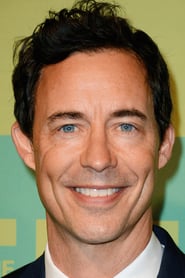
Tom Cavanagh is the reason to watch this movie. Best known at the time for his run on Ed and later beloved as Harrison Wells on The Flash, Cavanagh plays Charles Brewster as a socially awkward academic who is genuinely uncomfortable around people. He doesn't play the grumpy intellectual as a cliche. There's real warmth underneath his discomfort, and when Heather's presence starts to thaw him out, the change feels earned rather than scripted.
Faith Ford, who spent nine seasons on Murphy Brown and five on Hope & Faith, brings a naturalistic energy to Emily. She's a woman at a crossroads: her daughter has left home, her life feels smaller than it should, and she's made a slightly impulsive decision to shake things up. Ford plays this without melodrama. Emily is not sad. She's restless. That distinction matters.
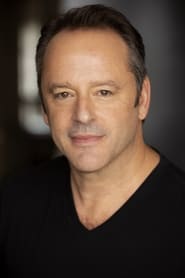
Gil Bellows as Ray is the most conventional of the four leads, the charming brother with an easy smile. But he and Ford have good chemistry, and the Boston storyline benefits from being lower-stakes. Nobody is going to mistake this for a prestige drama, but the actors keep it grounded enough that you believe these people might actually exist.
Gabrielle Miller rounds out the quartet as Heather, and she does solid work with a role that mainly requires her to be initially suspicious and gradually charmed. The movie is smart enough to keep the Heather-Charles dynamic ambiguous for a while. You're not sure if it's heading toward romance or something more familial, and that uncertainty makes their scenes together more interesting than the script probably deserves.
Debbie Macomber's Trading Christmas: Book to Screen
Macomber originally published the source novel in 2003 under the title When Christmas Comes, later reissued as Trading Christmas to match the film. The book is a lightweight romantic comedy that Macomber wrote as a standalone holiday story, separate from her longer series like the Cedar Cove books.
The adaptation stays close to the novel's structure. Both use the parallel home-swap plotlines, both pair up the same characters, and both land on the same resolution. Where the movie diverges is in the setting. Macomber's Leavenworth is treated as a generic small town, but the film leans into the real Leavenworth, Washington, a Bavarian-themed village that looks like it was designed specifically for Christmas movie exteriors. Snow-covered alpine storefronts, strings of lights, the whole catalog. It's almost unfairly photogenic.
Is Hallmark's Trading Christmas Worth Watching
Among Hallmark's enormous catalog of Christmas movies, Trading Christmas sits comfortably in the upper tier. It doesn't reinvent anything, and director Michael Scott (not that one) keeps the pacing steady without ever pushing for more than the material can support. The two-hour runtime, standard for Hallmark's original movies, does feel padded in places. A few scenes of characters staring out windows at snowfall could have been trimmed.
But the central performances are better than the average Hallmark offering. Cavanagh in particular gives a performance that would work in a theatrical romantic comedy. He has comic timing that most TV movie scripts don't know how to use, and here the script gives him just enough room to be funny without mugging.
The movie also avoids Hallmark's worst habit: the fake conflict. There's no contrived misunderstanding that could be resolved with a single conversation. When complications arise, they come from real human awkwardness, from people who didn't plan to spend Christmas with strangers and aren't sure how to navigate the situation. That grounding makes the inevitable happy endings feel more satisfying.
If you're specifically looking for a Hallmark Christmas movie that treats its characters like adults and doesn't rely on a gimmick more complicated than a house swap, Trading Christmas delivers. The bar is modest. The movie clears it with enough room to spare that you might find yourself genuinely smiling at the end, which is all any of us are really asking for in late December.
Fun Facts
The source novel was originally published in 2003 as When Christmas Comes before being reissued under the title Trading Christmas to align with the Hallmark film adaptation.
Tom Cavanagh, who plays Charles Brewster, had previously starred in the critically acclaimed NBC series Ed (2000-2004) and would later become a fan favorite as Harrison Wells on The Flash starting in 2014.
The fictional version of Leavenworth, Washington, used in the film is based on a real town that remodeled itself as a Bavarian-themed village in the 1960s to attract tourism after the local lumber industry declined.
Faith Ford spent nine seasons as Corky Sherwood on Murphy Brown (1988-1998), earning three Emmy nominations, before transitioning primarily to television movie roles in the 2000s.
Debbie Macomber has had more than a dozen of her novels adapted into Hallmark movies and series, including the long-running Cedar Cove television series (2013-2015), making her one of the most-adapted living authors on the network.
Gil Bellows, who plays Ray Brewster, is best known for his role as Tommy Williams in The Shawshank Redemption (1994) and as Billy Thomas on the series Ally McBeal.
Leavenworth, Washington, hosts a real Christmas lighting festival every December that draws over a million visitors, making it one of the most popular holiday destinations in the Pacific Northwest.
Cast