
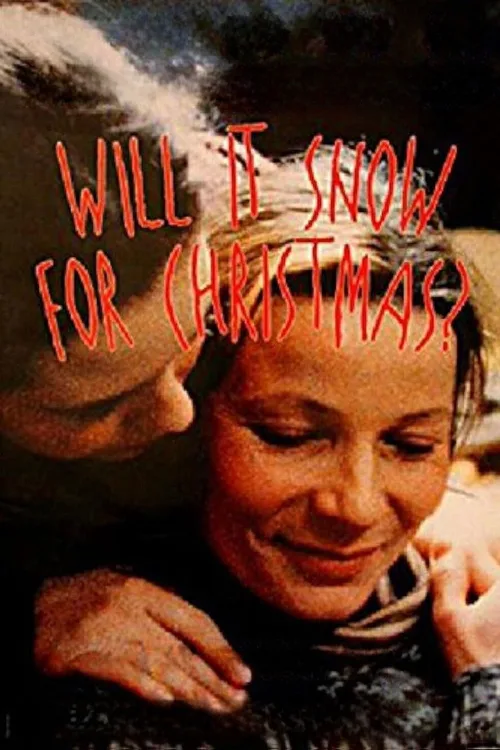
Will It Snow for Christmas? (1996)
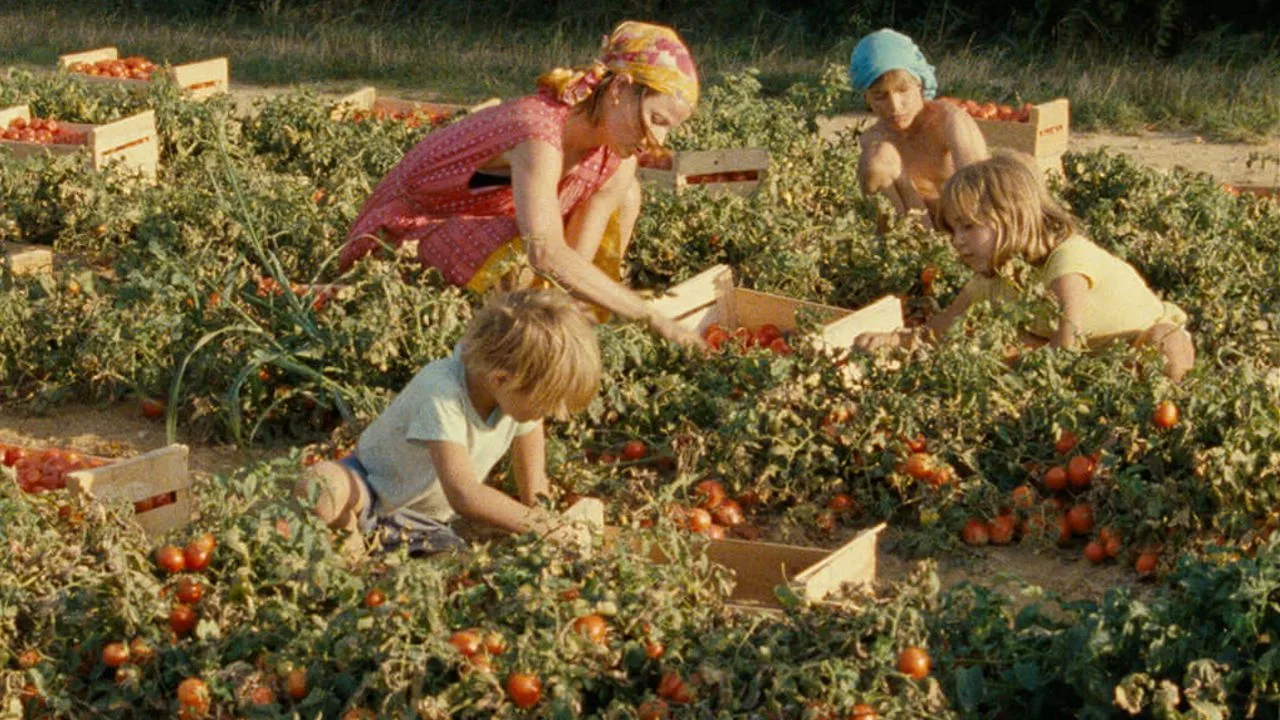
A woman and her seven children live on a farm in Southern France. In spite of the hard work and the mediocre accommodation, their life would be a happy one, but for one person: the owner of the farm, an egotistic and authoritarian individual who is also the lover of the woman and the father of all her children. The farmer handles them as his property, uses them as cheap labour to work in the fields, and denies them the right to leave the farm. It is only the love of the woman for her children that allows them to endure their situation; but even for her, disenchantment has set in.
 rating 7/10 User rating 30 votes 69%
 ❄ Christmas Connection
The title is the drama's central emotional question: will snow fall on Christmas Eve as a sign that the two protagonists can finally find peace? Christmas Eve in Korean culture carries the weight that Valentine's Day does in the West, a romantic occasion heavy with expectation, and the drama uses it as its emotional climax. The entire 16-episode arc bends toward that single winter night.
Where to Watch

Our Review
The title is a question, and the drama makes you wait 16 episodes for the answer. Will It Snow for Christmas? (크리스마스에 눈이 올까요) aired on SBS starting December 2, 2009, which is either perfect timing or a very deliberate act of emotional manipulation by writer Lee Kyung-hee. Probably both.
This is not a Christmas movie in any conventional sense. There are no decorations, no family gatherings, no gifts. Christmas here is a pressure point, a date circled on a calendar that two people cannot stop dreading and cannot stop waiting for. In Korean culture, Christmas Eve functions less like a religious observance and more like a high-stakes romantic occasion, the night when confessions get made or avoided, when the weight of what was never said finally lands. Lee Kyung-hee understood exactly what she was doing when she chose it as her story's axis.
The Writer Behind the Pain
If you know Lee Kyung-hee's work, you know what you're in for. She wrote I'm Sorry, I Love You (2004), the drama that turned So Ji-sub into a star and left an entire generation of Korean viewers in ruins. She followed that with A Love to Kill (2005), a revenge story between Rain and Shin Min-a that somehow managed to be even more punishing. By the time she wrote Will It Snow for Christmas?, she had built a reputation for finding men who hunger for love in the most self-destructive ways imaginable.
Cha Kang-jin fits that mold. He grows up without a father, watching his mother run a cheap coffee parlor (a dabang) in the rural town of Sancheong while she absorbs the contempt of everyone around her. Kang-jin cannot protect her. This helplessness shapes everything he becomes. When he meets Han Ji-wan as a teenager, the chemistry between them is real, but tragedy splits them apart before anything can resolve. He spends the next eight years becoming someone harder.
The drama opens in the present, where adult Kang-jin walks into Ji-wan's engagement party to another man. Ji-wan pretends she does not know him. That's the wound the show presses on for the next fifteen episodes.
Go Soo Carries the Weight
Go Soo, born in 1978, had just come off the dark thriller White Night when he took this role. It was a deliberate return to television after years focused on film, and the choice paid off. He plays Kang-jin as someone who has calcified around his grief without quite becoming stone. There is still something reachable in him, which is exactly what makes watching him so uncomfortable.
The Dramabeans recaps from 2009 noted his performance as a standout from the first episode, particularly a scene where he sings to his mother. It is the kind of moment Lee Kyung-hee writes for actors who can sustain silence: not much dialogue, everything in the body. Go Soo delivers.
Han Ye-seul plays Ji-wan with a specific kind of damage, someone who has learned to function by suppressing. Her performance is quieter than Go Soo's, which is the right call. Two people in open anguish would be unwatchable. One of them has to pretend they're fine.
The Bonus Casting You Probably Know Now
In 2009, neither Kim Soo Hyun nor Song Joong Ki were household names. Both appear here in early roles, and watching the drama now means watching two careers before they exploded.
Kim Soo Hyun plays the teenage version of Kang-jin in the opening episodes and occasional flashbacks. His breakthrough came two years later with Dream High in 2011; before that, he was a young actor doing good work in parts that most people weren't paying attention to. His scenes here are genuinely affecting. He makes the younger Kang-jin feel like a real precursor to Go Soo's adult version, not just a placeholder.
Song Joong Ki plays Han Ji-yong, Ji-wan's older brother, a warm, protective figure whose death by drowning while searching for something precious to his sister becomes one of the drama's defining traumas. Song would go on to star in Sungkyunkwan Scandal in 2010 and later, Descendants of the Sun, but this is him earlier, in a role that requires him to be good rather than charismatic, and he is.
Is This Actually a Christmas Drama?
Christmas frames the story but doesn't decorate it. There are no scenes of caroling or tree-trimming. The holiday matters here the way it matters in reality for a lot of people: as a date that concentrates emotion, that asks you to account for where you are and who you're with.
In Korea, Christmas Eve is observed more as a couples' holiday than a family one. Restaurants fill up, the streets have lights, and there is an ambient pressure to be with someone you love. For Kang-jin and Ji-wan, that pressure becomes unbearable given their history. The question of whether it will snow is not meteorological. Snow in Korean dramatic grammar carries specific meaning: purity, pause, the possibility of starting again. The show is asking whether these two characters deserve a reset.
The answer, when it arrives, earns its sentiment. Not because Lee Kyung-hee resolves everything neatly, but because by episode 16, you believe these characters have been through enough to reach whatever conclusion the sky provides.
What the Show Gets Right and Where It Wobbles
The first half is lean and controlled. The teenage flashbacks are well-shot and emotionally coherent. The central performances ground what could easily become soap opera into something more anchored.
The back half is messier. Lee Kyung-hee has a tendency, visible across her filmography, to accumulate suffering past the point where additional suffering adds meaning. Some of the secondary storylines in episodes 9 through 14 dilute the tension rather than build it. There is a stretch in the middle where the show is clearly marking time, which is a familiar problem in 16-episode Korean dramas of this era.
The ending restores focus. The final two episodes are what the whole structure was pointing toward, and they deliver.
If you come to this looking for a warm Christmas drama with festive atmosphere, you will be confused. If you come looking for a serious melodrama that happens to use Christmas as its emotional reckoning point, written by one of Korea's sharpest screenwriters and anchored by a genuinely strong lead performance, this is worth your time. The snow, when it finally falls, means something.
Fun Facts
Writer Lee Kyung-hee was born in 1969 and had already established herself as Korea's premier melodrama specialist before this show, with I'm Sorry, I Love You (2004) and A Love to Kill (2005) both ranking among the most-cried-over dramas of the 2000s on fan forums.
Kim Soo Hyun, who plays teenage Kang-jin in the early episodes, enrolled at Chung-Ang University's Film and Theater Department in 2009, the same year this drama aired. He became a household name in South Korea two years later with Dream High (2011).
Song Joong Ki's character Han Ji-yong dies by drowning while searching for a necklace belonging to his sister. Song's breakthrough came with Sungkyunkwan Scandal in 2010, and he later starred in Descendants of the Sun (2016), one of the highest-rated Korean dramas of that decade.
The drama is set partly in Sancheong County in South Gyeongsang Province, a rural area in southern Korea known for its traditional herbal medicine markets, which is referenced through Ji-wan's father's profession as an oriental medicine practitioner.
Go Soo, who plays adult Kang-jin, had spent several years focusing on film work before returning to television for this drama. His previous project was the 2009 thriller White Night, based on the Japanese novel by Keigo Higashino.
Seoul averages only about 2.3 days of snowfall per December, which gives the drama's central question, will it snow on Christmas Eve, a genuinely uncertain answer that Korean viewers would understand. Snow is rare enough in the capital to carry emotional weight when it does arrive.
The drama aired on Wednesday and Thursday nights on SBS, the time slot traditionally competitive in Korean broadcasting. It ran for exactly 16 episodes, finishing January 28, 2010, well past Christmas, which meant audiences spent almost two months waiting to find out whether the snow would come.
Director Choi Moon-suk and writer Lee Kyung-hee did not collaborate again after this project. Lee's next major work was The Innocent Man (2012), starring Song Joong Ki, who had appeared in a supporting role in this earlier drama three years prior.
Cast