
That's what Christmas is all about, Charlie Brown!
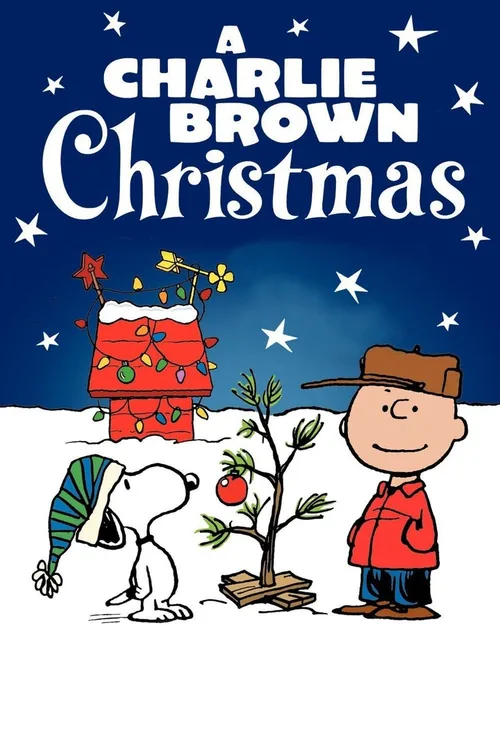
A Charlie Brown Christmas (1965)
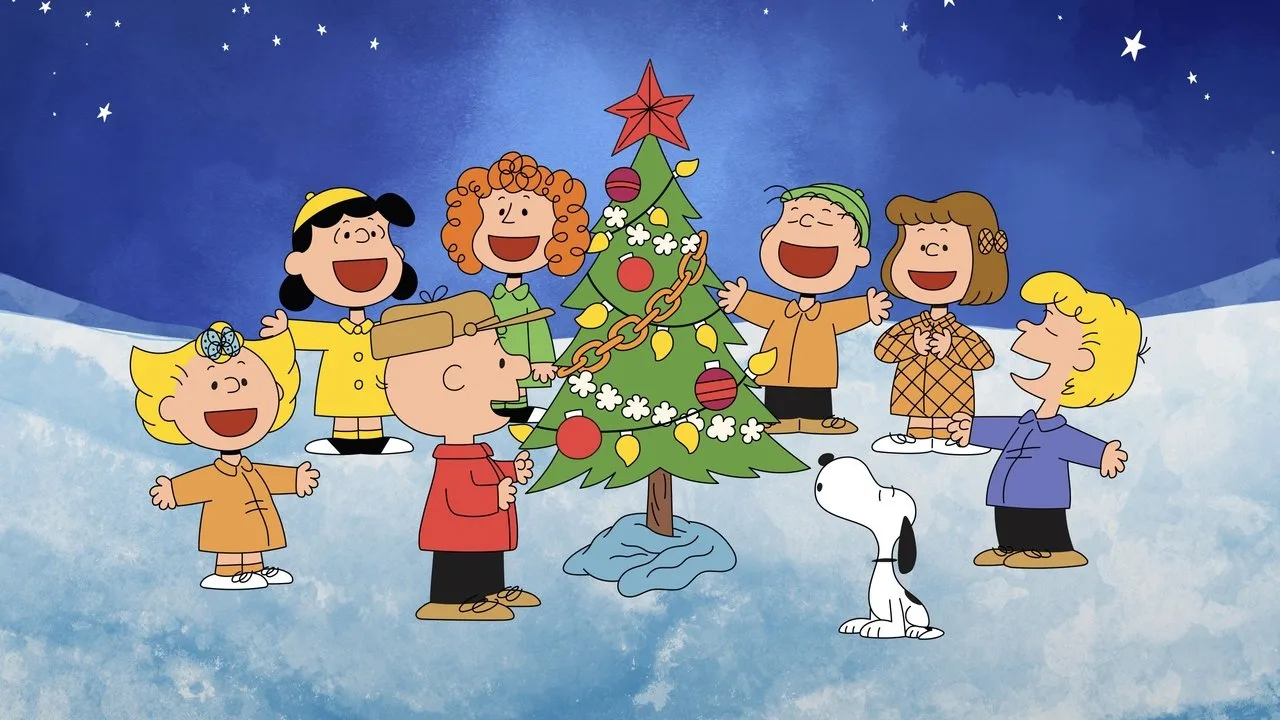
When Charlie Brown complains about the overwhelming materialism that he sees amongst everyone during the Christmas season, Lucy suggests that he become director of the school Christmas pageant. Charlie Brown accepts, but it is a frustrating struggle. When an attempt to restore the proper spirit with a forlorn little fir Christmas tree fails, he needs Linus' help to learn the meaning of Christmas.
 rating 9/10 User rating 762 votes 77%
 ❄ Christmas Connection
A Charlie Brown Christmas is Christmas distilled to its core question: what does the holiday actually mean? The entire 25-minute special is built around Christmas pageants, tree lots, and the Linus speech quoting the Gospel of Luke. It defined how Americans visualize a Christmas special.
Where to Watch


Our Review
A Charlie Brown Christmas almost didn't happen. In 1965, Coca-Cola sponsored a holiday special based on Charles Schulz's Peanuts comic strip, and CBS executives who previewed the finished product thought they had a disaster on their hands. The animation was crude. The voice actors were actual children who could barely read their lines. The jazz soundtrack felt wrong for a cartoon. And the climax was a child reciting Scripture on network television. One executive reportedly said, "We'll air it once and that'll be the last of it."
It drew 50% of the American television audience on its first broadcast and has aired every year since.
How A Charlie Brown Christmas Got Made
Producer Lee Mendelson and animator Bill Melendez had exactly six months to produce the special after Coca-Cola agreed to sponsor it. Schulz wrote the script himself, and he was immovable on two points: the kids had to be voiced by real children, and Linus had to recite the nativity passage from the Gospel of Luke. The network pushed back on both. Schulz didn't budge.
The child actors were a logistical headache. Most of them couldn't read fluently, so Melendez fed them their lines one phrase at a time. You can hear the result in the final product. The cadence is slightly off, the delivery unpolished. It sounds like children talking, not like actors performing children. That imperfection became the special's signature quality.
The animation was produced on a tight budget at Melendez's small studio. Characters sometimes slide across backgrounds rather than walk. The ice-skating sequence reuses cycles. None of this mattered. Schulz's writing was so economically precise that the simple visuals served it rather than undermined it.
Vince Guaraldi and the Sound of Christmas
Mendelson heard pianist Vince Guaraldi's "Cast Your Fate to the Wind" on the radio while driving across the Golden Gate Bridge and decided, on the spot, that Guaraldi should score the special. It was an unusual choice. Christmas specials in the 1960s used orchestral arrangements and choral singing. Guaraldi brought a jazz trio.
"Linus and Lucy," with its instantly recognizable piano figure, has become so associated with the Peanuts characters that it's difficult to imagine the franchise without it. But the real achievement is "Christmas Time Is Here," a melancholy waltz that captures something most Christmas music avoids: the sadness that can coexist with the season. Charlie Brown's depression isn't cured by the soundtrack. The music sits alongside it, acknowledging that the holidays are complicated.
The Vince Guaraldi Trio's soundtrack album has sold millions of copies and remains one of the best-selling jazz albums in American history. It regularly re-enters the Billboard charts every December.
The Charlie Brown Christmas Tree
Schulz understood visual metaphor. When Charlie Brown goes to the tree lot to buy a Christmas tree for the school pageant, he bypasses the shiny aluminum trees and picks a scrawny, nearly bare sapling. The other kids mock him for it. The tree is pathetic. It drops needles when you look at it wrong.
But that tree is Charlie Brown. It's overlooked, underestimated, and in need of a little care. When the kids wrap Snoopy's dog-house decorations around it and the tree stands upright, beautiful, the transformation takes about four seconds of screen time. No dialogue. Just the Guaraldi score and a visual payoff that has been replicated on coffee mugs, t-shirts, and ornaments for sixty years.
The scraggly Charlie Brown Christmas tree has become a cultural symbol of its own. You can buy official replicas at major retailers every holiday season. The idea that a small, imperfect thing can be the right choice resonates because Schulz didn't oversell it.
Linus Takes the Stage
Charlie Brown, exasperated by the commercialism around him, shouts, "Isn't there anyone who knows what Christmas is all about?" Linus walks to center stage, asks for a spotlight, and recites Luke 2:8-14, the King James Version passage about shepherds and angels.
It's the only moment in the special where the comedy stops completely. No reaction shots, no background gags, no musical underscore until Linus finishes. Schulz fought for this scene because he believed it was the answer to the question the entire special had been asking. The network thought it would alienate viewers. Instead, it became the most quoted scene in Christmas television history.
One small detail that animators have pointed out over the years: Linus drops his security blanket when he says the words "fear not." It may have been intentional. Schulz never confirmed it. Either way, it's the kind of detail that rewards rewatching.
Fun Facts
The first broadcast on December 9, 1965, drew nearly 15.4 million households, capturing about 50% of the television audience that night.
Vince Guaraldi composed the entire score in just a few weeks. "Linus and Lucy" was actually written earlier for a 1964 Peanuts documentary called A Boy Named Charlie Brown, then reused for the special.
The voice of Charlie Brown was provided by 8-year-old Peter Robbins. Because many of the child actors couldn't read well, lines were fed to them one at a time in the recording booth.
CBS executives were so unhappy with the finished special that they considered not airing it. Mendelson and Melendez themselves had doubts after the first screening. The audience response proved them all wrong.
Schulz insisted on no laugh track, which was nearly unheard of for animated television in 1965. The network objected, but Schulz held firm.
The Guaraldi soundtrack album, A Charlie Brown Christmas, was certified 4x Platinum by the RIAA and is the best-selling jazz album of the holiday season year after year.
The special won both an Emmy and a Peabody Award in 1966, silencing the critics who had called it too slow and too religious for prime-time television.
Cast