
The Nativity (1978)
The story of the courtship of Joseph and Mary, and of the events leading up to the first Christmas.
 rating 6/10 User rating 1 votes 60%
 ❄ Christmas Connection
The Nativity dramatizes the biblical account of Jesus's birth directly, from the Annunciation through the arrival in Bethlehem. There is no Christmas without this story, and this film makes no bones about what it is covering. It is as Christmassy as a movie can be without being set at a modern Christmas.
Our Review
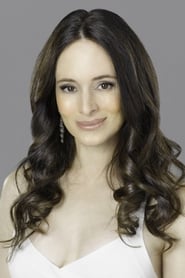
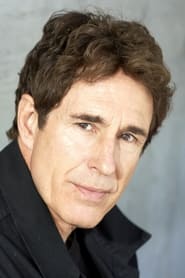
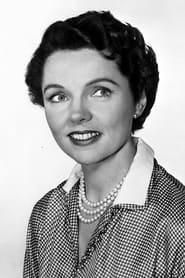
NBC aired The Nativity on December 12, 1978, as a two-hour holiday event. The network was right to treat it as an event. This is not an animated retelling for children or a pageant filmed in a church hall. It is a serious dramatic production that covers the birth of Jesus from the Annunciation through the night in Bethlehem, and it was made with the care and budget that prestige television could muster in the late 1970s, which was not inconsiderable. The cast includes Jane Wyatt, John Shea, and in one of her earliest screen appearances, Madeleine Stowe as Mary.
Stowe was twenty-three when she filmed this role. It is easy, in retrospect, to see what NBC saw in her. She carries a natural stillness that suits a character who is asked to receive impossible news and respond with something other than hysteria.
What the 1978 Nativity Gets Right
The film earns credit for treating Mary as someone with an inner life. The Annunciation scene does not play as a pleasant visit from a glowing figure. Stowe plays the moment with genuine fear and then, slowly, a kind of resolve that reads as character rather than theological symbol. The script, written by Millard Lampell, gives her actual lines in which she processes what is happening rather than simply accepting it as a fait accompli.
Joseph is written similarly. John Shea plays him as a man who is genuinely struggling with the situation he finds himself in. His decision to stay with Mary is not immediate. He has to get there, and Shea shows the work of arriving at that decision. This sounds like a small thing, but most nativity dramatizations skip it entirely in favor of a Joseph who is essentially scenery.
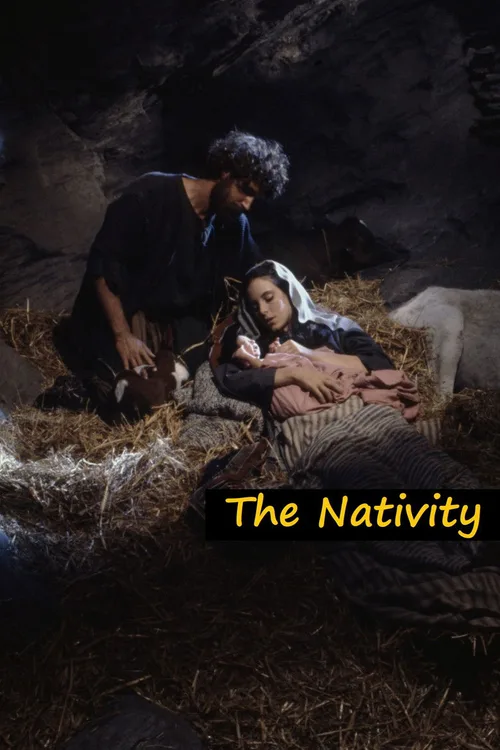
The film takes the journey to Bethlehem seriously as a physical hardship. The roads are not picturesque. The inn has no room for reasons that feel mundane and plausible rather than symbolic. The manger sequence is cold and dark. Director Bernard L. Kowalski keeps the production grounded in the practical difficulties of first-century travel and poverty.
Madeleine Stowe's Early Career
Stowe had appeared in television before this, but The Nativity was her first substantial dramatic role. She would not break into feature films prominently until Stakeout in 1987, nearly a decade later. In interviews from the period, she described the role as demanding and the production as ambitious for television.
Watching the film with knowledge of her later career is instructive. The qualities that made her effective in The Last of the Mohicans (1992) and Blink (1993) are already present here: a self-possession on screen that does not require dialogue to communicate, and a resistance to easy emotional display. She does not play Mary's grief or Mary's joy at maximum volume. She finds the register below those peaks, which is where the real performance lives.
The role required her to appear in a state of obvious late pregnancy for much of the film's second half, a physical performance that demands its own kind of commitment. She manages it without calling attention to it.
Jane Wyatt as Elizabeth
Wyatt was sixty-six when she appeared in this film, and she was still best known at that point as the mother in Father Knows Best, which had ended in 1960. Her casting as Elizabeth, Mary's older cousin who is herself miraculously pregnant with what will become John the Baptist, is thoughtful. Wyatt brings a warmth and specificity to scenes that could easily have been expository.
The relationship between Mary and Elizabeth gives the film its emotional center in the first half. Two women in unusual circumstances recognizing each other's situation across a gap in age and experience. Wyatt plays Elizabeth as someone who has waited a long time and has no patience left for false modesty about what is happening. She is not ethereal. She is practical and a little fierce, and the film is better for it.
Television Prestige in 1978
The late 1970s were a specific moment for American television. Roots had aired in 1977 and demonstrated that a serious, long-form narrative on network television could pull enormous audiences and win critical respect. Networks responded by commissioning more prestige projects, particularly for the holiday season, when competition for viewers was at its peak.
The Nativity was part of this pattern. It was shot on location in Tunisia and Italy to give it a visual authenticity that studio sets could not provide, a substantial investment for a television film. The production design avoids the sandstone-and-linen look that biblical films often default to. The locations have been chosen to suggest the actual terrain of the ancient Levant rather than a Hollywood approximation of it.
The film ran without significant interruption by commercials during its initial broadcast, which NBC treated as a mark of its seriousness. Whether the seriousness warranted that treatment is a fair question. The film is uneven, and its second hour is slower than its first. But the intent is genuine throughout.
Where It Falls Short
The shepherds and the Magi are handled with less care than the central performances. These are obligatory scenes in any nativity film, and The Nativity moves through them quickly without finding anything fresh to add. The star-following and the royal visit to Herod's court feel like a checklist being completed.
Some of this is structural. The nativity story as written in the Gospels is not a single coherent narrative. It draws from Matthew and Luke, which disagree on several details and emphasize different elements. Any film dramatizing it has to make choices about which details to include and how to resolve the contradictions, and some of those choices will disappoint someone. Lampell's script tries to be comprehensive and ends up slightly crowded.
The score leans heavily on swelling orchestral passages at moments that would benefit from quiet. This was a common television habit of the era, and it works against the film's more grounded instincts.
Still, as a dramatization of a story that has been told thousands of times, The Nativity finds enough specificity to justify its existence. Stowe's Mary alone makes it worth an hour of anyone's December.
Fun Facts
Madeleine Stowe was 23 years old during production of The Nativity and had limited prior screen experience. Her feature film career did not fully launch until Stakeout (1987), nine years later.
The film was shot on location in Tunisia and Italy rather than on studio sets, an unusually large logistical commitment for a 1978 American television production.
Screenwriter Millard Lampell had been blacklisted in Hollywood during the 1950s for alleged Communist sympathies. His 1966 television film Eagle in a Cage won an Emmy Award, and he continued working in television through the 1970s.
Jane Wyatt was 66 at the time of filming and had been best known for 16 years as the mother in Father Knows Best (1954-1960). Her Emmy Award for that series remains one of the few times the same actress won the award three consecutive times.
John Shea, who plays Joseph, later became widely known for playing Lex Luthor in the television series Lois and Clark: The New Adventures of Superman (1993-1997). In 1978 he was a stage actor making his television profile.
NBC broadcast the film during prime time on December 12, 1978, and promoted it as a holiday event production in the tradition of network biblical dramatizations going back to the 1950s.
Bernard L. Kowalski, who directed the film, began his career directing television episodes in the 1950s and later worked on series including The Untouchables and Bonanza. The Nativity was among his most high-profile assignments.
Cast