

The dilemma. The reunion
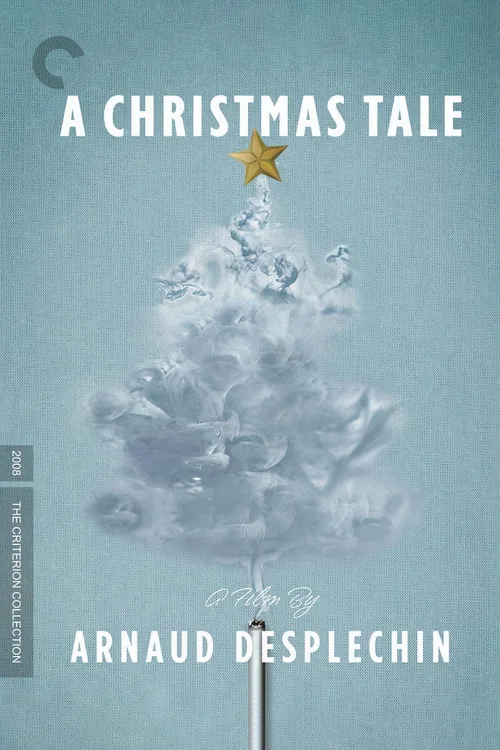
A Christmas Tale (2008)
When their regal matriarch falls ill, the troubled Vuillard family come together for a hesitant Christmastime reunion. Among them is rebellious ne'er-do-well Henri and the uptight Elizabeth. Together under the same roof for the first time in many years, their intricate, long denied resentments and yearnings emerge again.
 rating 9/10 User rating 169 votes 68%
 ❄ Christmas Connection
Christmas here is not a backdrop of warmth but a deadline. The Vuillard family gathers at the family home in Roubaix for the holidays because the matriarch needs a bone marrow donor, and the holidays are the only time everyone can be forced into the same house. The season provides the pressure cooker, not the sentiment.
Where to Watch


Our Review
A Christmas Tale opens with a puppet theater. A narrator explains in fairy-tale cadence that a couple in Roubaix had a child named Joseph who died at age six from a hereditary blood disease. They had two more children to find a compatible bone marrow donor. Neither matched. Joseph died anyway. The family has been living with that fact ever since. The puppets are adorable. The information is devastating. This is Arnaud Desplechin telling you exactly what kind of Christmas movie you are about to watch.
The 2008 film, which premiered in competition at Cannes and won Catherine Deneuve a Special Jury Prize, is 150 minutes of the Vuillard family doing what families like this do: talking past each other, quoting literature at moments of crisis, falling into old cruelties, and finding sudden tenderness in the worst places. Junon, the matriarch played by Deneuve, has leukemia. She needs a bone marrow transplant. Her husband, played by Jean-Paul Roussillon, is too old to donate. Her daughter Elizabeth has been categorically banned from the house by the entire family after a financial scandal involving her brother Henri. And Henri, played by Mathieu Amalric, is the one person in the family who is medically compatible to save his mother's life.
The Family That Cannot Stand Each Other
Desplechin is the director of My Sex Life... or How I Got into an Argument and Kings and Queen, and he has spent his career studying the particular way educated, emotionally articulate French people manage to be completely incomprehensible to each other. The Vuillards are his masterpiece on this subject. Each character arrives loaded with history the film parcels out in fragments, letters, voiceovers, and dreams. You piece the family together like a puzzle, and the picture that emerges is both messy and precise.
Henri is the film's engine. Amalric plays him as a man who has given up the performance of respectability. He drinks. He says what he thinks. He is his mother's least favorite child and, crucially, her only possible savior. Desplechin lets this irony sit without milking it for sentiment. Junon is not moved to love Henri because he can save her life. She is interested in him, clinically, the way she is interested in most things. Deneuve plays her as a woman who has always kept a certain distance from her own family, and illness has not changed that.
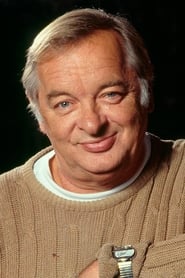
Roussillon won the César Award for Best Supporting Actor for his role as Abel, the father, and you can see why. He is the character who loves everyone without conditions, including the family members nobody else can manage to love, and Roussillon makes this not saintly but simply true.
Why It Works as a Christmas Film
The Christmas setting matters more than it might appear. The holidays enforce proximity. In any other season, Elizabeth and Henri would not be in the same room. Junon could manage her illness privately. The various children, grandchildren, and estranged partners would stay in their respective corners of France. Christmas collapses the buffer zones.
Desplechin shoots Roubaix, the northern French city where the film is set, in winter light that is flat and honest. There is nothing picturesque about it. The house is warm and lit, the world outside is gray, and the family inside is at full intensity. Snow appears occasionally, as does a Christmas tree, and there are gifts and a Christmas dinner. The film is not allergic to the season. It simply treats it as pressure rather than comfort.
This is worth saying plainly: if you want a film where Christmas reminds a family that love is what matters, watch something else. If you want a film where Christmas is the deadline by which a family must reckon with thirty years of accumulated damage, this is one of the best ever made.
The Cast, and What Desplechin Does with Them
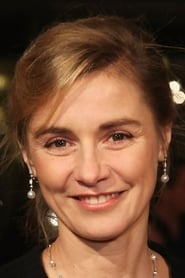
The ensemble is extraordinary. Anne Consigny plays Elizabeth with the rigidity of someone who has organized her entire life around a grudge and can feel it failing. Melvil Poupaud plays her son Paul, who has been hospitalized for psychiatric reasons and arrives carrying his own unresolved weight. Emmanuelle Devos, who appears in several Desplechin films, plays Henri's wife Faunia with a warmth that cuts against the family's general emotional coldness. Chiara Mastroianni, who is the real-life daughter of Catherine Deneuve and Marcello Mastroianni, plays a character romantically involved with one of the Vuillard cousins. Her presence in the film alongside her actual mother adds a layer that is not in the screenplay.
Desplechin trusts his actors completely. Scenes run long. Characters get to be right and wrong in the same conversation. There are no clear villains, which in a film about a family where one sibling has legally banned another from the family home, is a genuine achievement.
The film also quotes liberally from Nietzsche and other sources, which could be affectation but isn't. Desplechin uses the quotations the way the characters do: as shields, as provocations, as the language of people who have learned to think rather than feel their way through difficult moments. Henri quotes Nietzsche at his mother's hospital bed. It tells you everything about both of them.
Where This Sits in Desplechin's Work
A Christmas Tale was Desplechin's sixth feature. Critics placed it among the best films of 2008. The Criterion Collection released it in the United States, which is the reliable signal that a film is considered worth serious attention. Criterion's booklet essays treat it as a major work.
Desplechin returned to the Vuillard family in 2015 with My Golden Days, a prequel focusing on a young Paul Dédalus, a character from his earlier films. The Vuillards are his recurring concern, not because he finds families comforting, but because they are where the stakes are highest.
At the end of A Christmas Tale, the family disperses. The crisis resolves, partially. People return to their lives. The film does not pretend that Christmas fixed anything. What it does show is that the family survived the proximity, which, for the Vuillards, counts.
Fun Facts
Chiara Mastroianni, who plays Sylvia in the film, is the real-life daughter of Catherine Deneuve and Italian actor Marcello Mastroianni. The film cast actual mother and daughter without drawing explicit attention to the fact.
The film premiered in competition at the 2008 Cannes Film Festival, where Catherine Deneuve received a Special Jury Prize. The Palme d'Or that year went to Laurent Cantet's The Class.
Jean-Paul Roussillon won the 2009 Cesar Award for Best Supporting Actor for his role as Abel, the family patriarch, beating out three other nominees in what critics considered a surprise win for a relatively quiet performance.
The film runs 150 minutes and has a cast of more than a dozen significant characters. Desplechin and co-writer Emmanuel Bourdieu managed the sprawl by structuring each character's introduction around a specific unresolved event from the past.
The opening puppet theater sequence was shot separately from the rest of the film and uses paper cutout animation to narrate the death of the eldest Vuillard child, Joseph, before the main story begins. It was inspired by traditional shadow theater.
The Criterion Collection released A Christmas Tale in the United States as spine number 474. The booklet essay was written by film critic Kent Jones, who described Desplechin as "the most novelistic director working today."
Roubaix, the northern French city where the film is set, appears in several of Desplechin's films and is also his actual hometown. He has described it as a city that shaped his understanding of family loyalty and working-class Catholic culture.
Mathieu Amalric, who plays the difficult son Henri, has appeared in more Desplechin films than any other actor. Their collaboration began with My Sex Life... or How I Got into an Argument in 1996, making A Christmas Tale their fourth film together.
Cast