
A Holiday to Remember (1995)
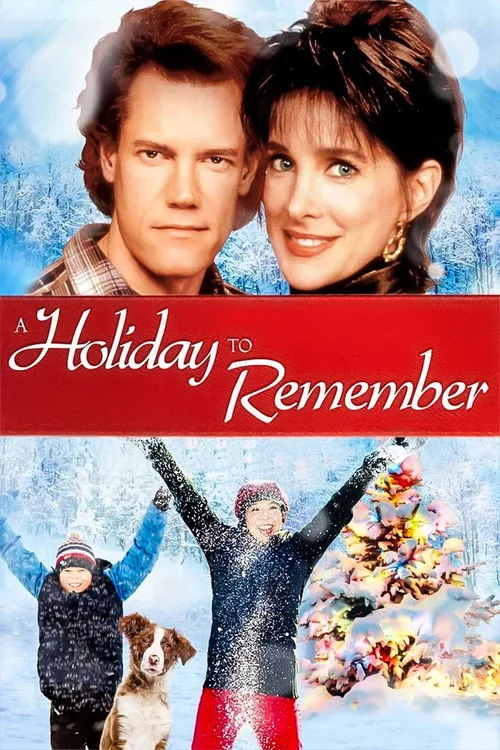
Compassionate holiday romancer with Connie Sellecca as a divorced mother who takes young daughter Asia Vieira to her small South Carolina hometown in order to start a new life. Once there, Connie has trouble getting ready for Christmas as Randy Travis, her former boyfriend comes calling, and a runaway boy and social worker take up a lot of her and her daughter's attention. With Rue McClanahan, Don McManus. Based on Kathleen Creighton's "A Christmas Love.
 rating 6/10 User rating 9 votes 47%
 ❄ Christmas Connection
The entire story unfolds during the Christmas season in a snow-dusted small town, with holiday decorations, festive gatherings, and the emotional warmth of the season serving as the backdrop for the central romance. Christmas functions less as scenery and more as the emotional accelerant that pushes two guarded adults toward each other faster than they would have moved otherwise. The holiday setting is essential to the story's logic.
Where to Watch


Our Review
There is a particular strain of 1990s TV Christmas movie that does not pretend to be more than it is. No elaborate twists, no winking self-awareness, no prestige ambitions. Just a story about two people in difficult circumstances finding each other at Christmas, set against a backdrop of snow and small-town decency. A Holiday to Remember (1995) belongs firmly to that category, and it executes the formula with more conviction than most.
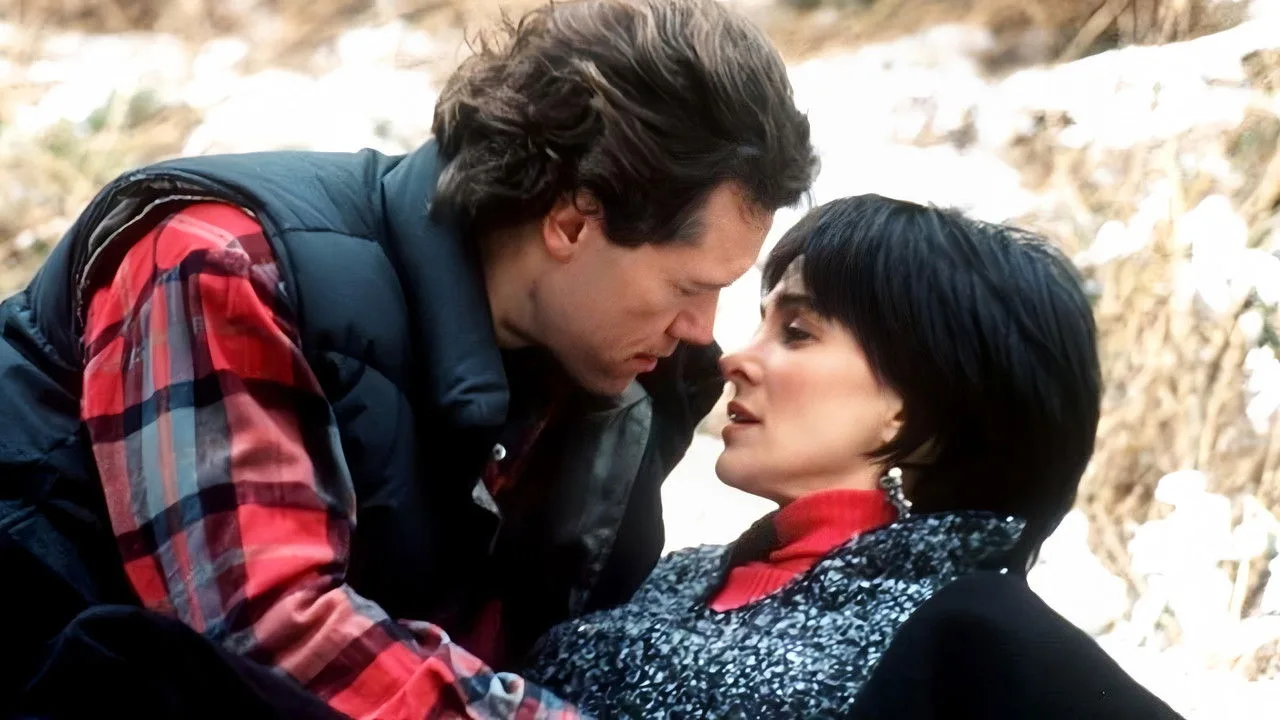
Connie Sellecca plays Carol, a single mother who relocates with her young daughter to a rural ranching community following the kind of personal upheaval that TV movies of this era handled with tasteful economy. Randy Travis plays Jake, the local rancher next door, a quiet, self-contained man still working through his own history. The setup is familiar. The execution is not always predictable.
What Makes the Casting Work
Randy Travis was primarily known as a country music star in 1995, with a run of hits through the late 1980s that made him one of the dominant voices in the genre. His acting work was limited, and casting a musician in a romantic lead is a calculated risk. Here it pays off. Travis brings a stillness to Jake that a more conventionally trained actor might have overplayed. He does not reach for emotion. He holds back, which reads as authentic reticence rather than limited range.
Sellecca handles the heavier lifting. Her Carol is not a passive romantic lead waiting to be rescued by the right man. She has practical concerns, a daughter to protect, and genuine skepticism about moving too quickly. The film does not rush her. That restraint, unusual for the format, gives the central relationship actual weight.
The chemistry is understated rather than electric. That is a deliberate choice and the right one for this material. A widowed rancher and a cautious single mother circling each other at Christmas should feel tentative, not combustible.
Kathleen Creighton's Source Novel
The film is based on A Christmas Love by Kathleen Creighton, a romance novelist who published steadily through the 1980s and 1990s with Silhouette Books. Creighton's novels tend to favor character interiority over melodrama, which makes them tricky to adapt for television. The screenplay, credited here, threads that needle reasonably well.
Small-town romance fiction of the Creighton school has specific structural rules. The outsider arrives. The local resists. The community itself functions as a kind of third character, applying pressure through gossip, warmth, and collective expectation. The film honors these conventions without being enslaved to them. Director Jud Taylor, a television veteran with credits going back to the 1970s, keeps the pacing tight enough that the 90-minute runtime doesn't sag.
Is "A Holiday to Remember" a Christmas Movie?
The film does not use Christmas as a thin excuse. The holiday season shapes the story's timeline and emotional logic. Carol and her daughter arrive during the period when a new community is most likely to absorb strangers, when invitations are extended, when defenses are lowered by shared ritual. Jake's resistance to connection makes particular sense at Christmas, when the gap between the warmth around him and his own interior isolation is hardest to ignore.
The Christmas Vibes rating sits at 4 out of 5. The film does not wallow in holiday iconography, but the season is doing genuine narrative work rather than just providing set dressing.
What Holds It Back
The film is not without its limitations. The supporting characters function mostly as types: the friendly neighbor, the skeptical local, the perceptive child who sees things the adults miss. None of them develop beyond their function in the plot. The daughter character, who in a lesser film would be aggressively precocious, is handled with relative restraint, but she still exists primarily to accelerate her mother's emotional journey rather than to have one of her own.
The third-act complication, which arrives on schedule, is the film's weakest section. It introduces an obstacle that the story resolves quickly and cleanly, which suggests the filmmakers knew it was mechanical but needed something to fill the space between the romantic buildup and the conclusion. It's the seam in the upholstery, visible if you know where to look.
For viewers who don't watch 1990s TV Christmas movies expecting structural innovation, none of this will matter much. The film delivers what it promises and does so without condescension.
The Randy Travis Factor
Travis recorded several Christmas albums during his career, and his association with holiday music probably informed his casting here. But A Holiday to Remember does not use him as a vehicle for musical performance. He doesn't pick up a guitar for a crowd-pleasing third-act number. The film treats him as an actor, which is both respectful and slightly unusual for this kind of project in 1995.
His country music fan base gave the film a built-in audience at broadcast, which was almost certainly a factor in the casting decision. That's not a criticism. Television Christmas movies have always been commercially pragmatic. What matters is that the pragmatism doesn't show on screen.
Fun Facts
Randy Travis had sold over 18 million records by the time this film aired in 1995, making him one of the best-selling country artists in the format's history at that point. His transition to acting was a natural extension of a career that already had him recognized as one of the faces of a particular American ideal.
Kathleen Creighton published her source novel A Christmas Love through Silhouette Books, which was then a division of Harlequin Enterprises. Silhouette specialized in contemporary romance and was one of the dominant forces in the category paperback market through the 1980s and 1990s.
Director Jud Taylor directed television movies and series episodes continuously from the late 1960s through the 1990s, accumulating credits across dramas, thrillers, and made-for-TV movies. His career is representative of a generation of working TV directors who kept a very large volume of American television running without ever becoming household names.
Connie Sellecca was already well known to television audiences from her years on Hotel (1983-1988) and The Greatest American Hero (1981-1983). By 1995 she had shifted largely to TV movies, where her established audience followed her.
The 1995 Christmas TV movie season was particularly crowded, with networks competing for holiday ratings in a broadcast landscape that still had genuine appointment-television viewing habits. DVD and streaming did not yet exist; if you missed a broadcast, you missed it.
Randy Travis's involvement in acting projects accelerated through the late 1990s. He eventually accumulated over 20 film and television credits, appearing in everything from Westerns to faith-based dramas, making him one of the more durable musician-to-actor transitions in that era of country music.
Cast