
If this picture doesn't make your skin crawl... it's on TOO TIGHT.
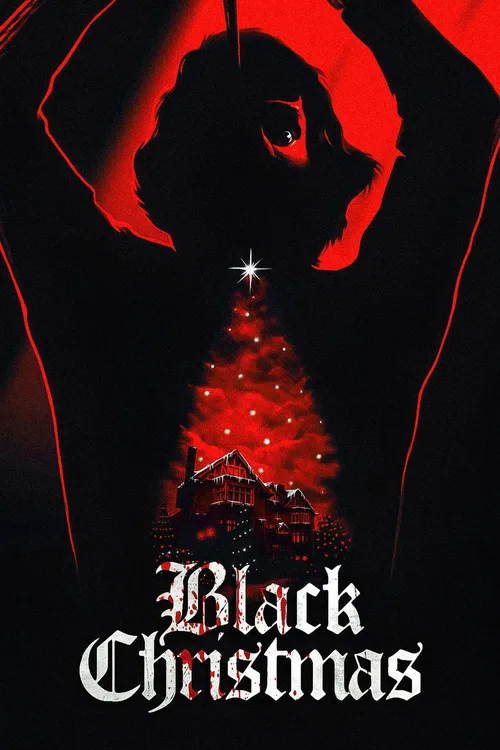
Black Christmas (1974)
As the residents of the Pi Kappa Sigma sorority house prepare for the festive season, a stranger begins to harass them with a series of obscene phone calls.
 rating 8/10 User rating 923 votes 69%
 ❄ Christmas Connection
Black Christmas turns a sorority house's holiday break into a nightmare, using the festive setting as both backdrop and weapon. Christmas carols, decorations, and the emptying campus create an eerie isolation that makes the horror land harder.
Where to Watch


Our Review
Before Halloween, before Friday the 13th, before the slasher genre even had a name, there was Black Christmas. Bob Clark's 1974 film didn't just arrive before the wave. It built the wave. A killer calls from inside the house, picks off sorority sisters during the holidays, and the camera shows you his point of view as he stalks through the darkened rooms. Every horror trope you think started somewhere else started here.
The Black Christmas 1974 Film That Invented a Genre
Clark shot the film in Toronto during the winter of 1974, using the University of Toronto's buildings as stand-ins for the fictional sorority house. The budget was modest, roughly $620,000 CAD. The result was anything but modest.
What separates Black Christmas from the films it inspired is restraint. Clark never reveals the killer. You hear his voice on the phone, a grotesque cocktail of whispers, shrieks, and obscene babbling. You see glimpses through his eyes. But you never learn who he is or why he kills. There's no backstory, no trauma flashback, no "he was bullied as a child" moment. The film trusts that the unknown is more frightening than any explanation.
That creative decision still feels radical fifty years later. Modern horror loves its lore. Black Christmas refuses to give you any.
The Black Christmas 1974 Cast
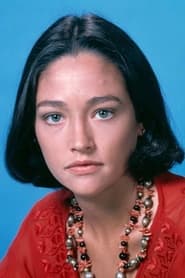
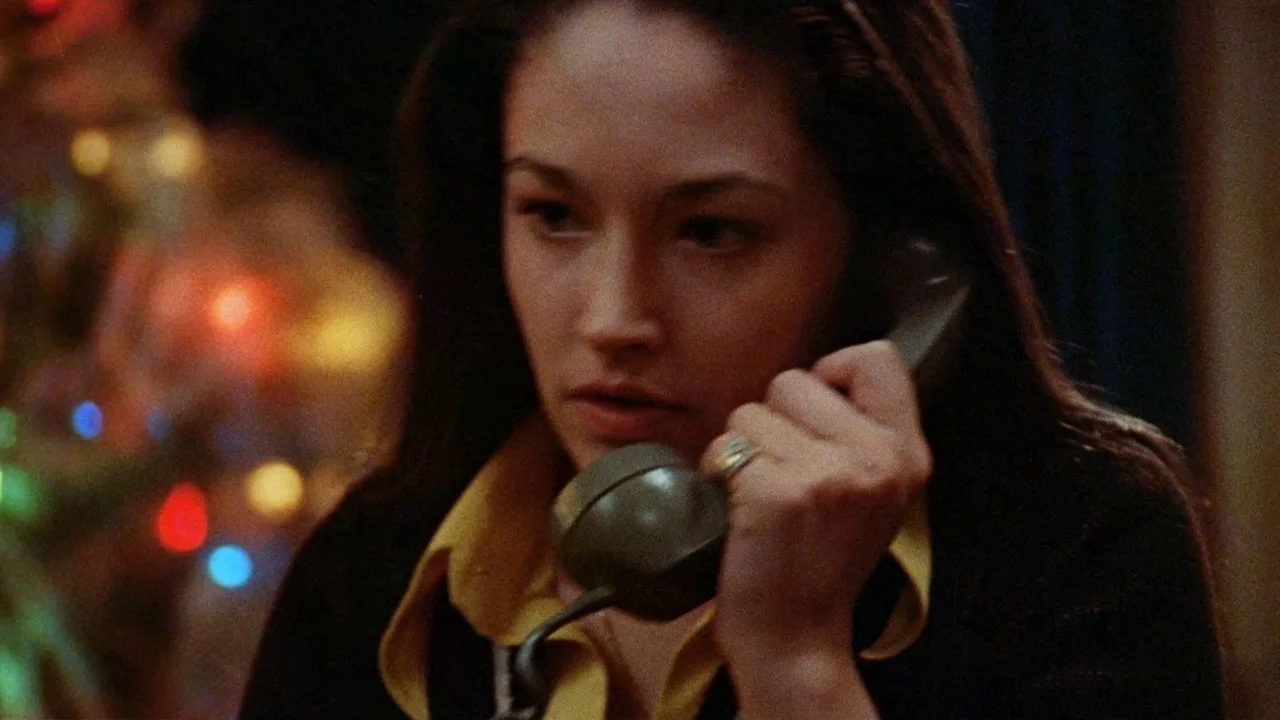
Olivia Hussey leads the cast as Jess, the practical, level-headed protagonist who is dealing with her own crisis: she's pregnant, and her boyfriend Peter (Keir Dullea) isn't handling the news well. Hussey, already famous from Zeffirelli's Romeo and Juliet (1968), brings an understated gravity to the role. She doesn't scream her way through the movie. She thinks, plans, and fights.
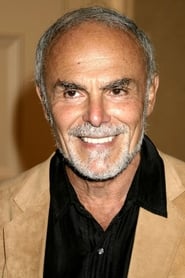
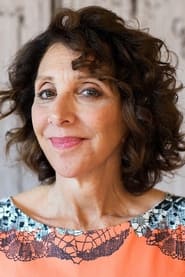
Margot Kidder plays Barb, the hard-drinking, sharp-tongued sorority sister who gets the film's best lines. Kidder was two years away from becoming Lois Lane in Superman, and her performance here is loose, funny, and fearless. Andrea Martin, later a comedy legend on SCTV, plays the quieter Phyl. John Saxon rounds out the cast as the police lieutenant trying to trace the calls.
The ensemble works because these characters feel like real people with lives outside the plot. They argue, joke, drink too much, and make bad decisions the way actual college students do.
The Call Is Coming from Inside the House
Black Christmas popularized one of horror's most enduring setups. The obscene phone calls that terrorize the sorority sisters aren't coming from some distant threat. The killer is already in the house, hiding in the attic, watching.
Clark milks this for everything it's worth. There's a shot of the killer's eye peering through a crack in a door that has lost none of its power. The film's sound design is equally unsettling. The phone calls feature layered voices that sound like multiple personalities arguing with each other. Nick Mancuso provided the voice work, and it remains one of the most disturbing audio performances in horror history.
The ending refuses to tie things up. The killer is still in the house. The phone begins to ring again. Roll credits.
The Black Christmas Film 2006 and Beyond
Hollywood remade Black Christmas twice. The Black Christmas 2006 version, directed by Glen Morgan, took the opposite approach to Clark's original. Where Clark hid the killer, Morgan gave him a detailed backstory involving childhood abuse, jaundiced skin, and a lot of gouged-out eyeballs. The Black Christmas 2006 cast included Mary Elizabeth Winstead, Katie Cassidy, Michelle Trachtenberg, and Lacey Chabert. It's a competent slasher with solid production values, but it trades mystery for gore and loses something in the exchange.
The 2019 remake, directed by Sophia Takal, reimagined the story as an explicitly feminist thriller about a fraternity cult. It had interesting ideas but a PG-13 rating that blunted its horror. Neither remake has the original's staying power, and neither trusts its audience the way Clark did.
Why Black Christmas Matters
Bob Clark went on to direct A Christmas Story in 1983. The same filmmaker gave the world both the coziest and the most terrifying Christmas movie ever made. That's a range most directors can only dream about.
Black Christmas also sparked a direct conversation that shaped the genre. John Carpenter has said that Clark once described a potential sequel where the killer returns the following Halloween. Carpenter took the idea and ran with it. Four years later, Halloween became a phenomenon, and the slasher genre exploded. Clark never got the credit he deserved during his lifetime.
If you've never seen the 1974 original, go in knowing as little as possible. Turn the lights off. Let the phone ring.
Fun Facts
Bob Clark also directed A Christmas Story (1983), making him the only filmmaker to create both the most beloved and the most terrifying Christmas movie in cinema history.
The obscene phone calls were performed by actor Nick Mancuso, who layered multiple voices on top of each other in a single take. Clark combined several recordings to create the final unsettling effect.
Olivia Hussey was so disturbed by the phone call recordings that she had trouble sleeping during the shoot. She was 22 years old at the time of filming.
The film was released in the U.S. as Silent Night, Evil Night because distributors worried audiences would think "Black Christmas" was a blaxploitation film.
John Carpenter has acknowledged that a conversation with Bob Clark about a hypothetical sequel directly influenced the creation of Halloween (1978).
Margot Kidder improvised several of her drunken scenes, including the "turtle" monologue that became one of the film's most quoted moments.
The sorority house attic scenes were shot in an actual house on Jarvis Street in Toronto that has since been demolished.
Cast