
More Daddies. More Problems.
Daddy's Home 2 (2017)
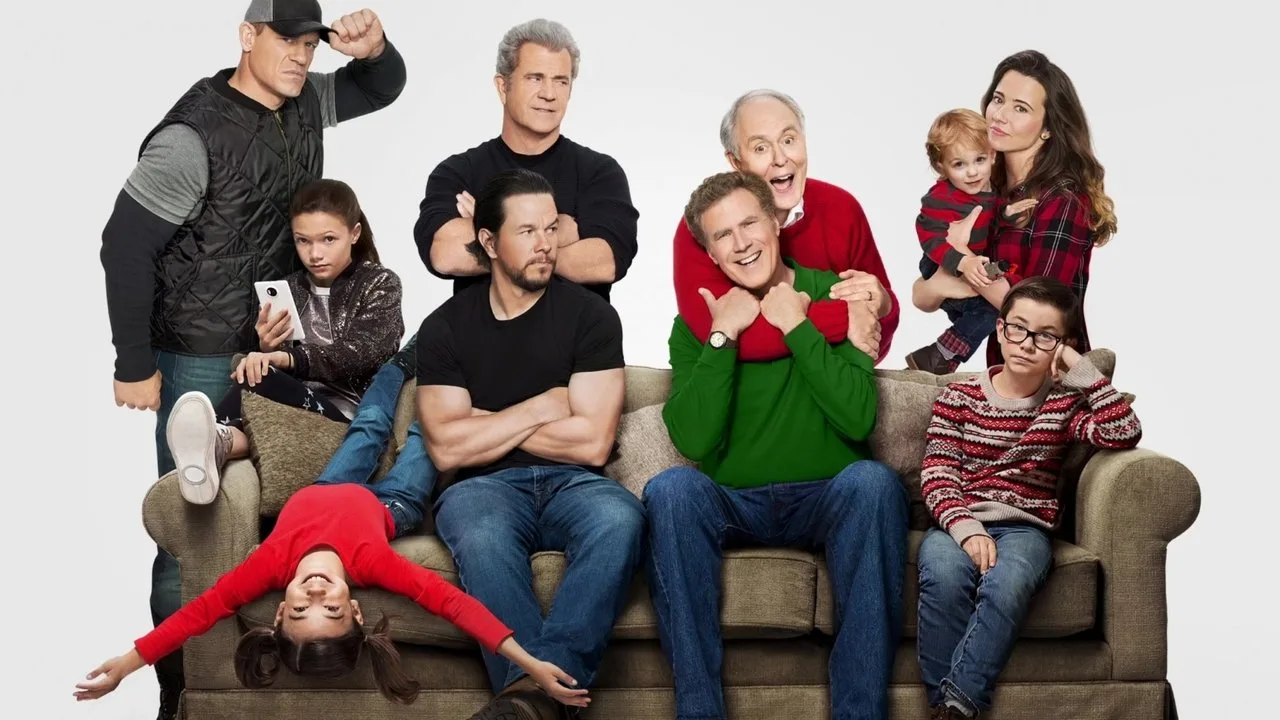
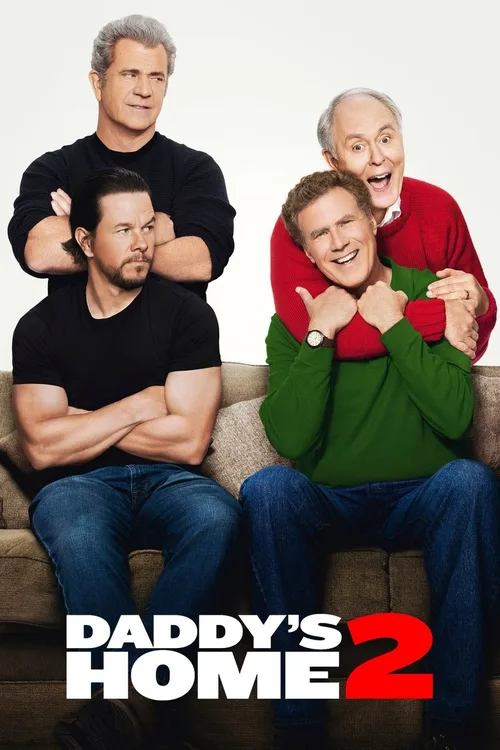
Father and stepfather Dusty and Brad join forces to make Christmastime perfect for the children. Their newfound partnership soon gets put to the test when Dusty's old-school, macho dad and Brad's gentle father arrive to turn the holiday upside down. After a sudden change in plans, the four men decide to take the kids to a luxury resort for a fun-filled getaway that turns into a hilarious and chaotic adventure.
 rating 5/10 User rating 2,694 votes 63%
 ❄ Christmas Connection
Daddy's Home 2 is set entirely during the Christmas season, with the plot revolving around blended families trying to have the perfect holiday together. The climax takes place at a Christmas cabin resort, and the film features a school nativity play, a Christmas tree lot, and a holiday talent show.
Where to Watch


Our Review
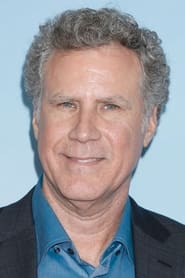
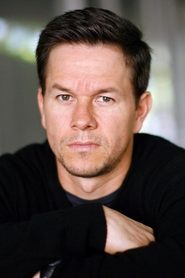
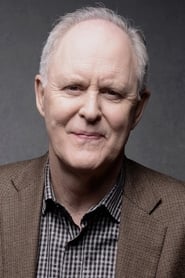
Daddy's Home 2 (2017) takes a simple and effective approach to sequelizing a comedy hit: double the dads. The first film had Will Ferrell's over-eager stepfather Brad squaring off against Mark Wahlberg's hyper-cool biological father Dusty. For the sequel, director Sean Anders brings in their fathers. Mel Gibson plays Kurt, Dusty's absent, macho, womanizing dad. John Lithgow plays Don, Brad's relentlessly affectionate, boundary-challenged father. It's a smart structural idea. The movie just doesn't always know what to do with it.
The Daddy's Home 2 Cast and the Grandfather Problem
Gibson and Lithgow are the reason to watch this movie. That's both a compliment and a criticism.
Lithgow plays Don as a man whose love has no off switch. He kisses Brad on the lips at the airport. He cries during conversations about sandwiches. He hugs strangers. Lithgow commits fully, and his scenes generate the movie's biggest laughs because he plays it completely straight. Don isn't trying to be funny. He genuinely cannot understand why everyone around him is uncomfortable. It's a performance that could have been grating, but Lithgow finds the exact right pitch.
Gibson, meanwhile, plays Kurt as a sun-leathered alpha male who views parenting as a competitive sport. He undermines Brad at every turn, flirts with every woman in the room, and treats emotional vulnerability like a disease he might catch. Gibson's real-life reputation makes the casting feel pointed, and the film never quite decides whether it's in on the joke or not. But as a screen presence, he commands attention. When Gibson and Lithgow share a scene, the energy shifts. The movie gets better.
The problem is that Ferrell and Wahlberg, technically the leads, become supporting players in their own sequel. Their dynamic from the first film, the macho dad versus the try-hard stepdad, has been resolved. Brad and Dusty are co-daddying in harmony now. That's a nice character development, but it leaves them with nothing to play except reactions to their fathers. Ferrell, one of the best improvisers in American comedy, spends large stretches of the movie just looking flustered.
Is Daddy's Home 2 a Christmas Movie?
Without question. This isn't a comedy that happens to include a Christmas tree in the background. The entire plot is driven by the holiday. Brad and Dusty decide to combine their two families for a single "together Christmas" instead of shuttling the kids between houses. The grandfathers arrive and immediately throw this fragile arrangement into chaos. Kurt convinces everyone to abandon the suburban Christmas plan and head to a luxury cabin resort instead.
From there, it's wall-to-wall Christmas. A trip to pick out a tree goes wrong. The kids perform in a school nativity play. There's a power outage on Christmas Eve that forces the whole family into a single room with candles. The climactic scene involves a Christmas talent show that spirals into public confessions and emotional breakdowns. The movie takes the specific stress of blended-family holiday logistics and turns the volume up to absurd.
The thermostat gag is the film's best running joke. All four dads, despite agreeing on nothing else, share a primal, non-negotiable conviction that nobody touches the thermostat. It's a small, accurate observation about fatherhood that lands every time because it doesn't try too hard.
What Works and What Doesn't
The cabin resort section is where the movie finds its rhythm. There's a snowball fight sequence that escalates into genuine chaos, with Gibson treating it like a military operation. Lithgow on a ski slope, terrified and sliding backward, gets a laugh that's purely physical and honestly earned. A scene where the extended family goes to see a movie and ends up in the wrong theater playing a violent action film is a clever bit of misdirection.
That in-theater movie, called Missile Tow, features a voice cameo from Liam Neeson. It's a self-aware gag about holiday action movies that works better than it has any right to.
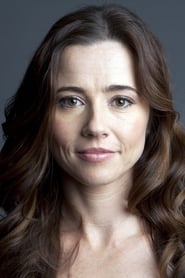
What doesn't work is the emotional stuff. Linda Cardellini and Alessandra Ambrosio, playing Brad's wife Sara and Dusty's wife Karen, get almost nothing to do. There's a subplot about Dusty's stepdaughter Adrianna having a crush on a boy that goes nowhere interesting. And the film's attempt at a sincere emotional resolution, with Kurt finally showing vulnerability on Christmas morning, feels rushed. Gibson gets about 90 seconds to pivot from cartoonish jerk to repentant father. That's not enough screen time for a genuine transformation, so it lands as obligatory rather than moving.
A Box Office Hit That Critics Didn't Love
Daddy's Home 2 grossed $180.6 million worldwide against a production budget of around $69 million. By studio math, that's a solid win. Paramount released it on November 10, 2017, perfectly positioned for the Thanksgiving corridor, and it delivered exactly what the marketing promised.
Critics were less generous. The film holds a 21% on Rotten Tomatoes, with the consensus noting it was "unlikely to spread much yuletide merriment." That's harsh but not entirely unfair. The script by Anders and John Morris recycles a lot of the first film's formula: Brad gets humiliated, Dusty acts cool, slapstick ensues. Adding the grandfathers gives the formula a fresh coat of paint, but underneath, it's the same house.
Still, the audience score sits much higher. Families watching this on a December evening aren't looking for structural innovation. They're looking for Will Ferrell falling off things and Mel Gibson being sarcastically mean to John Lithgow. The movie provides exactly that.
The production injected more than $19 million into the Massachusetts economy, with filming spread across 16 communities including Concord, Framingham, and Great Barrington. The ski resort scenes were shot at Ski Butternut in the Berkshires, employing 2,800 local workers. For a movie about the chaos of family Christmas, it generated some genuinely positive real-world impact in the towns that hosted it.
Fun Facts
Mel Gibson and John Lithgow were both announced as joining the cast in January 2017. Anders specifically wanted actors who embodied extreme opposite versions of the Wahlberg and Ferrell characters.
Principal photography began on March 20, 2017, in Concord, Massachusetts. The production filmed across 16 Massachusetts communities over approximately three months.
The ski resort scenes were filmed at Ski Butternut in Great Barrington, Massachusetts, and Nashoba Valley Ski Area in Westford.
The production spent more than $19 million in Massachusetts and employed 2,800 local workers who earned a combined $10 million in wages.
Liam Neeson provided a voice cameo as the star of Missile Tow, the fictional holiday action movie the family watches in the theater. Mark Wahlberg later said he wanted Neeson to star in a potential Daddy's Home 3.
The house used as the family home is not the same one from the first Daddy's Home. The original film was shot in New Orleans, while the sequel moved production entirely to Massachusetts.
The film grossed $180.6 million worldwide against a $69 million budget, making it a clear financial success despite earning just 21% on Rotten Tomatoes.
Cast