
Innocence is what he knows. Beauty is what she sees.
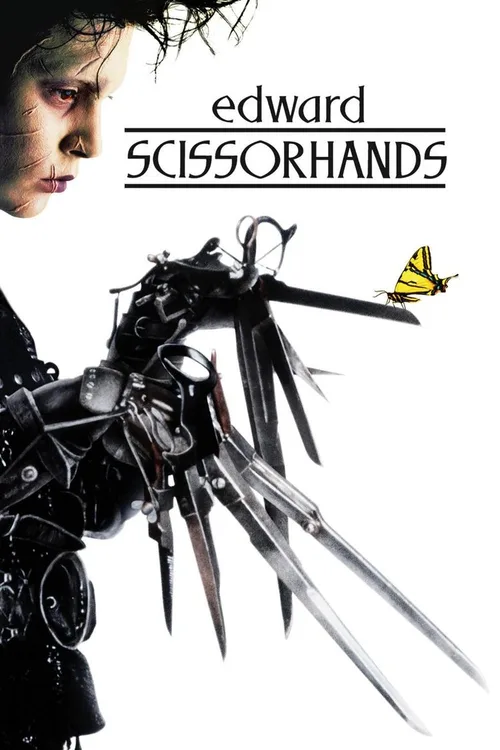
Edward Scissorhands (1990)
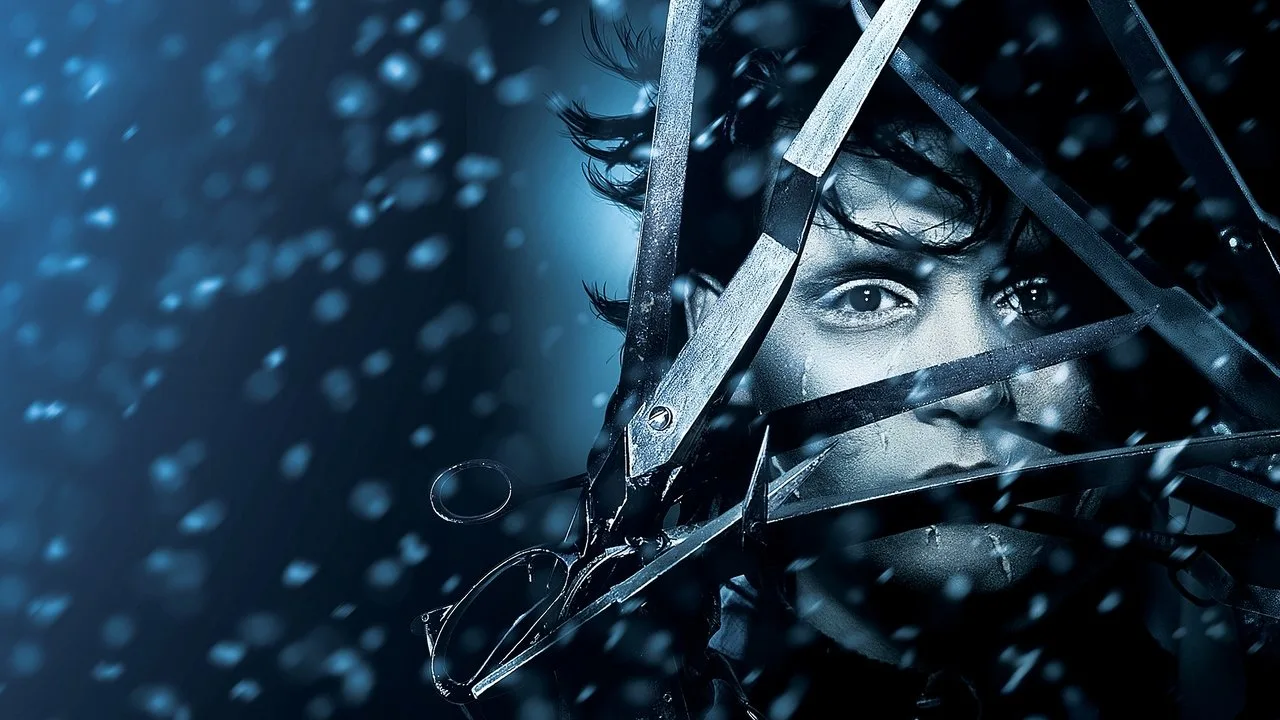
A small suburban town receives a visit from a castaway unfinished science experiment named Edward.
 rating 8/10 User rating 13,598 votes 77%
 ❄ Christmas Connection
Christmas is the emotional climax of Edward Scissorhands. The ice-sculpting scene, where Edward carves an angel while Kim dances in the falling ice shavings, is one of cinema's most iconic Christmas moments. The film's themes of acceptance, loneliness, and belonging resonate deeply with the season's spirit.
Where to Watch


Our Review
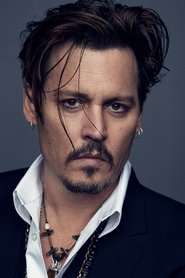
Tim Burton released Edward Scissorhands in 1990 as a PG-13 fantasy romance, and thirty-five years later it remains one of the strangest, most tender films ever to feature a Christmas tree. Johnny Depp plays Edward, an artificial man left unfinished by his inventor (Vincent Price, in his final major film role), stranded alone in a Gothic mansion with scissors where his hands should be. When Avon saleswoman Peg Boggs (Dianne Wiest) discovers him and brings him home to her pastel-colored suburban neighborhood, the film becomes something Burton had never quite managed before: genuinely moving.
Is Edward Scissorhands a Christmas Movie?
This is a fair question. Most of the film takes place in a vaguely timeless suburban setting that could be any season. The neighborhood barbecues and hedge-trimming montages don't scream December. But the final act pivots hard into Christmas, and the result is one of the most emotionally devastating holiday sequences in any film.
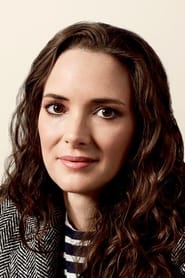
Edward, now rejected by the neighborhood that once adored him, retreats to his hilltop mansion. He begins carving an ice sculpture of an angel. The ice shavings drift down like snow over Kim (Winona Ryder), who dances in them below. It is, without exaggeration, one of the most visually stunning Christmas scenes ever filmed. Danny Elfman's score swells. Kim spins in the artificial snow. And the whole movie clicks into place.
Christmas functions here not as set dressing but as the story's emotional hinge. The season amplifies everything the film is about: the ache of wanting to belong, the cruelty of people who fear what they don't understand, and the small acts of beauty that outsiders create precisely because they see the world differently.
Tim Burton's Most Personal Film
Burton has said in interviews that Edward Scissorhands is autobiographical. He grew up in Burbank, California, feeling like an outsider in a conformist suburban landscape. The film's unnamed Florida suburb, with its identical houses painted in sickly pastels, is Burbank filtered through a Gothic lens.
The production design by Bo Welch sells the whole concept. The neighborhood was filmed in a real development in Lutz, Florida, where the crew repainted twenty houses in coordinated candy colors. Edward's hilltop mansion, by contrast, is all cobwebs and unfinished corridors. The visual contrast between the two worlds is the film's thesis statement in architecture.
Johnny Depp speaks fewer than 170 words in the entire film. That restraint was Depp's idea. He understood that Edward communicates through action, through creation, through the things he carves. The ice angel, the topiary dinosaurs, the elaborate hairstyles he gives the neighborhood women. Edward's hands destroy what he tries to touch gently, but they create beauty at a distance.
The Cast of Edward Scissorhands
Winona Ryder plays Kim Boggs with a slow-burn tenderness that anchors the film's love story. She starts out frightened of Edward and ends up being the only person willing to protect him. Their scenes together work because Ryder doesn't oversell the romance. She plays it as quiet recognition: this strange person sees her more clearly than anyone in her life.
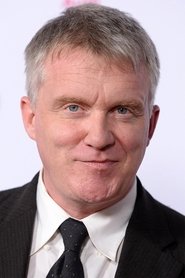
Dianne Wiest is perfect as Peg, the Avon lady whose maternal instinct overrides her common sense. Anthony Michael Hall, playing against his usual nice-guy type, is convincingly menacing as Kim's jealous boyfriend Jim. And Alan Arkin, as Peg's husband Bill, delivers the film's driest comedy simply by being unfazed by everything.
Vincent Price appears for only a few minutes as Edward's inventor. He was 79 and seriously ill during filming. Burton, who had idolized Price since childhood, wrote the role specifically for him. Price died three years later. Their collaboration gives the film a bittersweet layer that extends beyond the screen.
Why It Still Works
The film's suburb could be a social media feed. Everyone loves Edward when he's useful. He trims their hedges, styles their hair, gives them something to photograph and gossip about. The moment he stops being convenient, they turn on him. The speed of the neighborhood's reversal feels more relevant now than it did in 1990.
Burton would go on to make bigger, more expensive films. None of them hit this same nerve. Edward Scissorhands works because it keeps its scope small. One outsider. One neighborhood. One Christmas where the snow falls because a lonely man on a hill is making something beautiful that no one asked for.
Fun Facts
Tom Cruise was originally considered for the role of Edward, but Burton felt Depp better embodied the character's vulnerability. Depp reportedly agreed to the role after a single meeting with Burton.
The neighborhood scenes were filmed in a real housing development called Carpenter's Run in Lutz, Florida. The production crew repainted about twenty houses in pastel colors, and some residents kept the paint job for years afterward.
Vincent Price's scenes were among the first shot because the production team was concerned about his declining health. He passed away in 1993, making Edward Scissorhands one of his last film appearances.
Johnny Depp wore his Edward Scissorhands costume to a Hollywood costume shop to test whether people would recognize him. No one did, which he took as proof the makeup worked.
Caroline Thompson wrote the screenplay based on a drawing Burton made as a teenager of a thin, sad figure with blades for fingers. Burton described it as a visual representation of how he felt growing up.
Danny Elfman has called his score for Edward Scissorhands his personal favorite among all his film compositions, including his work on Batman and The Nightmare Before Christmas.
The film grossed $56 million domestically on a $20 million budget, making it a solid commercial hit despite 20th Century Fox's initial nervousness about the concept.
Cast