
Elves (2021)
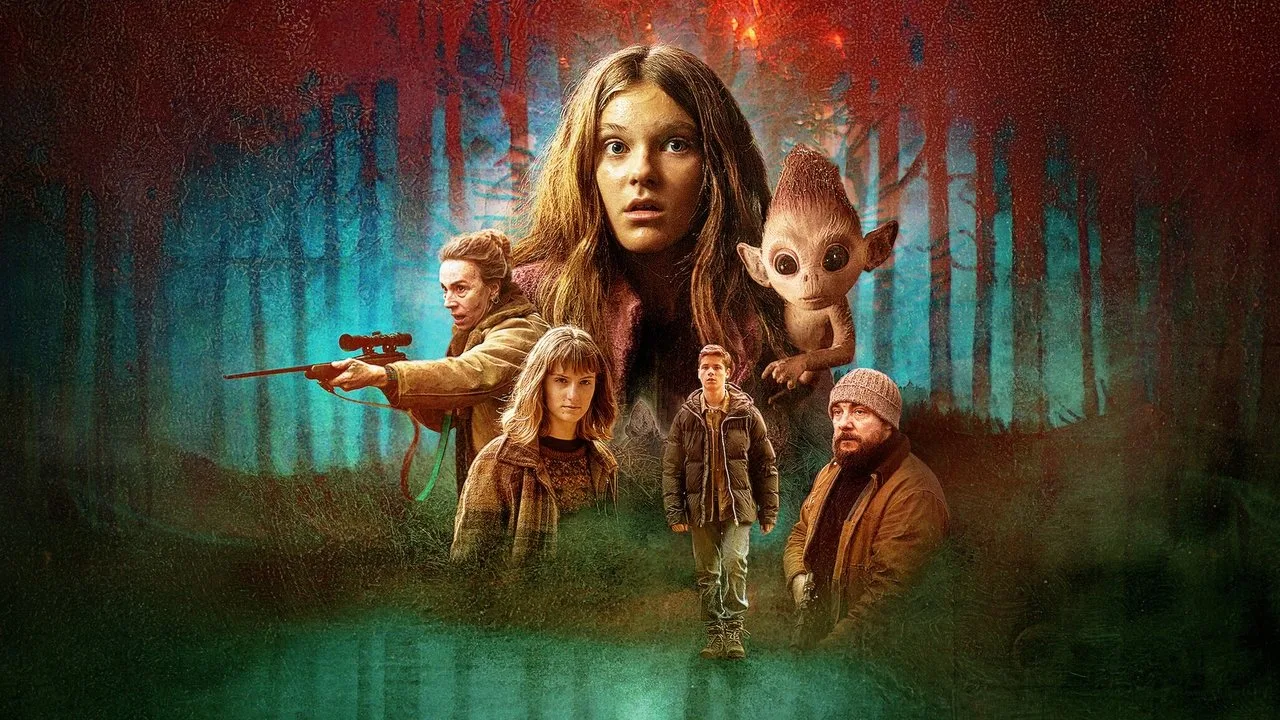
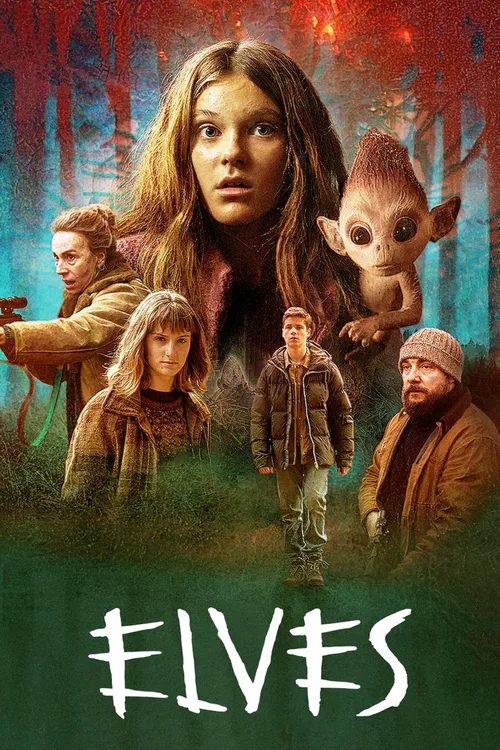
A Christmas vacation turns into a nightmare for a teenager and her family when they discover an ancient menace that stalks their island getaway.
 rating 7/10 User rating 237 votes 69%
 ❄ Christmas Connection
The entire series takes place during a family Christmas holiday on a remote Danish island, with the creature threat tied directly to ancient Scandinavian nisse folklore. Advent, Christmas decorations, and holiday traditions are woven throughout all six episodes. Without Christmas as the setting and cultural backdrop, the story does not exist.
Our Review
Scandinavian folklore has always known that the nisse, those small, mischievous household spirits tied to farm and hearth, were not simply adorable. They demanded respect, offerings, and deference. Get on their bad side and livestock would die, milk would sour, and worse would follow. The Danish Netflix series Elves (original title: Nisser) takes that ancient unease and weaponizes it into six tightly wound episodes of Christmas horror that aired on November 28, 2021.
Created and written by Stefan Jaworski and directed across all episodes by Roni Ezra, the show follows a family that travels to the fictional Danish island of Aarmandsø for Christmas. Almost immediately, things go wrong in exactly the way you expect from a horror series, and then in several ways you don't.
What Makes Elves Work as Christmas Horror
The premise is economical and smart. Teenager Josefine, the family's reluctant youngest member, finds an injured creature in the forest after the family car clips something on the road at night. She nurses it back to health in secret. The creature, which she names Kee-ko, is one of the island's elves, and the locals have spent generations maintaining a strict agreement with them: the elves stay in their forest, the humans stay in their village, and a reinforced fence running through the island keeps that arrangement intact.
Josefine breaks the arrangement.
The show earns its scares not through jump cuts but through dread. The island's small community of locals already knows what the elves can do, and watching them decide how to handle this oblivious family from the mainland generates real tension. The creature design blends folklore authenticity with genuine menace: the elves are fast, territorial, and intelligent in the manner of animals protecting their territory. They're not evil in a cartoon sense. They're just following rules humans have forgotten how to respect.
The Cast Carries the Weight
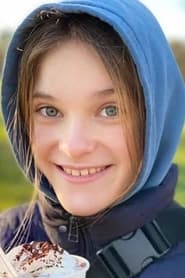
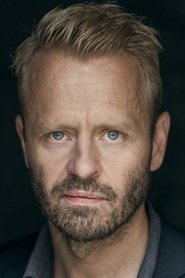
Ann Eleonora Jørgensen and Rasmus Hammerich play the parents with the kind of understated realism that keeps Danish drama grounded. Neither of them is stupid, which matters in a genre built on characters making inexplicable decisions. Vivelill Søgaard Holm plays Josefine, and she's the series' moral center: a teenager who made a compassionate mistake and spends six episodes paying for it and trying to fix it.
Sonja Steen, as the island elder who maintains the old pact with the elves, steals every scene she's in. Her character carries generations of specific, painful knowledge, and Steen plays the weight of that without melodrama. She's not a villain. She's a person who understands something horrible and has decided to live with it anyway.
Six Episodes, No Padding
Each episode runs between 23 and 25 minutes. The entire series takes less time to watch than most feature films, and it uses that constraint ruthlessly. There are no subplot distractions, no filler scenes of characters cooking dinner and chatting. The story moves forward in every scene. By the time the finale arrives, the show has earned its conclusion through momentum rather than spectacle.
The visual language is equally spare. The series was filmed around the greater Copenhagen area, with the flat winter landscape of Orø island standing in for the fictional Aarmandsø. The frozen ground, bare trees, and grey Scandinavian light create an environment that feels genuinely isolated without requiring a single line of dialogue to explain why no one can simply call for help.
The opening theme uses a version of "Carol of the Bells" arranged by Danish artist Fallulah. It's a smart choice. The carol has always had a slightly unnerving quality beneath its festive surface, and here it signals clearly that this Christmas will not be cheerful.
How Scary Is It, Actually?
Elves lands somewhere between atmospheric folk horror and family-adjacent thriller. It's not relentlessly brutal, and it's not trying to compete with prestige gore. The horror is situational, rooted in the specific dread of a place with rules you didn't know about until you'd already broken them. Parents who watch it alongside teenagers will likely find it more effective than solo viewing, because the family dynamics on screen mirror the watching dynamic in the room.
The IMDB score of 5.6 undersells it. Much of the backlash comes from viewers who expected something more explicitly violent or more extensively mythological. The show has a specific, modest ambition and it meets that ambition cleanly. That's rarer than the score suggests.
In December 2021, Elves reached Netflix's global top ten most-viewed series. It did so with six episodes, a small cast, and a creature built on folklore most of its audience had never heard of. By any reasonable measure, that's a success.
Fun Facts
The Danish title of the series is Nisser, a direct reference to the nisse, a small supernatural household spirit from Scandinavian folklore that predates the Christianized Christmas traditions by centuries. The nisse was originally a protective farm spirit who required a bowl of porridge left out on Christmas Eve or would turn malevolent.
All six episodes of the series were written by a single writer, Stefan Jaworski, and directed by a single director, Roni Ezra. This kind of unified authorial control is unusual for television and gives the series an unusually consistent visual and narrative tone across its full runtime.
The island of Aarmandsø where the story is set does not exist. Filming took place around the real Danish island of Orø in Isefjorden, including the Østre Færge ferry that carries the family to the island in the opening episode.
The series premiered on Netflix on November 28, 2021, timing it to arrive just as Advent began, and it entered Netflix's global top ten most-viewed series within weeks of release despite having no major international stars in its cast.
The opening theme is a rearrangement of "Carol of the Bells" by Danish singer Fallulah. The original carol, "Shchedryk," was composed by Ukrainian composer Mykola Leontovych in 1914 and was first performed publicly in Kyiv in 1916, making its horror-adjacent reuse here an unusually layered piece of music history.
The creature effects for the elves combined practical on-set puppetry and animatronics with CGI enhancement, a production approach designed to give the actors something physical to react to rather than performing entirely against empty space.
Each episode of Elves runs approximately 23 to 25 minutes, making the entire first season shorter in total runtime than most single feature films. The production team designed the series specifically for this compressed format, treating it as a six-part film rather than a conventional television season.
Cast