
You Better Watch Out.
Fatman (2020)
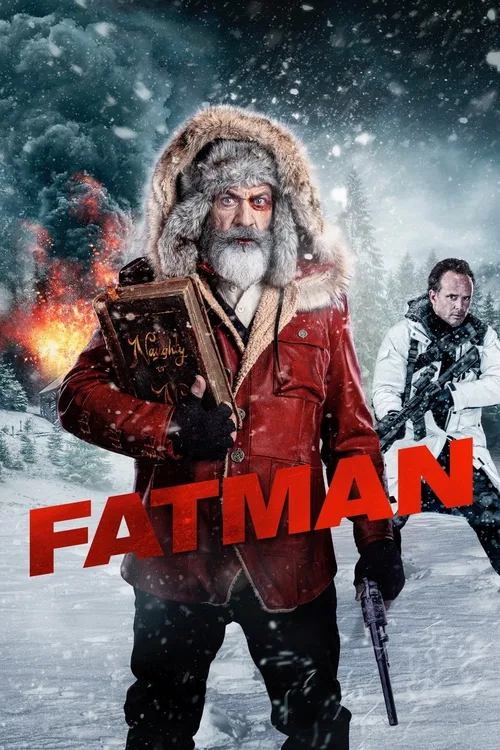
A rowdy, unorthodox Santa Claus is fighting to save his declining business. Meanwhile, Billy, a neglected and precocious 12 year old, hires a hit man to kill Santa after receiving a lump of coal in his stocking.
 rating 6/10 User rating 941 votes 56%
 ❄ Christmas Connection
Fatman is built entirely around Santa Claus as its protagonist, set on his ranch in rural Alaska during the Christmas season. The plot revolves around gift-giving, naughty-or-nice lists, and a child's rage over receiving coal in his stocking. Santa's identity and purpose are central to every scene.
Where to Watch


Our Review
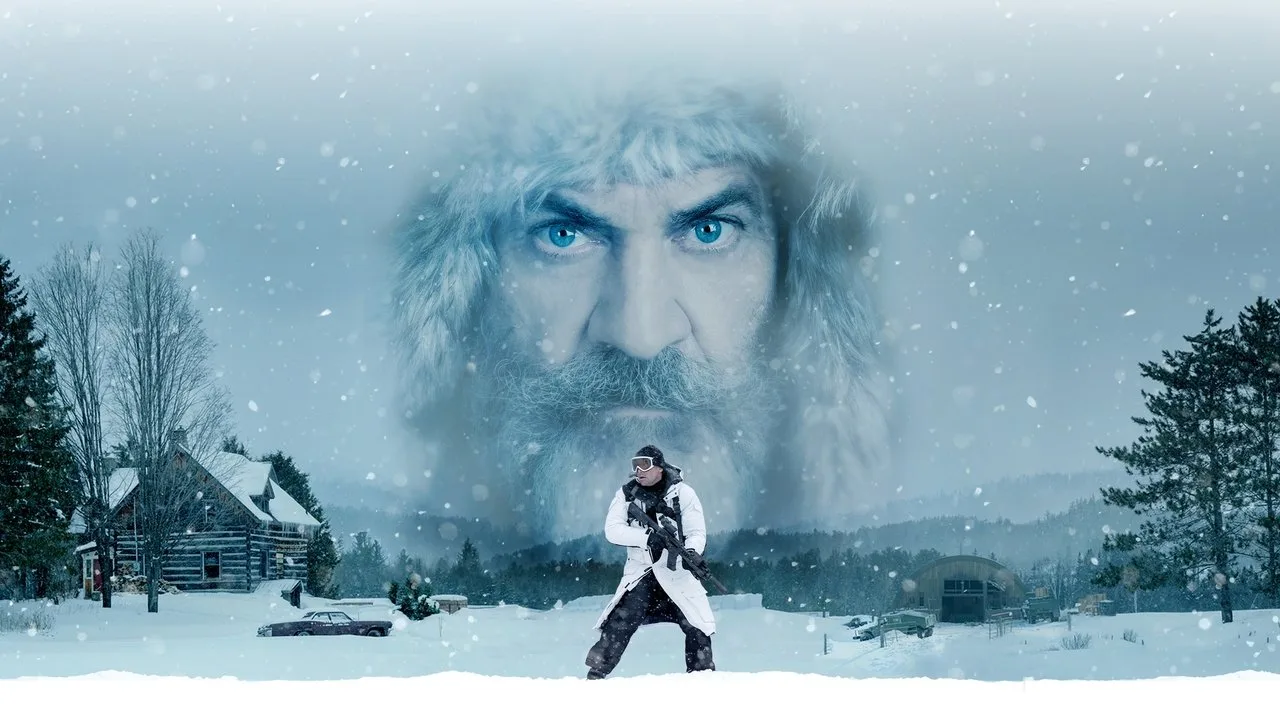
Fatman opens with a shot of Mel Gibson's Santa Claus, here called Chris Cringle, feeding horses on a snow-covered ranch in Alaska. He looks tired. He looks old. He's carrying a rifle. Within minutes, a spoiled 12-year-old named Billy Wenan receives a lump of coal in his Christmas stocking and responds by hiring a professional assassin to kill Santa. That is the premise of the 2020 film directed by brothers Eshom and Ian Nelms, and it is played almost entirely straight.
This is not a parody. It's not a winking comedy. Fatman occupies a strange, lonely corner of Christmas cinema where the absurd meets the deadpan, and the film refuses to apologize for any of it.
Mel Gibson as a Grizzled, Government-Subsidized Santa
Gibson's Chris Cringle lives modestly. His workshop employs a squad of elves who produce toys on what appears to be a factory floor. His operation survives on a U.S. military contract, because apparently the government subsidizes Santa's gift production in exchange for manufacturing fighter jet components. The film presents this without irony. Chris signs the paperwork, grumbles about budget cuts, and goes back to work.
Gibson brings something genuinely interesting to the role. He plays Santa as a blue-collar worker nearing retirement who has watched the world's children get worse year after year. The naughty list is growing. Fewer children deserve presents. His funding is getting slashed. He's drinking more. His marriage to Ruth (Marianne Jean-Baptiste, quietly excellent) is one of the few warm things in the film, and Jean-Baptiste grounds every scene she's in with understated affection.
The performance works because Gibson doesn't play it for laughs. He plays it like a man who has been doing a thankless job for centuries and is running out of reasons to continue.
Walton Goggins as the Skinny Man
On the other end of the narrative, Walton Goggins plays a hitman known only as "Skinny Man." He's been hired by Billy, a sociopathic child who treats the assassination of Santa Claus as a business transaction. Goggins is the best thing in the movie. He plays the role with a calm, reptilian focus that suggests a man who has been waiting his entire career for this particular contract.
The Skinny Man has his own grudge against Santa. As a child, he also received coal, and the memory has festered into something clinical and personal. Goggins sells this backstory through small physical choices: the way he handles a childhood ornament, the way he studies a Santa figurine in a diner. He doesn't chew scenery. He dissects it.
The film crosscuts between Gibson's ranch and Goggins' methodical pursuit, and these two parallel tracks give Fatman a rhythm that feels more like a Coen brothers thriller than a holiday movie.
Is Fatman a Christmas Movie?
Yes, but not in any conventional sense. The film takes the mythology of Santa Claus completely seriously. Chris Cringle is immortal. He has a magical sleigh. His elves are real. Children receive real coal or real gifts based on their behavior. The naughty-or-nice system is treated as a verifiable fact of the world, not a metaphor.
But the film surrounds this mythology with the texture of rural American decline. Chris's operation is failing financially. The government is cutting his subsidies. The elves are demoralized. The tone is closer to a small-town economic drama than a Christmas fantasy. Think of it as a Christmasified version of a story about a family farm being squeezed out by federal budget politics.
What Works and What Doesn't
The Nelms brothers have a strong eye for composition. The Alaskan landscape is shot with a cold beauty that reinforces the film's melancholy. The pacing is deliberate, almost too deliberate. At 100 minutes, Fatman sometimes feels like it's taking a long walk through the snow to reach a destination you can already see.
Billy, the bratty kid who sets the plot in motion, is the film's weakest element. Chance Hurstfield plays him as a one-note sociopath, and the script doesn't give him enough texture to make his villainy interesting. He's a plot device in a school uniform.
The climax, when Goggins finally reaches the ranch, delivers the confrontation the film has been building toward. It's violent, messy, and surprisingly emotional. Gibson and Goggins share only a few minutes of screen time together, but the buildup makes it count. The final image is both bleak and oddly hopeful, which is about as close to a Christmas miracle as this film gets.
A Cult Christmas Film That Found Its Audience
Fatman was released in October 2020 to mixed reviews and almost no theatrical audience, earning just $1.6 million against a $20 million budget. COVID-era distribution didn't help. But the film found a second life on streaming and physical media, developing the kind of devoted cult following that sustains midnight screenings and Reddit threads.
Its appeal makes sense. Fatman fills a specific niche: for viewers who want a Christmas movie that takes Santa seriously but refuses to be sentimental about it. It sits alongside Rare Exports and Violent Night in a small but growing subgenre of films that treat Santa Claus as a figure worth interrogating rather than simply celebrating. Gibson's weary, weathered performance anchors it, and Goggins elevates every scene he's in. The film is flawed, uneven, and genuinely unlike anything else in the Christmas canon.
Fun Facts
The Nelms brothers wrote the Fatman script years before production, originally envisioning it as a lower-budget project before Mel Gibson's involvement raised the film's profile and its $20 million budget.
Walton Goggins kept a childhood Santa ornament on set that he used as a prop in several scenes, building his character's obsession with Santa through physical objects rather than dialogue.
Fatman was filmed in Ottawa, Canada, standing in for rural Alaska. The production shot during a real Canadian winter to avoid artificial snow.
Marianne Jean-Baptiste, who plays Ruth (Mrs. Claus), is best known for her Oscar-nominated role in Mike Leigh's Secrets and Lies (1996). Fatman marks one of her rare appearances in a genre film.
The film's Santa drives a 1972 Ford Bronco, a deliberate choice by the directors to make Chris Cringle feel like a working rancher rather than a magical figure.
Fatman grossed only $1.6 million theatrically but became one of the most-rented digital titles during the 2020 holiday season, suggesting its audience simply wasn't going to theaters during the pandemic.
The U.S. military subplot, in which Santa's workshop manufactures fighter jet parts to stay funded, was inspired by real-world stories of small American manufacturers taking government defense contracts to survive.
Cast