
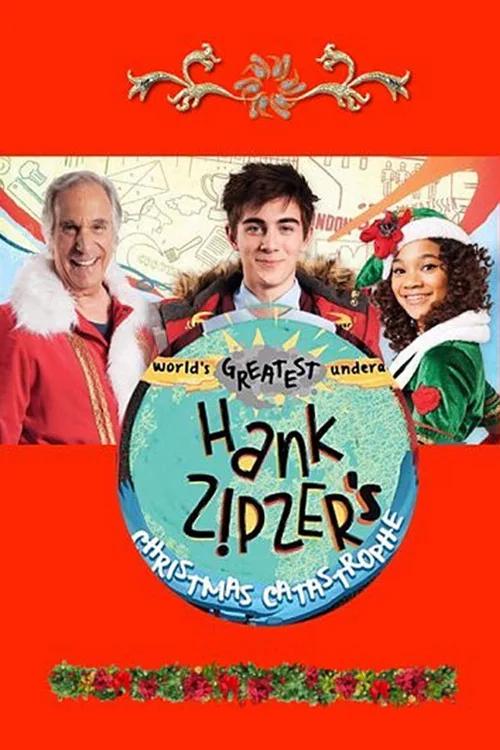
Hank Zipzer's Christmas Catastrophe (2016)
Hank Zipzer's Christmas Catastrophe follows Hank in the run up to Christmas as he prepares for a new baby brother. But Hank's life never runs smoothly and soon Miss Adolf is turning Mr. Rock's Rudolph the Rock'n'Roll Reindeer into a one-woman Christmas Carol - two school inspectors are getting injured in a bizarre sleighing accident and Mr. Joy is trying to cancel Christmas altogether. In his attempt to drag triumph from the glittering jaws of doom, Hank will ice skate into disaster, nearly crash a Christmas tree into a crowd, get himself and his best friends arrested, get his favourite teacher sacked and lose the love of his life. This time, he really has let everyone down. Surely even Hank can't get out this one. Luckily for us, there's no way to tell Hank that.
 rating 7/10 User rating 5 votes 66%
 ❄ Christmas Connection
The entire film is structured around the school Christmas show, a family preparing for a Christmas baby, and the chaotic fallout when things go spectacularly wrong on Christmas itself. Christmas is not a backdrop here -- it is the engine of every plot thread, from the cancelled school play to the manger-adjacent birth of Hank's sibling.
Where to Watch


Our Review
There is a very specific pleasure in watching a child character wreck Christmas with the best of intentions. British TV has always done this well, and Hank Zipzer's Christmas Catastrophe (2016) earns its place in that tradition. It is a CBBC Christmas special, 75 minutes long, built around a lovable dyslexic kid who manages to turn a school nativity into something resembling a minor disaster zone. The formula is not new. The execution is surprisingly good.
The film caps three series of the CBBC show Hank Zipzer, which ran from 2014 to 2016 and was adapted from the American children's book series by Henry Winkler and Lin Oliver. Yes, that Henry Winkler -- Arthur "The Fonz" Fonzarelli himself -- who spent decades not knowing he had dyslexia, then channelled the experience into 18 books about a kid who struggles at school but isn't stupid. The books sold more than four million copies. The British TV adaptation moved the character from New York to London, kept the dyslexia front and centre, and found in Nick James a lead performance good enough to win a BAFTA Children's Award.
What Actually Happens (and Why It Works)
Hank's school Christmas show has been commandeered by the imperious Miss Adolf, who transforms Mr. Rock's planned "Rudolph the Rock 'n' Roll Reindeer" into a one-woman Christmas Carol. Meanwhile, Mr. Joy -- a teacher whose name is the film's best joke -- has decided that Christmas is fundamentally a waste of time and wants to cancel it altogether. On the home front, Hank's mother is heavily pregnant and due to give birth right around Christmas Day.
These three threads collide with the inevitability of a well-constructed farce. Hank, trying to fix everything, makes it worse. Then he makes it worse again. The script, by Joe Williams and Debbie Isitt, maintains enough momentum that you don't sit around waiting for the resolution -- you're too busy watching things unravel.
Debbie Isitt directed and co-wrote the three Nativity! films, which means she knows exactly how to build a school Christmas show towards total collapse and then engineer a redemptive finale. That experience shows. The pacing in the final act is genuinely tight for a children's TV movie.
Henry Winkler's Cameo and Why It Matters
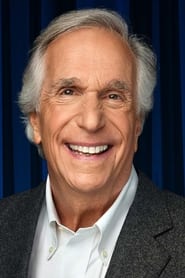
Winkler appears as Mr. Rock, the music teacher whose ambitious plans get trampled by Miss Adolf. It's a warm, funny performance and clearly a labour of affection -- Winkler didn't have to cross the Atlantic to appear in a BBC children's special, but he did it repeatedly across the show's run. His presence makes sense as more than stunt casting: he co-created the character, and his own experience of undiagnosed dyslexia is literally the reason Hank Zipzer exists as a fictional child.
Winkler wasn't diagnosed with dyslexia until he was in his 30s. He had graduated from the Yale School of Drama despite reading at a second-grade level, which tells you something both about his intelligence and about how thoroughly the education system of his era failed him. The Hank Zipzer books came out of a desire to give kids a character who struggled the way he had, and who found solutions the way he eventually did.
The film handles this material without lecturing. Hank's dyslexia creates practical problems -- reading a script, following instructions, processing information quickly -- but the film never pauses to explain dyslexia to the audience. It just shows you what it looks like from the inside, which is the harder and more useful thing.
Nick James and the Weight of a BAFTA
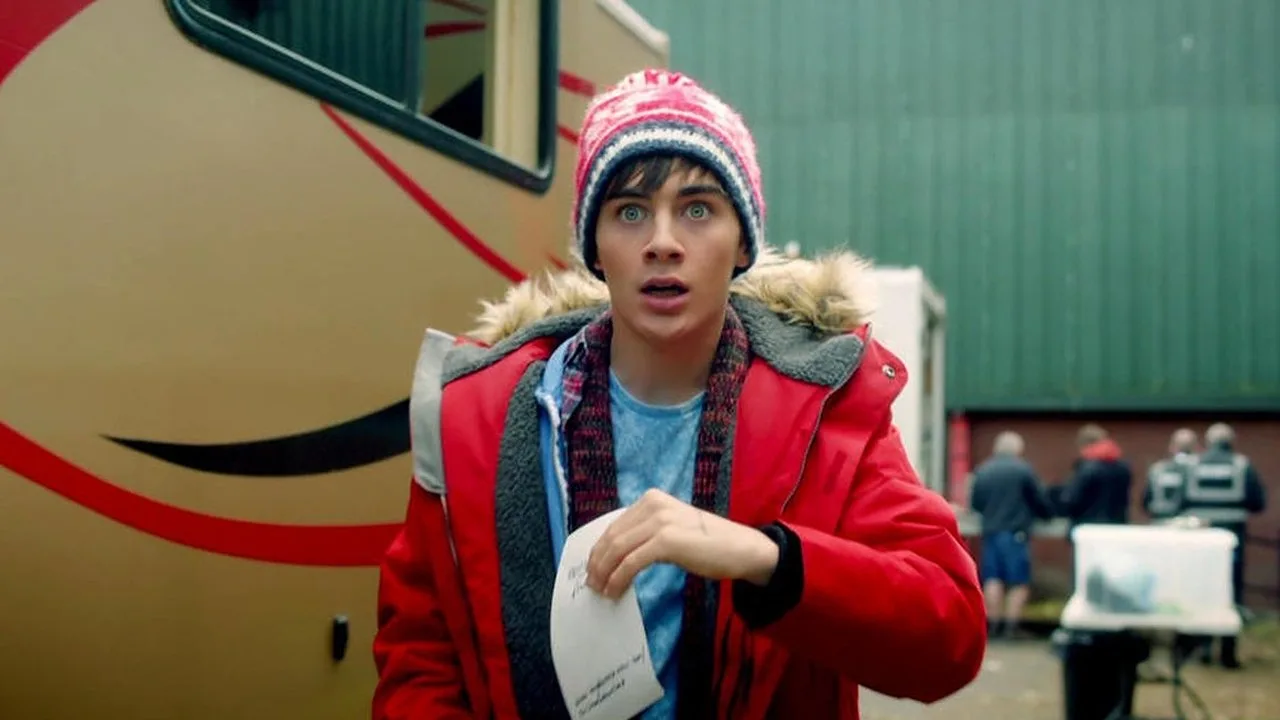
Nick James won the BAFTA Children's Award for Performer for his work as Hank across the series. That award matters because it's easy to dismiss children's television performances as category-adjacent to real acting. Watch the Christmas special and you'll see the award was earned. James plays embarrassment, enthusiasm, panic, and guilt in quick succession without any of it feeling calculated. He doesn't push for sympathy. The character is funny because James plays him as someone who genuinely believes each new plan is going to work, right up to the moment it doesn't.
The supporting cast is solid. Juliet Cowan as Hank's mother brings warmth without becoming a sentimental device. The film also benefits from being shot on location rather than in a studio -- it looks like a real school, which gives the chaos something real to disrupt.
Where It Sits in the British Christmas TV Landscape
British Christmas television is its own ecosystem, and CBBC Christmas specials occupy a specific corner of it -- made for children 6 to 12, aired in December, designed to be watched with parents who won't be bored. Hank Zipzer's Christmas Catastrophe achieves this balance better than most. The jokes land at different registers for different age groups. The emotional beats are earned rather than manufactured.
The film was nominated for an International Emmy Kids award in the TV Movie/Mini-Series category and won it. The BAFTA nomination in the Comedy category confirmed what the ratings had already suggested: this wasn't just competent children's television, it was notably good children's television.
The ending -- a baby born amid the wreckage of a cancelled Christmas show, with everyone piling into a hospital waiting room -- has the slightly chaotic warmth of a real family Christmas rather than the staged warmth of a Hallmark card. That distinction is what separates a children's film you'll remember from one you'll forget by New Year.
Fun Facts
Henry Winkler was in his 30s before he was diagnosed with dyslexia -- despite having already graduated from the Yale School of Drama and achieved international fame as "The Fonz" on Happy Days.
The Hank Zipzer book series, which Winkler co-wrote with Lin Oliver starting in 2003, has sold more than four million copies. Because of Winkler's dyslexia, the books are written by dictation: he walks around Oliver's apartment sharing ideas aloud while she types.
Nick James won a BAFTA Children's Award for Performer for his role as Hank Zipzer -- a competitive category that has recognised performances across all of British children's television.
The film won the International Emmy Kids Award in the TV Movie/Mini-Series category, making it one of only a handful of CBBC productions to receive that recognition.
Co-writer Debbie Isitt directed all three Nativity! films (2009, 2012, 2014), making her one of Britain's most experienced hands at the specific subgenre of chaotic school Christmas show comedies.
The TV series relocated Hank from his original setting of New York City to London, keeping the character's American family but placing him in the British school system -- a change that gave the show its unusual transatlantic flavour.
The production received funding support from Screen Yorkshire's Yorkshire Content Fund, though the show is set in London -- a common feature of British TV economics where regional film funds support productions that aren't necessarily set in the funding region.
Here's Hank, the prequel book series Winkler and Oliver launched in 2014, uses a special font called "dyslexie" designed to be easier for dyslexic readers -- the first time that font appeared in a book published in the United States.
Cast