

You Better Be Good...
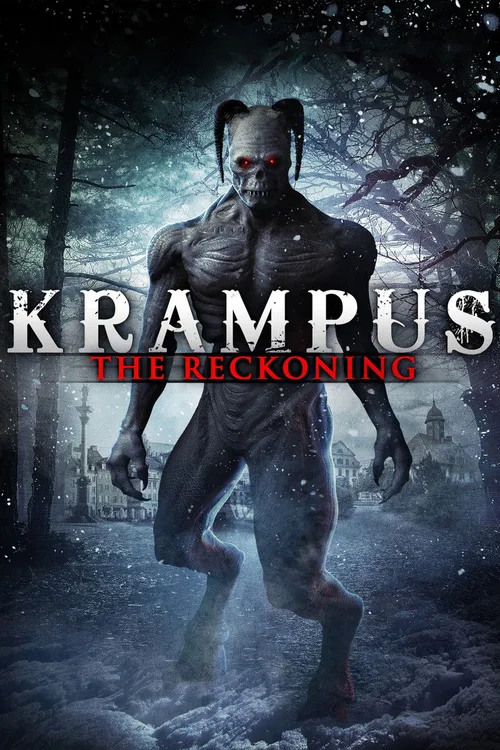
Krampus: The Reckoning (2015)
Zoe, a strange child has a not so imaginary friend the Krampus who is the dark companion of St. Nicholas.
 rating 2/10 User rating 53 votes 35%
 ❄ Christmas Connection
Krampus: The Reckoning uses the Alpine folklore figure of Krampus, the horned punisher of naughty children who accompanies St. Nicholas on December 5, as its central monster. The film is set during the Christmas season and draws explicitly on the tradition where bad children face supernatural consequences. The Christmas framing is thin but functional.
Where to Watch


Our Review
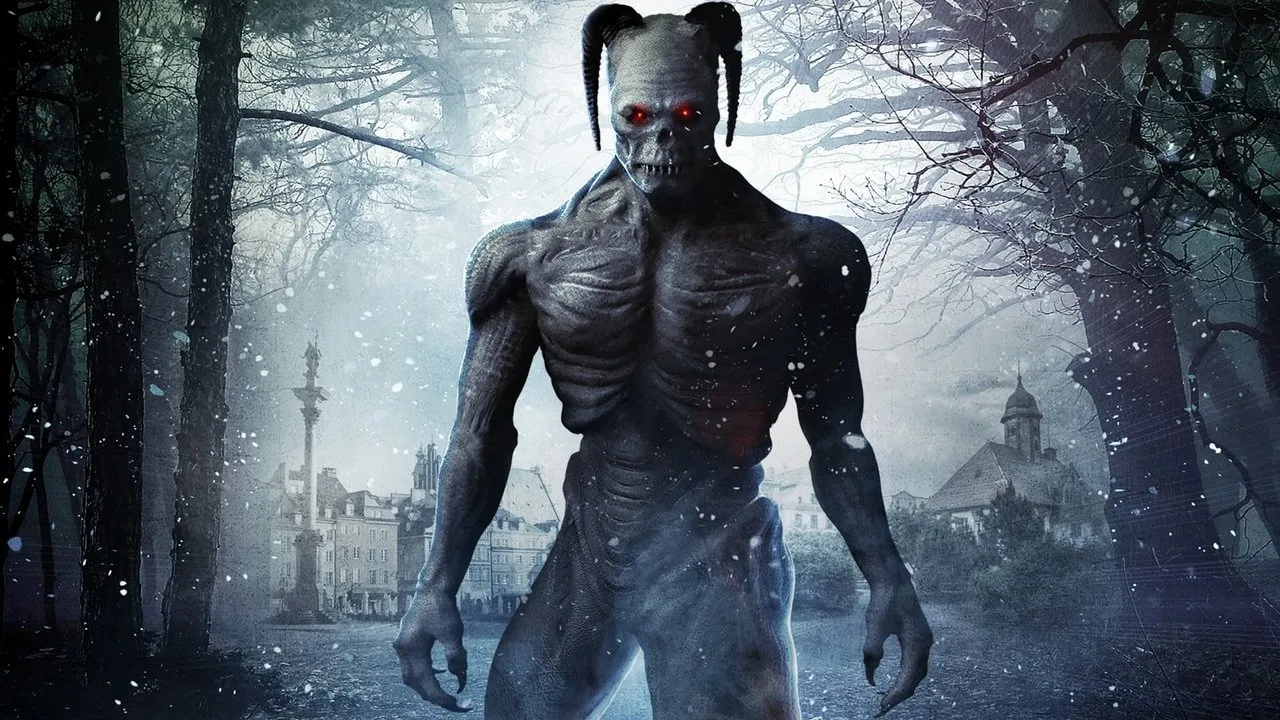
There were two Krampus movies in 2015. One had a $15 million budget, a Universal Pictures release, and Adam Scott. The other had director Robert Conway, a direct-to-video DVD release date of November 3, 2015, and a CGI Krampus that looks like it was rendered on a mid-2000s gaming PC. Krampus: The Reckoning is the second one, and understanding exactly what you are getting into is the only thing that makes watching it bearable.
What Is Krampus: The Reckoning About?
Child psychologist Rachel Stewart, played by Monica Engesser, is called to investigate after the foster parents of a small girl named Zoe (Amelia Haberman) are found burned to death in their locked home. Zoe, calm and oddly articulate for her apparent age, was locked in her room the whole time. Rachel digs into Zoe's history and discovers this is not the first set of foster parents to die under improbable circumstances.
The film is set in Arizona, which is an unusual choice for a creature rooted in the snowbound Alps of Austria and Bavaria, but Conway leans into the sun-bleached suburban setting without much comment. Detective Miles O'Connor, played by James Ray, partners reluctantly with Rachel as the bodies accumulate. The mystery unfolds across a series of conversations in offices and interrogation rooms, with the actual monster kept largely offscreen until the budget allows a brief appearance.
The twist involves Rachel's own buried history with Krampus, and it is a legitimate attempt at building mythology rather than just a serial killer in a costume. The idea that Zoe might be decades older than she appears, and that Krampus operates as a kind of hired supernatural enforcer for a girl who knows how to call him, is genuinely more interesting than the execution suggests.
The Krampus Folklore Behind the Film
Whatever its failings as a movie, Krampus: The Reckoning arrived at a moment when the Alpine figure was breaking into mainstream American awareness. Krampus originates in the German-speaking regions of the Alps, where he serves as the dark companion to St. Nicholas. Nicholas rewards well-behaved children on December 5 (Krampusnacht); Krampus punishes the rest with birch switches and, in the worst cases, drags them off in a sack.
The Catholic Church repeatedly tried to suppress Krampus celebrations from the 16th century onward. The rugged Alpine terrain made enforcement difficult, and the tradition survived. Modern Krampuslauf processions still run through Austrian and Bavarian towns each year, participants wearing handmade fur suits, carved wooden masks, and cowbells.
Conway's film relocates this mythology to Phoenix-area suburbia and gives Krampus a new function: he doesn't punish naughty children, he punishes adults who mistreat them. It's a coherent reinterpretation. The source folklore did carry an element of divine justice, even if the original version directed that justice at children rather than their abusers. The problem is not the concept.
Where the Film Fails
The CGI creature is genuinely difficult to watch. The Krampus effects look unmistakably cheap, and Conway uses them sparingly enough that the film spends most of its 89 minutes as a procedural drama with horror punctuation. That procedural material requires actors who can carry quiet tension through long dialogue scenes, and the cast is inconsistent. Engesser brings more to the lead role than the script deserves; some of the supporting performances do not.
The pacing is the deeper problem. Conway shoots for slow-burn atmosphere and lands on slow. Scenes that should generate dread feel like establishing shots that ran long. The film has a coherent story with a beginning, middle, and twist ending, which puts it ahead of many comparable productions, but coherence alone is not enough to fill 89 minutes.
The IMDB rating of 2.6 out of 10 is harsh but not dishonest. This is a film made by people who cared about the mythology and ran out of resources before they could do it justice. A better script, two more days of shooting, and a creature budget that didn't embarrass would have produced something watchable. What exists is interesting as a curiosity and painful as entertainment.
Should You Watch Krampus: The Reckoning?
If you are working through every Krampus film ever made, yes. If you want to watch a good Christmas horror movie, start with Michael Dougherty's Krampus from the same year and work backward from there. Conway's film occupies a specific niche: it takes the folklore more seriously than many studio productions do, it has a genuine narrative structure, and it is nearly unwatchable in the conventional sense.
The one scene that actually works is an early confrontation where Zoe sits across from Rachel and discusses the nature of punishment with the eerie composure of someone who has lived through several decades of Christmas seasons in a child's body. Haberman, given very little to work with technically, is unsettling in that sequence. It is about four minutes long and is better than anything surrounding it.
Fun Facts
The film was co-written by Robert Conway and Owen Conway and released direct-to-video on November 3, 2015, exactly one month before Michael Dougherty's studio Krampus opened in cinemas on December 4, 2015.
Krampus: The Reckoning holds a 2.6 out of 10 on IMDb based on user ratings, placing it among the lowest-rated horror films of the 2015 Christmas season.
The historical Krampus is first documented in written sources from the 16th century in the German-speaking Alpine regions, though some folklorists believe the figure's origins may be older.
Krampusnacht, celebrated on December 5, is the eve of St. Nicholas Day (December 6). In Austrian tradition, Krampus and St. Nicholas visit households together, with Nicholas giving gifts to well-behaved children and Krampus delivering switches to the rest.
The Catholic Church issued formal prohibitions against Krampus celebrations multiple times, including a notable push in the early 20th century when Austrian fascist groups also attempted to suppress the tradition, calling it "un-Christian."
Director Robert Conway set the film in Arizona rather than any Alpine or European location, making it one of the few Krampus productions to transplant the creature entirely into the American Southwest.
The 2015 calendar featured at least four separate Krampus-themed horror films, reflecting a surge of American interest in the legend. The Dougherty film's $61.5 million worldwide gross on a $15 million budget helped confirm Krampus as a commercially viable horror property.
Cast