
Mary Christmas (2002)
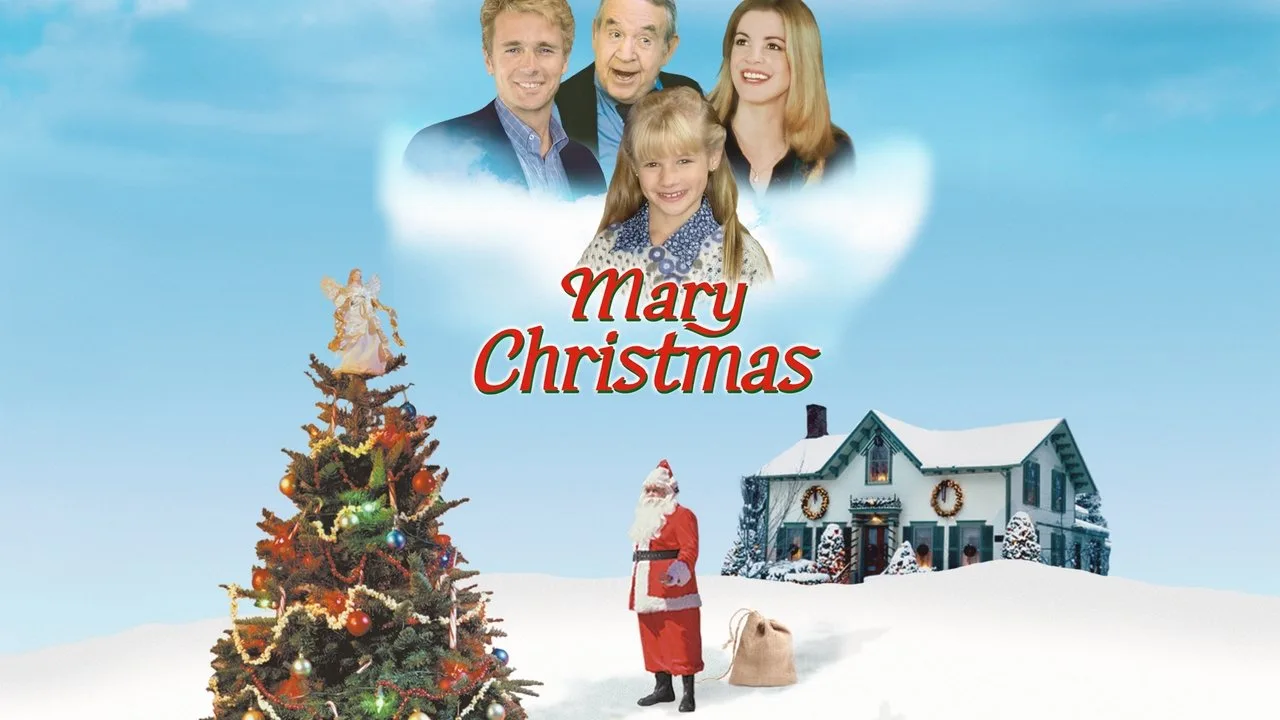
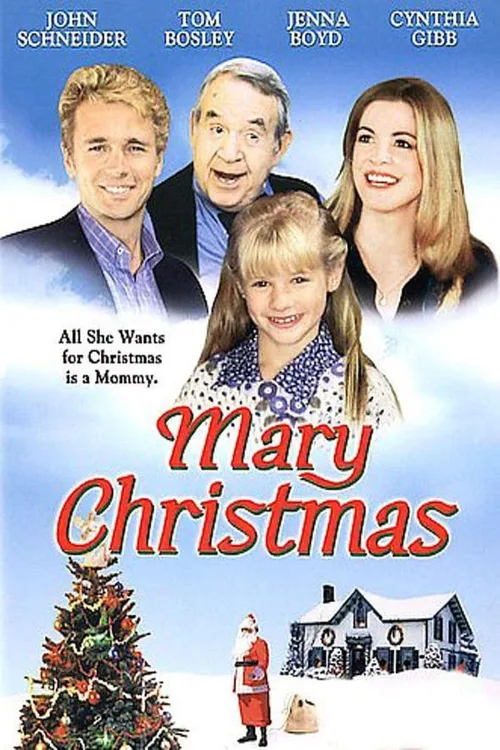
Californian widower Joel Wallace, a successful businessman, is a great catch in a grand mansion, but absorbed by his work. His daughter Felice writes to a TV Christmas special, hoping for a 'new mammy'.
 rating 6/10 User rating 11 votes 57%
 ❄ Christmas Connection
The entire plot is driven by Christmas: a little girl writes a letter to Santa asking for a new mother, and the holiday season is the force that pulls the right people together. The film premiered on November 29, 2002, and has rerun every Christmas season since. Without Christmas, there is no movie.
Where to Watch


Our Review
The premise of Mary Christmas runs entirely on Christmas-movie logic, and it works because the film doesn't pretend otherwise. A little girl named Felice Wallace writes a letter to Santa asking not for toys but for a mother. The letter ends up on a TV producer's desk. The producer ships his reluctant star reporter, Mary Maloney, off to do a feel-good holiday segment on the Wallace family instead of letting her take her planned vacation. What Mary doesn't know, and what the movie spends its 100 minutes carefully revealing, is that Felice is the daughter she gave up for adoption nine years earlier.
This is a PAX TV movie from 2002. That sentence tells you everything about the budget, the lighting, and the moral universe you're entering. PAX TV built its entire brand on family-safe programming, and Mary Christmas was its biggest original movie success: the highest-rated premiere in the network's history when it aired on November 29, 2002.
What "Mary Christmas" Gets Right
The movie's secret weapon is Jenna Boyd as Felice. Boyd was a child actor from Bedford, Texas who had been working since she was two years old, and her performance here is the reason the movie holds together. She plays Felice not as a precocious moppet designed to melt adult hearts on cue, but as a genuinely determined kid who has thought carefully about what she wants and has a reasonable plan for getting it. The letter-to-Santa framing device could easily have been cloying. Boyd makes it feel sincere.
Cynthia Gibb plays Mary Maloney as a woman who has built her professional competence partly as armor against something she doesn't let herself think about too often. Gibb was already a veteran of made-for-TV drama by 2002, with a Golden Globe nomination for playing Gypsy Rose Lee in the 1993 CBS film Gypsy on her resume. She doesn't overplay the emotional reveals. When the pieces start clicking into place for Mary, Gibb keeps the reaction interior, which is the right call.
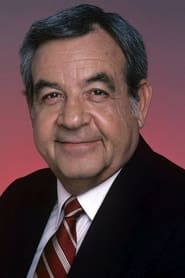
Tom Bosley shows up as the Wallace family's kind neighbor, Harry. Bosley was 75 at the time of filming, still recognizable to anyone who grew up watching Howard Cunningham on Happy Days, and his function here is essentially the same: steady, warm, the adult in the room who already understands what the younger characters are just figuring out. It's a small role, but Bosley was incapable of being unpleasant on screen.
John Schneider, Director
The director credit on this film belongs to someone named "Jonathan Richards." That's John Schneider, who also stars as Joel Wallace, Felice's widowed father. Schneider was between the end of The Dukes of Hazzard and the beginning of Smallville, where he'd spend the next decade playing Clark Kent's adoptive father. Using a pseudonym when you're directing yourself is a time-honored TV-movie tradition, and Schneider handles both jobs competently without doing anything particularly unexpected with either.
Joel Wallace is the standard-issue workaholic widower, a type that appears in so many Christmas movies it's practically a genre convention. Schneider plays him with enough self-awareness that the character doesn't become a caricature. The romance between Joel and Mary develops in the background of the main story rather than in front of it, which is the right structural choice when a child is carrying the emotional weight of the film.
The Screenplay and What It Demands of You
Betty G. Birney co-wrote the screenplay. Birney had won an Emmy and three Humanitas Prizes for her television work, including animation and live-action children's programming. She knew exactly what this story required. The coincidence at the center of the plot is enormous: reporter gets assignment, turns out she's the biological mother of the subject. The screenplay asks you to accept this without a shrug and then works to justify your acceptance through emotional payoff rather than logical scaffolding.
If you're the kind of viewer who needs Christmas movie coincidences to feel earned in a realistic sense, Mary Christmas will frustrate you. If you understand that these films operate in the same emotional register as fairy tales, where the magic is the point and the mechanism is secondary, the film delivers what it promises.
The movie does slow down in its second act. Felice's schemes to push her father and Mary together are transparent, and the film lingers on them longer than necessary. The pacing in the middle 30 minutes is the weakest stretch.
Is Mary Christmas Worth Watching?
For what it is, yes. It's a warm, competently made TV movie with a better-than-average child performance and a central emotional hook that actually functions. It's not trying to be The Holiday or A Christmas Story. It's trying to make you feel something specific and seasonal on a Friday night in late November, and it achieves that with less sentimentality than the premise suggests.
The movie has aired every Christmas season since its 2002 debut. That's not an accident. Audience ratings on IMDb hover around 6.5, which is a reliable ceiling for this genre, and the film earned a 72% audience approval on Rotten Tomatoes. These are not remarkable numbers. They're honest ones.
Felice's letter to Santa ends with a request so specific and direct that it cuts through all the genre machinery around it. She doesn't ask for someone like a mother. She asks for one. That clarity is what the film is actually about, and on that count, it delivers.
Fun Facts
The premiere of Mary Christmas on November 29, 2002 became the highest-rated original movie in PAX TV's history, a record that stood when the network rebranded as Ion Television in 2005.
John Schneider directed the film under the pseudonym Jonathan Richards, a practice common in TV movies when the lead actor is also directing. Schneider was filming Smallville as Jonathan Kent at the same time he was developing this project.
Betty G. Birney, who co-wrote the screenplay, had won an Emmy Award, three Humanitas Prizes, and a Writers Guild of America Award before working on Mary Christmas, primarily for her work in children's television and animation.
Jenna Boyd, who played Felice, earned a Young Artist Award nomination for her performance. The following year she was cast in Ron Howard's The Missing (2003) opposite Cate Blanchett, where she won the Young Artist Award for Best Performance by a Leading Young Actress.
Cynthia Gibb had received a Golden Globe nomination a decade earlier for playing Gypsy Rose Lee in the 1993 CBS film Gypsy, making her the most decorated performer in the Mary Christmas cast by awards-recognition standards.
Tom Bosley appeared in all 255 episodes of Happy Days (1974-1984) and was one of only two cast members to do so, along with Henry Winkler. His role in Mary Christmas as neighbor Harry came 18 years after the sitcom ended.
The screenplay was co-written by Stanley M. Brooks and Betty G. Birney. Brooks was also one of the film's producers through the production company Once Upon a Time Films.
Cast