
Night Train (2009)
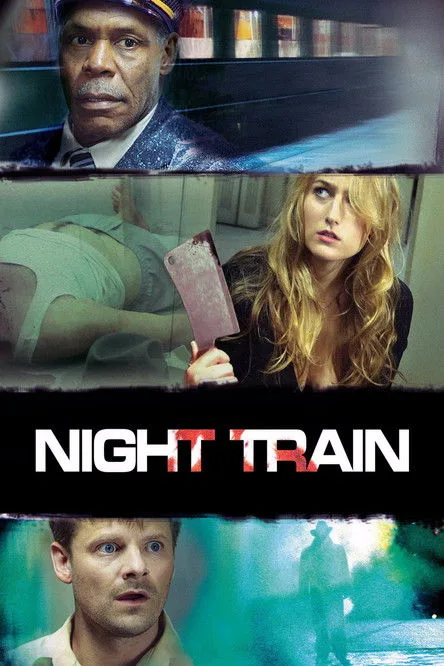
Two Passengers and the conductor discover that a person has passed away on their Night Train cabin. They come across valuable diamonds on his person, that they decide to keep for themselves...
 rating 6/10 User rating 179 votes 56%
 ❄ Christmas Connection
Night Train takes place entirely on Christmas Eve aboard a passenger train, with the holiday setting doing real thematic work. The season of goodwill becomes a backdrop of maximum irony as three ordinary people shed their better instincts over a mysterious box. Christmas here is not decoration; it's the moral pressure point the film keeps pressing.
Where to Watch


Our Review
There is a specific kind of B-movie that knows exactly what it is and plays that hand well, and a specific kind that mistakes ambition for execution. Night Train (2009) lives uneasily between the two. It has an excellent premise, a cast that earns its pay, one genuinely unnerving performance, and a script that unravels right when it should be pulling tightest. Set entirely on a Christmas Eve passenger train, it's a small film doing big things with limited space, and the Christmas setting isn't window dressing. The holiday is doing moral work here.
What Is Night Train About?
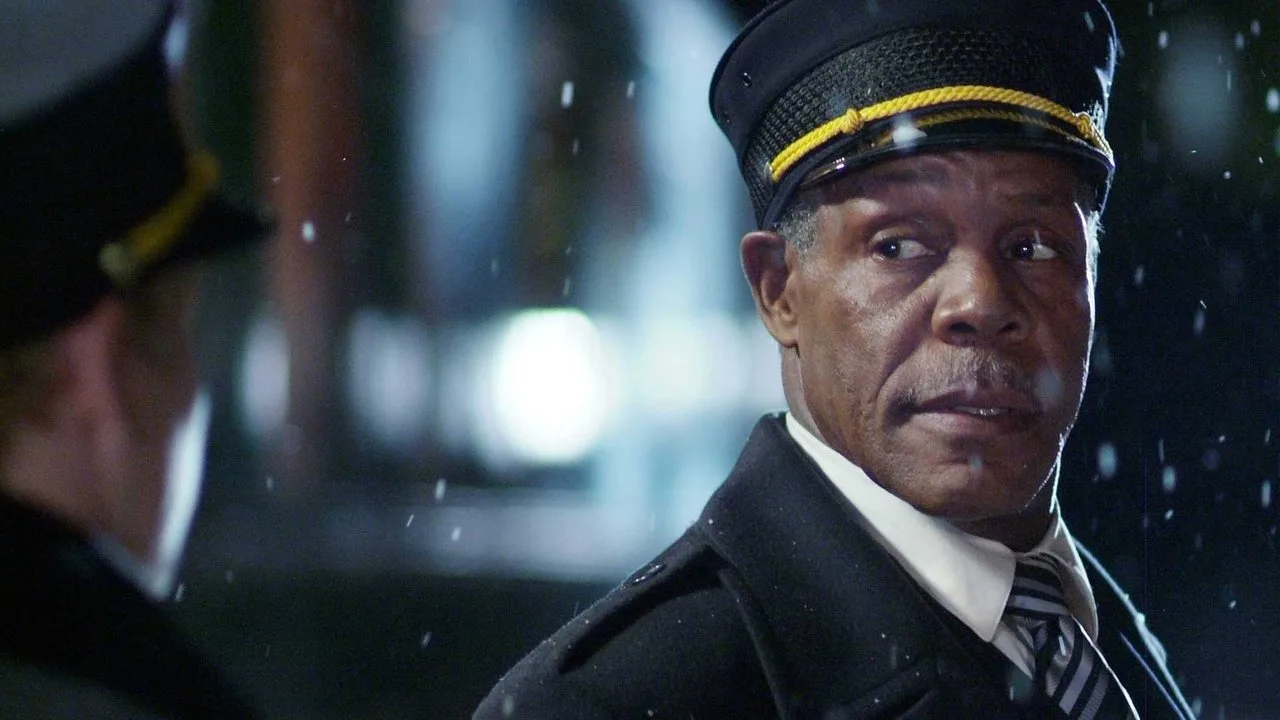
A stranger boards a night train carrying a small ornate box. He swallows pills with vodka, settles into a lounge car, and dies. Three people on the train discover both the body and the box: Miles (Danny Glover), the veteran conductor nearing retirement; Chloe (Leelee Sobieski), a pre-med student traveling alone; and Pete (Steve Zahn), a loudmouth salesman on a losing streak.
The box is the problem. Everyone who looks inside sees something different, something that speaks directly to their particular hunger. Pete sees cash. Chloe sees something. Miles, the most reluctant of the three, resists the longest. They agree to dump the body and split what's inside. Then they begin turning on each other, because that's what people do.
The story is a direct structural descendant of The Treasure of the Sierra Madre (1948): strangers bound together by discovered wealth, eroded by distrust, destroyed by what they wanted to protect. Director Brian King acknowledged the homage openly. He also named supporting characters after figures from The Maltese Falcon: the intimidating Mr. Gutman (Constantine Gregory) and the slippery Mr. Cairo (Jo Marr) are straight lifts from the 1941 Bogart film. If you're going to steal, steal from the best.
The Cast
Glover is exactly as good as you'd expect: grounded, credible, the one character who reads as a real person rather than a genre construct. His Miles is a decent man watching himself become something else, and Glover plays the deterioration with restraint. He doesn't signal the moral collapse; he just gradually stops fighting it.
Zahn does his reliable loose-cannon work as Pete. The role doesn't stretch him, but he fills it, and his comic timing provides genuine relief in what would otherwise be unrelentingly grim.
Then there's Sobieski. Chloe begins the film buttoned-up, cautious, slightly mousy. By the final act she is wielding a cleaver with the composure of someone who has always known she was capable of this. It's a committed performance that escalates past the point where most actors would pull back. She's the reason to watch.
Richard O'Brien, the man who wrote and starred in The Rocky Horror Show, plays Mrs. Froy, a peculiar fellow passenger who knows more than she lets on. O'Brien plays the role in drag, with the measured strangeness he brings to everything he touches.
The Christmas Eve Setting
King sets the film on Christmas Eve deliberately, not atmospherically. The date is a pressure cooker for the themes he's working with. Goodwill. Charity. The idea that people are better around the holidays. The film's argument is that those impulses are tissue-thin against sufficiently strong temptation.
The train is sparsely populated, which would make sense on Christmas Eve. The few other passengers who do appear become threats or complications. The confined setting serves the same function as the Alaskan wilderness in Sierra Madre, stripping away all the social scaffolding that keeps people from doing what they actually want to do.
There are no Christmas carols here, no warm light through frosted glass. The holiday exists in the film as irony, pure and simple.
The Box, and Why the Ending Stumbles
The supernatural element is where the film's ambitions outpace its delivery. The box isn't full of diamonds, it's full of desire. It shows each person their deepest want, and that want is different for everyone. This is a strong idea. It transforms a heist story into something closer to a moral fable, a kind of secular Pandora's Box for a Christmas Eve train carriage.
The problem is that the film never commits to what the box actually is, where it came from, or who the shadowy figures pursuing it represent. The Gutman and Cairo characters suggest a whole mythology that the script declines to explain. When the film ends with a toddler wandering out of nowhere, picking up the box, and smiling at whatever they see inside, the moment is meant to be chilling. It lands as unresolved.
An ambiguous ending can work when the ambiguity feels intentional and earned. Here it feels more like the script ran out of answers. The film built something genuinely mysterious and then didn't know how to close the door on it.
A Respectable Direct-to-Video Entry
Night Train was shot in Bulgaria on a limited budget and released directly to DVD in the United States in July 2009, bypassing theatrical distribution entirely. It holds a 5.7 on IMDb, which is about right. The film is better than its release circumstances suggest and weaker than its cast deserves.
King had previously written the screenplay for Cypher (2002), a low-budget sci-fi thriller that found a devoted audience despite minimal theatrical attention. He knows how to construct a paranoid scenario with limited resources. Night Train shows those skills at work. The train interior is used well. The pacing is tight for the first two acts. The atmosphere is genuinely strange in ways that feel deliberate rather than accidental.
The film doesn't quite stick the landing. But there's enough craft on display, and enough of Sobieski's particular ferocity, that it earns a late-night watch on a dark December evening.
Fun Facts
Night Train was the feature directorial debut of writer-director Brian King, who had previously written the screenplay for the 2002 sci-fi thriller Cypher. He also wrote the Night Train screenplay himself.
The film was shot on location in Bulgaria, using local train infrastructure to keep costs down, and was released directly to DVD in the United States in July 2009 without a theatrical run.
Two supporting characters are named direct homages to classic noir: Mr. Gutman and Mr. Cairo reference the villains played by Sydney Greenstreet and Peter Lorre in John Huston's The Maltese Falcon (1941).
Richard O'Brien, best known as the creator and original Riff Raff in The Rocky Horror Show (1973) and its 1975 film adaptation, plays Mrs. Froy, a character performed in drag.
The character name Mrs. Froy is itself a reference: a character named Miss Froy appears in Alfred Hitchcock's 1938 thriller The Lady Vanishes, set aboard a train in Europe.
The plot draws explicit structural inspiration from John Huston's The Treasure of the Sierra Madre (1948), in which three prospectors destroy themselves through mutual distrust over found gold. Brian King acknowledged the homage.
The film's supernatural conceit, a box that shows each viewer a different vision of their deepest desire, echoes the myth of Pandora's Box from Greek antiquity, in which a container releases all the world's evils when opened out of curiosity.
Matthias Schweighofer, who plays the young assistant conductor Frankie, later became one of Germany's most prominent film directors and stars, directing and starring in the 2021 Netflix film Army of Thieves.
Cast