
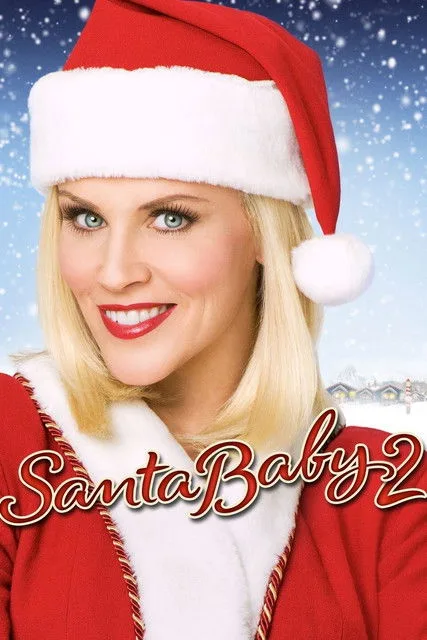
Santa Baby 2 (2009)
Santa's in the midst of a late-life crisis -- he's tired of the responsibilities of the job and is ready to pass on the reins to Mary, who feels torn between the family business and running her own high stakes firm in New York City, along with balancing a relationship with the love of her life, Luke (Dean McDermott). The situation gets increasingly dire when Teri, an ambitious new arrival to the North Pole, sows dissension at the workshop in an effort to take over Christmas.
 rating 4/10 User rating 29 votes 51%
 ❄ Christmas Connection
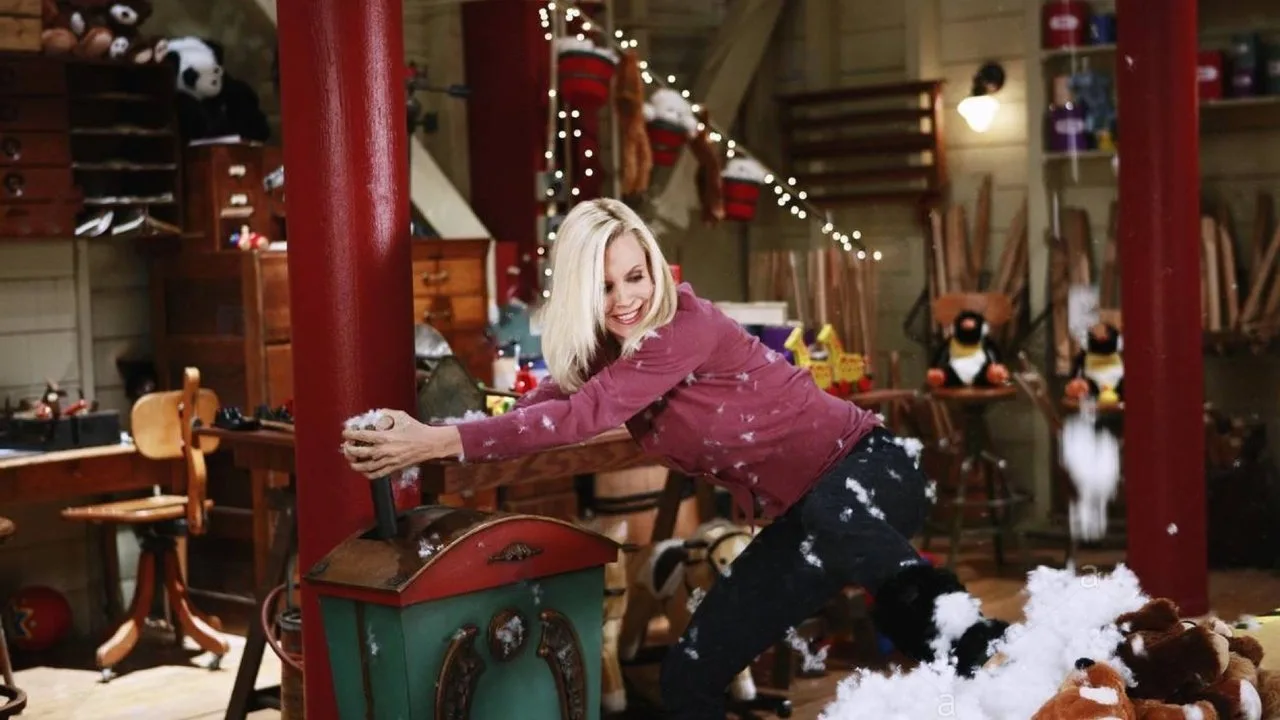
The entire film takes place at the North Pole and revolves around saving Christmas from an elf saboteur and Santa's midlife crisis. Christmas is not a backdrop here but literally the business being fought over. Mary Class must take over the workshop or Christmas simply does not happen.
Where to Watch

Our Review
Santa Baby 2: Christmas Maybe arrived on ABC Family on December 13, 2009, three years after the original pulled in 4.7 million viewers and became one of the network's most-watched original movies of that year. The sequel had the same director, Ron Underwood -- who had somehow gone from Tremors and City Slickers to this -- the same writers, Garrett Frawley and Brian Turner, and the same lead, Jenny McCarthy, back as Mary Class, Santa's type-A daughter who abandoned the family business for a corner office in New York. What it didn't have was the same Santa. George Wendt played the role in the original. Paul Sorvino, who once played mob boss Paul Cicero in Goodfellas, took over for the sequel. A curious swap, to say the least.
What Happens When Santa Has a Midlife Crisis
The premise this time is that Santa is burned out. Decades of toy delivery have caught up with him, and he wants to retire, hand the workshop to Mary, and presumably do whatever retired Santas do. That is already a thin setup for ninety minutes of television. Then the film introduces Teri (Kelly Stables), a suspiciously ambitious newcomer who inserts herself into the workshop operation while Santa checks out and Mary scrambles to hold things together.
Teri's true identity as a rogue elf named Phoebe, revealed when Mary and Luke literally pull off her wig, is the movie's big plot twist. It is not especially surprising. The film telegraphs it approximately forty minutes before it lands. But the mechanics of her scheme -- organizing an elf strike, manipulating the head elf Gary, and plotting to control Christmas herself -- are just coherent enough to give the movie a functioning second act.
Kelly Stables plays the villainy with genuine commitment. She's the most watchable person in the film.
The Santa Swap Problem
Recasting Santa between two films in the same franchise, with the same cast otherwise returning, is a choice that demands explanation. The film offers none. Paul Sorvino plays the role with weary gravitas, which is tonally wrong for a movie where elves go on strike over cookie policy. George Wendt, who built his career playing an affable barfly on Cheers, brought something naturally warm and slightly ridiculous to the role in the original. Sorvino brings Sorvino, which is a lot of Sorvino for a character who is mostly just tired and confused for the first hour.
The midlife crisis angle, while a legitimate comedic premise, requires a Santa you already like watching fall apart. It's harder to feel anything about a man you just met having an existential breakdown about toy manufacturing.
Jenny McCarthy and the Limits of Franchise Goodwill
McCarthy is the through-line holding both films together, and she's a more capable physical comedian than these movies ever bother to use her as. The original at least built a story around her fish-out-of-water energy -- a hard-driving executive suddenly running an elf workshop. The sequel tries to repeat that dynamic without the novelty. Mary knows the North Pole now. She's not out of her depth this time; she's just annoyed, and a protagonist who is mostly annoyed for ninety minutes is a hard sell.
Dean McDermott returns as Luke, her boyfriend, and has even less to do than in the first film. His main function is to exist so that Teri can flirt with him, giving Mary a personal stake in defeating her.
The 3.8 million viewers who tuned in for the premiere represented a significant drop from the original's numbers. That gap is about right.
What the Movie Gets Right About Christmas Stress
Strip away the North Pole setting and there is something recognizable in the film's central anxiety. The pressure to make Christmas happen, the family member who has checked out at the worst possible moment, the outsider who waltzes in with "improvements" that make everything worse -- these are real seasonal stressors dressed in red velvet. The movie is too breezy to commit to any of it seriously, but the bones of a sharper story are visible underneath.
The elf strike, in particular, is a better bit than the film knows what to do with. Labor unrest at Santa's workshop, orchestrated by a management consultant in disguise, could carry an entire satirical Christmas film. Here it's resolved in one scene.
The ABC Family Christmas Movie Formula
Both Santa Baby films are products of a specific late-2000s ABC Family approach to holiday programming: recognizable celebrity, light romantic subplot, PG stakes, and a running time that fills exactly the space between dinner and bedtime. The formula worked. The network ran the same play with Candace Cameron Bure, Lacey Chabert, and a rotating cast of mid-career actors throughout the 2000s and 2010s.
Santa Baby 2 is not a failure by those standards. It is competent, inoffensive, and sufficiently Christmassy. It just doesn't have a reason to exist beyond the fact that the first one worked. Christmas movies have been made on worse grounds than that.
Fun Facts
The original Santa Baby (2006) drew 4.7 million viewers on its ABC Family premiere, making it one of the network's highest-rated original movies at the time. The sequel drew 3.8 million viewers in 2009, a drop of roughly 900,000.
Both Santa Baby films were filmed in Calgary, Alberta, Canada, in winter production conditions. Santa Baby 2 filmed in February 2009, nearly a year before its December 13, 2009 broadcast premiere.
Paul Sorvino, who replaced George Wendt as Santa Claus, is best known for playing mob boss Paul Cicero in Martin Scorsese's Goodfellas (1990). The casting gap between those two roles is a legitimate measure of how unpredictable an acting career can be.
Director Ron Underwood had directed City Slickers (1991), which earned Jack Palance an Academy Award for Best Supporting Actor, before pivoting almost entirely to television holiday movies. Between 2006 and 2011, he directed Santa Baby, The Year Without a Santa Claus, Holiday in Handcuffs, Santa Baby 2, and Deck the Halls -- five Christmas TV movies in six years.
Kelly Stables, who plays villain Teri/Phoebe, went on to become a recurring cast member on the CBS sitcom Two and a Half Men as Melissa. The Santa Baby 2 role came before her CBS tenure.
The film was produced by Well Done Productions and Alberta Film Entertainment, both Canadian companies. Like many ABC Family originals of the era, the American holiday movie was shot entirely in Canada to take advantage of lower production costs and tax credits.
The ABC Family 25 Days of Christmas programming block, which premiered both Santa Baby films, was launched in 1996. By 2009, it had become a reliable annual ratings driver for the network, which rebranded as Freeform in 2016.
Cast