

Put Christ Back in Christmas
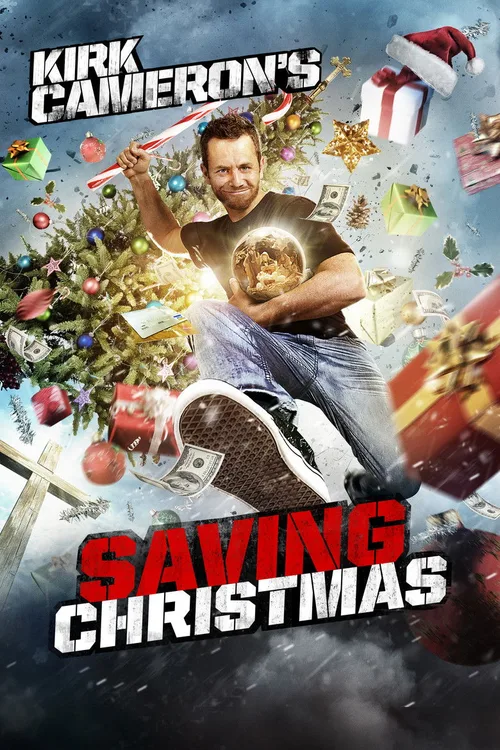
Saving Christmas (2014)
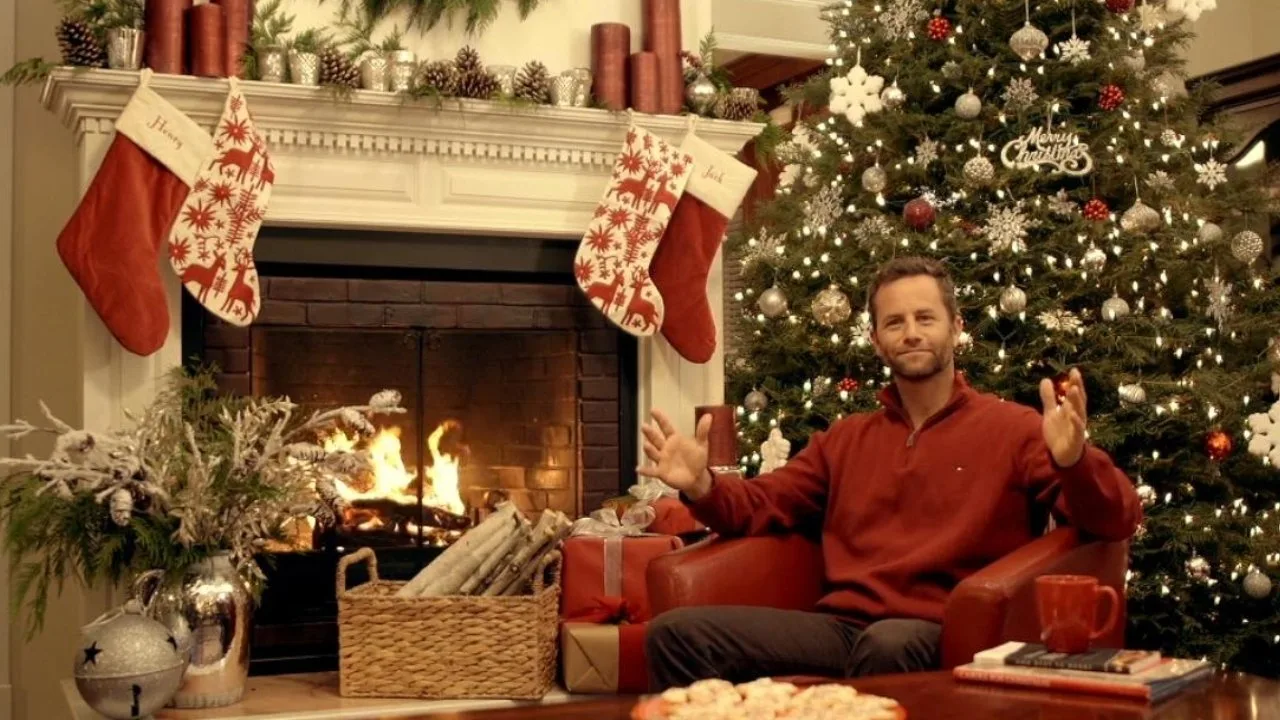
Kirk is enjoying the annual Christmas party extravaganza thrown by his sister until he realizes he needs to help out Christian, his brother-in-law who has a bad case of the bah-humbugs.
 rating 2/10 User rating 102 votes 18%
 ❄ Christmas Connection
The entire film is literally about Christmas and whether Christians should celebrate it. Kirk Cameron spends roughly 70 minutes arguing that Christmas trees, Santa Claus, feasting, and gift-giving all have legitimate Christian roots. It is nothing but Christmas, wall to wall, for its entire runtime.
Where to Watch


Our Review
Kirk Cameron's Saving Christmas (2014) is one of the strangest films ever made about the holiday it claims to defend. It won four Razzie Awards, including Worst Picture. It holds a 0% on Rotten Tomatoes from critics. Its IMDb score of 1.3 placed it briefly on that site's bottom-100 list within weeks of release. And yet, if you measure a Christmas movie by how much Christmas is actually in it, this film beats nearly everything else on the calendar.
What Is Saving Christmas Actually About?
The setup is a framing device so thin it barely qualifies as one. Cameron plays a fictionalized version of himself, attending his sister's Christmas party. He finds his brother-in-law, Christian (played by director Darren Doane), sitting alone in a Land Rover outside, troubled by what he sees as the holiday's pagan contamination. Christian is uncomfortable with Christmas trees, Santa Claus, feasting, and the December 25 date. Cameron climbs into the passenger seat and proceeds to address each concern one by one.
That is the whole film. Two men in a car. Cameron talks. Christian listens. Then there are dramatic historical reenactments with jarring slow-motion cinematography that looks like a cologne advertisement directed by someone who just discovered a shutter speed slider. Then back to the car.
The arguments Cameron makes are the film's actual content, and they deserve examination because they are what the movie is for.
The Arguments (and Where They Fall Apart)
Cameron's central claim is that Christians who worry about pagan roots in Christmas traditions are wrong to worry. God created trees, therefore Christmas trees are fine. The early church placed Nativity scenes at the center of communal life, therefore feasting and decorating a house are Christian acts. Material gifts reflect a God who gave humanity the material gift of his own son. On and on.
The Santa Claus segment is the film's most memorable stretch, for the wrong reasons. Cameron tells the story of Saint Nicholas, including a reenactment of the Council of Nicaea in 325 AD where Nicholas reportedly punched the heretic Arius in the face. This is a real historical legend, embellished here into something closer to a bar fight, complete with slow-motion cape-swirling. Cameron presents this as evidence that Santa is actually a tough Christian soldier. The logic requires several leaps that the film declines to mark.
None of this is original theology. Christian apologists have been making similar arguments about Christmas and paganism for years, and some of the points have genuine scholarly support. The problem is that Cameron treats them as revelations, presenting settled debate as secret knowledge that ordinary Christians have been denied. He also gets several details wrong in ways that anyone curious enough to search for them will notice within five minutes.
The Filmmaking
Darren Doane is a music video director, and Saving Christmas looks like an extended music video for a band that ran out of budget on day three. The color grading swings between oversaturated and murky. The slow-motion cutaways are deployed constantly, regardless of whether anything onscreen justifies them. Historical reenactment actors appear to have been given no direction beyond "look purposeful."
The AV Club described it as "approximately 50 minutes of actual moving footage" padded into an 80-minute film. That is accurate. The film ends with a full hip-hop dance sequence set to "Angels We Have Heard on High," featuring Cameron, Doane, and the entire cast breakdancing at the Christmas party. Then comes a lengthy blooper reel. Then beatboxing over the credits by a group called the Conspiracy Guys. The total runtime is just over 70 minutes, with around nine minutes of credits.
The Rotten Tomatoes Incident
After the film received universally negative reviews, Cameron posted on his Facebook page in November 2014, asking his nearly two million followers to "storm the gates of Rotten Tomatoes" and rate the film positively. He claimed the next day that the audience score had risen to 94%. What actually happened was that the call to manipulate scores drew far more hostile reviewers to the site than supportive ones. The film's audience score collapsed, and the story became a small news event about how not to respond to bad reviews.
It is hard to imagine a more counterproductive strategy. The film had earned its scores. The campaign made it famous for being bad rather than merely obscure and bad.
Who Is This For?
The film was produced by Camfam Studios in collaboration with Liberty University and Provident Films, distributed through the faith-based theatrical circuit that has grown significantly since Fireproof in 2008. That film, also starring Cameron, grossed over $33 million against a $500,000 budget and was the highest-grossing independent film of its year. Saving Christmas grossed about $2.7 million on a similar budget, which is a profit on paper but a significant step down.
The intended audience is Christians who feel the holiday has drifted away from its religious roots. That is a real and understandable concern. The film's failure is not that it addresses that concern but that it addresses it so poorly, substituting confident assertion for actual argument, spectacle for substance.
A viewer who already agrees with Cameron will find it reassuring. A viewer who doesn't will find it unconvincing at best and insulting to their intelligence at worst. A viewer who knows Christmas history will spend most of it composing corrections in their head.
The One Thing It Gets Right
Buried under the shoddy filmmaking and the theological overreach is a position that has real merit: that Christians who reject Christmas as pagan are working from a weak historical case, and that the holiday's mixture of traditions does not automatically undermine its religious meaning. That argument existed long before this film and will exist long after it. Cameron did not need to make a movie about it. He did anyway.
The dance sequence ends. The credits roll. Kirk Cameron has saved Christmas. No one asked him to, the job did not need doing, and he did it badly. But the egg nog is warm and the tree is lit and outside, somewhere, Saint Nicholas is punching a heretic in slow motion.
Fun Facts
The film won four of its six Razzie Award nominations at the 35th Golden Raspberry Awards in February 2015, taking Worst Picture, Worst Actor, Worst Screenplay, and Worst Screen Combo, the last of which was awarded to Cameron "and his ego."
Kirk Cameron became famous playing Mike Seaver on the ABC sitcom Growing Pains (1985-1992), for which he received two Golden Globe nominations. He converted to evangelical Christianity at age 18 during the show's run.
The film's director, Darren Doane, also plays the brother-in-law character Christian, making it a film in which the director sits in a car being lectured by the film's star and producer for most of the runtime.
Cameron's 2008 film Fireproof, made by the same Kendrick Brothers-adjacent faith-based circuit, grossed over $33 million on a $500,000 budget and was the highest-grossing independent film of 2008. Saving Christmas made about $2.7 million on a comparable budget.
When Cameron called on his Facebook followers to boost the film's Rotten Tomatoes audience score in November 2014, the resulting media coverage brought far more negative reviewers to the site than positive ones, causing the score to drop further rather than rise.
The historical reenactment of the Council of Nicaea (325 AD) depicts Saint Nicholas violently attacking the theologian Arius, based on a legend that is not corroborated by contemporary historical sources but has circulated widely in popular Christian media.
The film runs just over 70 minutes of actual content, followed by approximately nine minutes of credits that include a bloopers reel and a beatboxing performance by a group called the Conspiracy Guys.
Three weeks after its November 2014 release, Saving Christmas appeared on IMDb's Bottom 100 list with a score of 1.3, one of the lowest ratings the site had recorded for a theatrically released film.
Cast