

December 5 will never be the same...
Saint (2010)
A horror film that depicts St. Nicholas as a murderous bishop who kidnaps and murders children when there is a full moon on December 5.
 rating 7/10 User rating 158 votes 49%
 ❄ Christmas Connection
Sint is set entirely on the eve of St. Nicholas Day (December 5), the Dutch gift-giving tradition that predates and directly inspired the Santa Claus legend. The film uses Sinterklaas, his white horse, and the Black Pete helpers as its horror machinery -- stripping away the festivity to reveal a genuinely dark origin myth. In the Netherlands, this film arrived during the height of the Zwarte Piet cultural debate, which made its provocations land with extra force.
Where to Watch


Our Review
The Dutch have been celebrating Sinterklaas on the evening of December 5 for centuries. Sint Nikolaas arrives by steamboat from Spain, rides his white horse across rooftops, and delivers gifts to well-behaved children. It is, by any measure, a wholesome tradition. Dick Maas looked at all of this and decided the obvious move was a slasher film.
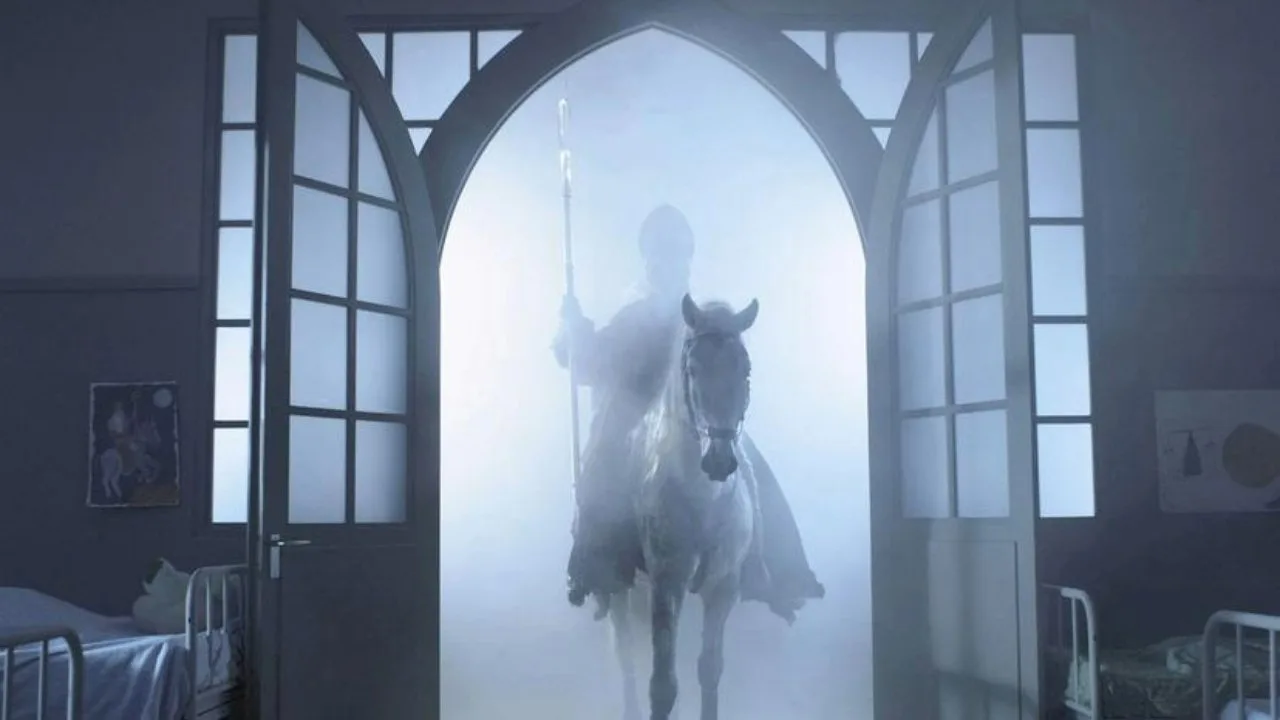
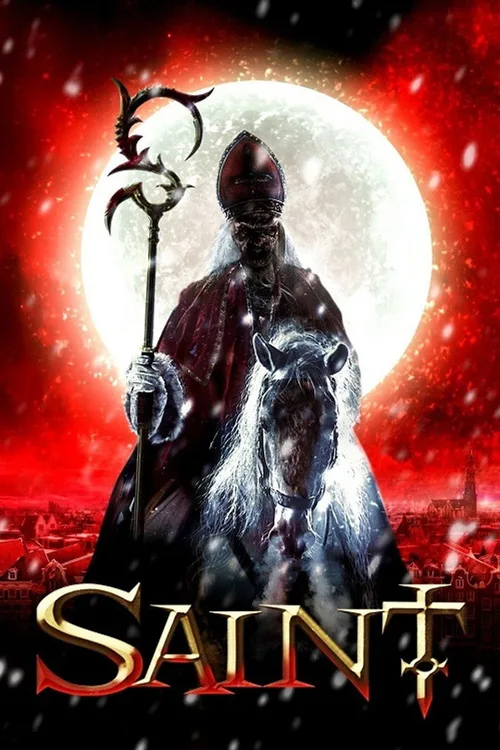
Sint (2010), released internationally as Saint, opens with a medieval prologue: a corrupt, murderous bishop named Niklas terrorizes a Dutch village until the townspeople burn him alive on his boat, along with his band of criminals. Niklas dies. But on nights when a full moon falls on December 5, he comes back, riding his spectral horse across the Amsterdam skyline, gutting anyone he can find.
The setup is pure pulp. The execution is mostly committed to making that pulp work.
What 'Sint' Gets Genuinely Right About Horror
Maas is not a young director trying to be edgy. By 2010 he had already made Amsterdamned (1988), a thriller that turned the city's canal network into a monster's hunting ground. He knows Amsterdam as a horror location. He knows how to use narrow streets, dark water, and the city's peculiar geometry against an audience.
The film's best sequences use exactly this knowledge. Niklas on horseback, silhouetted against a full moon above the rooftops of the Jordaan district, looks genuinely terrifying. The scale is right. The city's steep-gabled facades make perfect horror architecture. A scene in a hospital, where Niklas and his undead Pieten rampage through fluorescent-lit corridors, has the chaotic energy of a properly crafted genre set piece.
The decision to frame Niklas as a medieval criminal bishop rather than a supernatural entity is smarter than it first appears. It gives the horror a historical anchor. Maas isn't just saying Sinterklaas is secretly evil -- he's proposing that the legend was built on top of something genuinely ugly, and the tradition survived while the ugliness was forgotten. That's a serviceable horror premise with actual thematic weight.
Where It Struggles
The film's human characters are almost entirely functional. Frank (Egbert Jan Weeber), the teenage protagonist, exists to run from things. The detective who actually believes the Sinterklaas legend is real -- played by Bert Luppes -- is more interesting, but the script doesn't give him enough scenes to develop into something beyond a paranoid cop archetype.
The gore is generous and occasionally creative, but Sint never quite decides how seriously it wants to take itself. Some scenes are clearly played for dark comedy. Others aim for genuine dread. The tonal inconsistency doesn't sink the film, but it prevents it from being as effective as either a horror comedy or a straight horror film.
The pacing also sags in the second act. Once the film establishes its rules and Niklas is loose in Amsterdam, there's a stretch where it's running out the clock rather than escalating. The final confrontation on a rooftop brings energy back, but the middle section earns its fidgeting audience.
The Sinterklaas Tradition This Film Is Riffing On
To understand why Sint works as cultural provocation, it helps to understand what Sinterklaas actually is. The tradition traces to the historical Saint Nicholas of Myra, a fourth-century bishop in what is now Turkey. By the medieval period, the feast day of December 6 had accrued legends of miraculous gift-giving. Dutch colonists brought Sinterklaas to America; English speakers turned it into Santa Claus.
In the Netherlands, Sinterklaas arrives by steamboat every November from Spain -- the origin of this detail is disputed by historians, but the tradition is firm. He travels with Zwarte Piet (Black Pete), helpers who carry gifts and, in older versions of the story, punished naughty children by stuffing them in a sack. The Zwarte Piet tradition had already become a major cultural flashpoint by 2010, with protests over the character's origins and depiction.
Maas uses Zwarte Piet directly in the film as Niklas's undead enforcers, which made Sint land as more than just a horror film in the Netherlands. It was commenting on the tradition in real time.
Is 'Sint' Worth Watching?
For horror fans who want something outside the Anglo-American mainstream, yes. The film has a specific local flavor that American holiday horror can't replicate. The Amsterdam setting does real work. The mythology is coherent. And Maas stages a few sequences that would look at home in any competent European genre film of the period.
For viewers expecting the satirical precision of something like Krampus (2015) or the full commitment of a straight slasher, expectations need calibrating. Sint is rougher around the edges than either. It's a mid-budget Dutch genre film from a director who knows exactly what he's doing with action and location, and considerably less certain about his characters.
The image that stays with you: Sinterklaas on his white horse, galloping along a rooftop in a snowstorm, lantern swinging, long bishop's staff in hand. It's the Sinterklaas of every Dutch child's imagination, rendered in a nightmare. That image alone justifies the film's existence.
Fun Facts
Dick Maas released Sint on November 5, 2010 in the Netherlands, exactly one month before Sinterklaas Eve, timing the release to maximize the cultural discomfort of watching a horror Sinterklaas while the real celebration approached.
The film was the most-watched Dutch film of 2010, selling over 800,000 tickets domestically -- a remarkable number for a horror film in a country with a population of roughly 16 million at the time.
Maas originally developed the concept in the 1990s but couldn't secure financing for years because Dutch producers didn't believe audiences would accept a horror version of the beloved Sinterklaas character.
The historical Saint Nicholas of Myra, the basis for the Sinterklaas legend, died around 343 AD. His tomb in Demre, Turkey, remained a pilgrimage site for centuries before the Crusades era spread his legend across Europe.
In the film, a full moon on December 5 is the trigger for Niklas's return. This is a real astronomical event, though rare -- December 5 full moons occur roughly every 19 years following the Metonic cycle.
The Dutch title Sint is simply the abbreviation for Sinterklaas, but the international title Saint strips that context entirely, which is why non-Dutch audiences often don't immediately grasp the specific tradition being subverted.
The film's success prompted a surge of Dutch interest in darker retellings of the Sinterklaas tradition, and it is regularly cited as the movie that demonstrated Dutch genre cinema could compete commercially with American holiday horror imports.
Cast