

'Tis the Season to be Jolly!
Season's Beatings (1999)
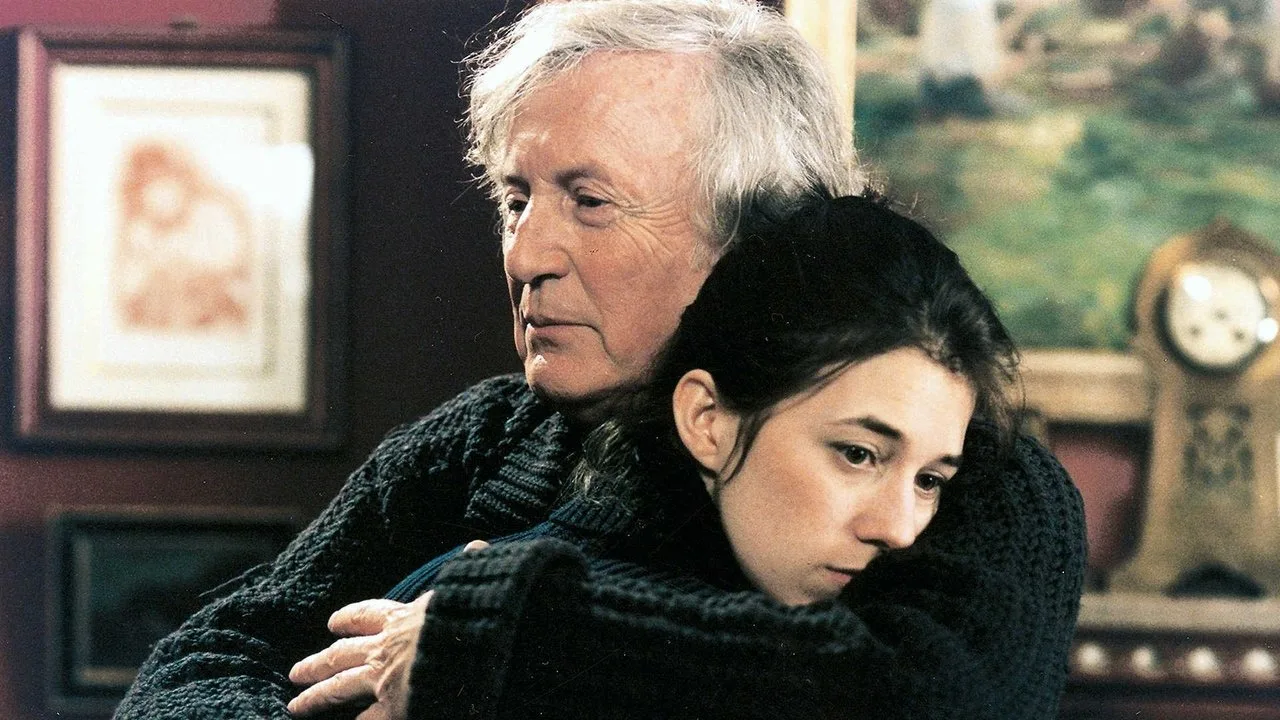
Christmas, family, and infidelity. Yvette's husband has died, and her grown daughters join her at the grave: Sonia, wealthy, bourgeois, and generous; Louba, living with their dad Stanislas, singing at a Russian restaurant, penniless, the mistress for the past 12 years of a man who will never leave his wife; Milla, the youngest, acerbic, lonesome. Christmas was when they learned their parents were divorcing 25 years ago. Over the next few days, yuletide depression, Louba's pregnancy, Sonia's crumbling marriage, Stanislas's overtures to Yvette, and Milla's attraction to the man who's her father's rent-free lodger lead each one to re-examine self, family, and hopes. Is renewal possible?
 rating 7/10 User rating 87 votes 59%
 ❄ Christmas Connection
The entire film unfolds in the week before Christmas Eve in Paris, using the holiday season as a pressure cooker for family secrets and personal crises. The title "La Buche" refers literally to the Buche de Noel, the traditional French Christmas cake that becomes a flashpoint for sibling rivalry. Christmas is not backdrop here; it is the mechanism that forces three estranged sisters and their divorced parents back into the same room.
Where to Watch

Our Review
The English title is a pun, and it sets expectations the film does not entirely meet. "Season's Beatings" suggests something with teeth, a dark comedy, maybe even a horror adjacent sendup of holiday cheer. What Daniele Thompson actually made in 1999 under the original French title La Buche is warmer than that, and more honest than almost any Christmas film Hollywood was producing at the time. It is not mean. It is not gentle either. It is just very, very French.
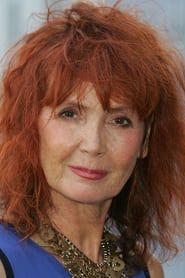
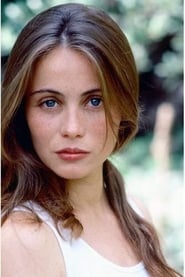
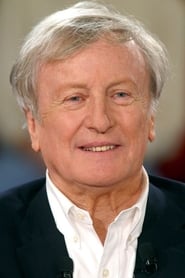
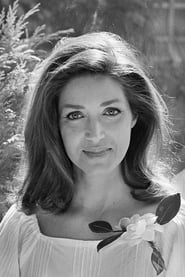
The film follows three sisters over the five days before Christmas Eve in Paris. Louba (Sabine Azema) is a single singer who has just discovered she is pregnant and cannot bring herself to tell her lover. Sonia (Emmanuelle Beart) has the outwardly successful marriage that is rotting from the inside. Milla (Charlotte Gainsbourg) is the youngest, the sharpest-tongued, and the loneliest. Their mother Yvette (Francoise Fabian) has just lost her second husband and wants the family together for Christmas. Their biological father Stanislas (Claude Rich), a Russian violinist and self-described seducer, is not well.
Nobody is in any state to be doing Christmas.
What "La Buche" Actually Means
The Buche de Noel is the French Christmas cake shaped like a log, a centerpiece of the Christmas Eve dinner. It is also, in this film, the thing three sisters cannot agree on: who orders it, who pays for it, whose taste matters. Thompson uses the cake as a comic lightning rod. All the petty grievances that families accumulate over decades find their most absurd expression in an argument about dessert.
This is the film's central trick. The really serious things, infidelity, pregnancy, depression, divorce, get handled with restraint. The cake argument plays out at length. Thompson understands that this is how families actually work. The big wounds get silence; the manageable ones get screaming.
A Directorial Debut Built on Decades of Experience
Thompson came to directing at 57, having spent her career writing screenplays for others. Her father was Gerard Oury, the director of La Grande Vadrouille (1966), one of the biggest box-office hits in French cinema history. Thompson co-wrote several of her father's films, then went on to write Cousin Cousine (1975) and both La Boum films (1980, 1982), the latter launching Sophie Marceau into stardom.
By the time she made La Buche with her son Christopher Thompson, who also co-wrote the script and appears in the film, she had accumulated three decades of understanding how French audiences respond to family drama and comedy. It shows. The film moves like a screenplay written by someone who has internalized every mistake a screenplay can make and knows exactly how to avoid them.
Critics compared it to Woody Allen's Hannah and Her Sisters, a reasonable shorthand: three sisters, holiday framework, Jewish family identity, ensemble cast of equal weight. But Thompson's camera stays in Paris, and the emotional register is distinctly French. Nobody here is charmingly neurotic. They are just tired and complicated and trying.
The Cast Earns Everything
The three leads are doing genuinely different things and they fit together without feeling assembled. Azema plays Louba's panic as low-grade static. She is always slightly distracted, slightly behind the conversation, because she is carrying something she cannot say out loud. Beart gives Sonia the tightly controlled affect of someone managing a situation that has already collapsed; the moments when the control slips are the film's sharpest. Gainsbourg plays Milla as the one who has stopped performing composure entirely, which makes her both the most difficult character in the room and the most honest one.
The César committee agreed with that assessment. At the 2000 ceremony, Gainsbourg won Best Supporting Actress for the role. It was the kind of award that reads as recognition for the whole ensemble as much as for any single performance.
Claude Rich as the aging, still-vain Stanislas is the film's secret pleasure. He is not a villain or a buffoon. He is a man who has never fully understood the damage his charm has done, and who is now facing the possibility that he may not get the chance to understand it. Rich plays that with a lightness that keeps it from becoming sentimental.
Michel Legrand Plays Both Sides
Michel Legrand composed the score, and he makes interesting choices. The film's Christmas inserts, the kitsch decorations and seasonal music in shops, get deliberately lush, ironic arrangements. Dean Martin singing holiday standards plays over scenes where the characters are doing the opposite of celebrating. Then, at the end, the film closes with a full orchestral treatment of "A Yiddishe Momme," the Yiddish standard, played completely straight.
It is a tonal shift that could easily misfire. It does not. Thompson and Legrand earn it because the film has spent its entire runtime acknowledging that this family carries their history, Russian, Jewish, Parisian, fractured, into every interaction, including Christmas. The final image is not a reconciliation. It is a family deciding, provisionally, to stay in the same room. That the music swells is earned because everything before it was honest enough.
The film drew 1.6 million spectators in French cinemas after its November 1999 release, and the Thompsons won the Prix Lumieres for Best Screenplay in 2000. Neither achievement is a surprise. The script is doing genuinely difficult structural work: six or seven storylines, no villains, no false resolutions. Making it look easy.
Fun Facts
La Buche was Daniele Thompson's first film as director, at age 57. She had spent her previous career writing screenplays, including Cousin Cousine (1975) and the two La Boum films (1980, 1982).
Thompson co-wrote the screenplay with her son Christopher Thompson, who also appears in the film as a supporting character. It is a literal family production about family dysfunction.
Charlotte Gainsbourg won the Cesar Award for Best Supporting Actress at the 2000 ceremony for her role as Milla, the youngest and sharpest-tongued of the three sisters.
Daniele Thompson's father was Gerard Oury, director of La Grande Vadrouille (1966), which held the French box office record for domestic attendance for decades. Thompson co-wrote several of his films before striking out independently.
The score was composed by Michel Legrand, one of the most decorated French composers in cinema history, with Oscar wins for The Thomas Crown Affair (1968) and Summer of '42 (1971). La Buche was released as a separate soundtrack CD in November 1999.
The film was shot in Paris's 6th arrondissement and at the Rungis market in Val-de-Marne, the vast wholesale food market south of Paris that supplies much of the city's restaurants and shops.
The film drew 1.6 million admissions in France following its November 1999 release, a strong performance for an ensemble drama without a single major action set piece or romantic comedy plot line.
The closing sequence uses "A Yiddishe Momme," a Yiddish standard from 1925 written by Jack Yellen, arranged by Legrand, reflecting the Russian-Jewish heritage of the fictional family. It is a deliberate tonal contrast to the ironic Christmas music used throughout the rest of the film.
Cast