
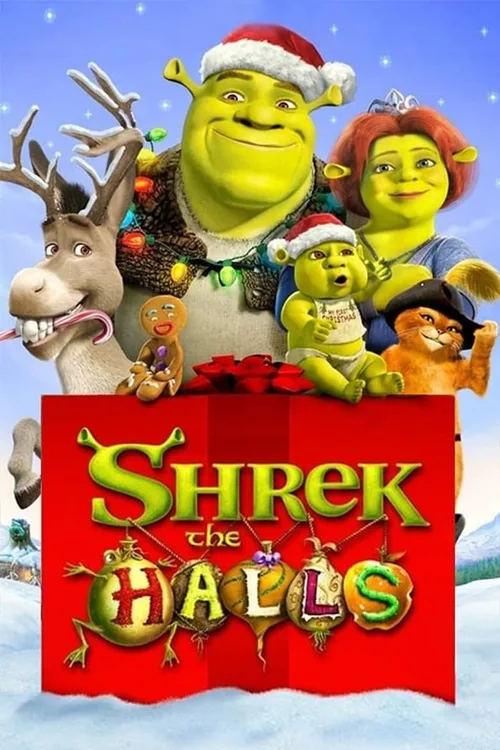
Shrek the Halls (2007)
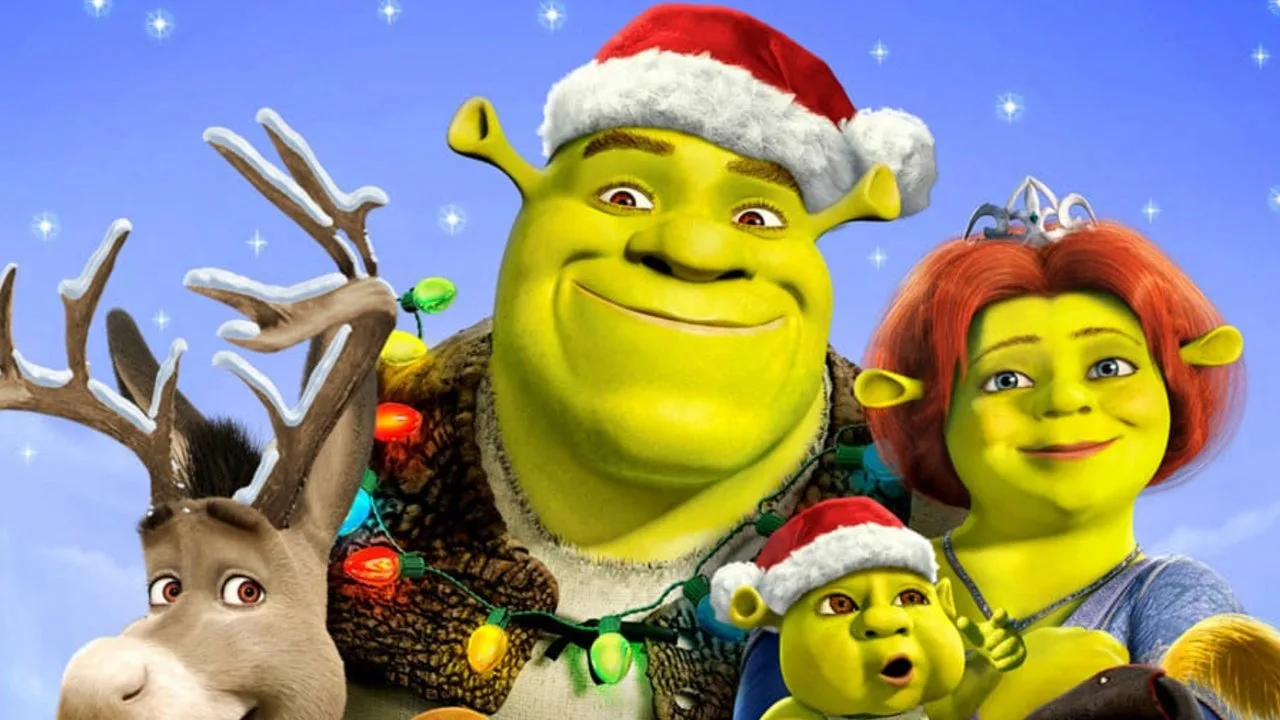
The Christmas tree isn't the only thing green in this new holiday classic. Shrek is back and trying to get into the spirit of the season. After promising Fiona and the kids a Christmas they'll remember, he is forced to take a crash course in the holiday. But just when he thinks he has everything for their quiet family Christmas just right, there is a knock at the door.
 rating 7/10 User rating 903 votes 64%
 ❄ Christmas Connection
Shrek the Halls is built entirely around Christmas as its central premise, with Shrek attempting to understand and celebrate the holiday for the first time. The special hits every Christmas touchstone: tree decorating, gift-giving, Christmas stories, and the notion that the holiday is about being together rather than getting things right. It aired on ABC on November 28, 2007, squarely in the Christmas TV special tradition.
Our Review
Shrek the Halls premiered on ABC on November 28, 2007, and pulled in 20.83 million viewers, beating the combined demo scores of every other major network that Wednesday night. For a 22-minute animated special slotted between Thanksgiving and the rest of the holiday season, that's an extraordinary number. It also tells you something about how well DreamWorks understood what they had with this franchise: the characters were so established, so reliably funny, that audiences would show up for a half-hour Christmas detour without a second thought.
The premise is simple and correct. Shrek has never celebrated Christmas. Fiona grew up with the holiday in her castle; Shrek grew up in a swamp, alone. Now they have children, a full house, and a wife who is quietly excited about their first family Christmas. Shrek, determined to get it right, attempts to read a Christmas story to the kids. He falls asleep. He dreams about Christmas. He wakes up. Then Donkey, Puss in Boots, Gingy, and the rest of the Far Far Away crew invade the swamp and everything collapses into cheerful chaos.
What Makes the Special Work
The writing is smarter than it needs to be. Each character gets a Christmas story segment that perfectly reflects who they are: Donkey delivers a breathless, sugar-fuelled ramble about getting everything he wants; Gingy tells a gingerbread horror story about being eaten; Puss narrates a swaggering fairy-tale romance. These sequences work as genuine comedy, not just filler between plot beats.
Eddie Murphy, predictably, is the standout. Donkey's Christmas list monologue is the kind of performance that reminds you why Murphy was cast in the first place. He runs on pure manic energy for two solid minutes and it never gets tiresome.
The emotional core is earned, which is not a given for productions this short. Shrek's anxiety about not knowing how Christmas works isn't played for easy laughs. The film takes it seriously enough that when the resolution comes, it actually lands. The idea that Christmas is the sum of the people in your house, not the correct execution of traditions, is not a new idea. But the film sells it through character rather than sentiment.
Is Shrek the Halls Worth Watching?
At 22 minutes, the question isn't whether it's worth your time. The question is whether it's genuinely good or merely competent holiday product. It's genuinely good. The animation holds up well. The jokes are calibrated for adults and children simultaneously, which is the only way to make a family special that doesn't make parents want to leave the room. The visual gag involving a Christmas tree and a swamp setting is one of the better environmental jokes in the franchise.
The special was directed by Gary Trousdale, who co-directed Disney's Beauty and the Beast (1991) and The Hunchback of Notre Dame (1996). He knows how to build an emotional arc within a contained runtime, and that experience shows. The pacing is tight without feeling rushed.
It also has the good sense not to overstay its welcome. Many holiday specials pad themselves to fill a broadcast slot. This one ends when the story ends.
Where It Falls Short
The middle section, where the entire Far Far Away cast descends on the swamp, is slightly crowded. There are enough characters that some feel like cameos rather than participants. The Fairy Godmother is gone by this point in the timeline, which removes one comedic engine, and the replacement energy from the ensemble doesn't quite compensate.
The animation, while solid for a TV special, is noticeably below the theatrical film standard. That's expected given the format and budget, but it's worth setting expectations. This isn't Shrek 2. It's a television production, and it looks like one.
Neither of these are serious complaints for a 22-minute Christmas special made for broadcast television in 2007. They're just the honest accounting.
Fun Facts
The special aired on ABC on November 28, 2007, and drew 20.83 million viewers, making it the most-watched program on any network that Wednesday night, beating the combined 18-49 demo scores of CBS, NBC, and Fox combined in its opening half-hour.
Gary Trousdale, the director, previously co-directed Disney's Beauty and the Beast (1991), the first animated film ever nominated for the Academy Award for Best Picture. Two original directors, David Ian Salter and Mark Baldo, were replaced by Trousdale during pre-production.
Shrek the Halls was produced at PDI/DreamWorks, the Redwood City studio that created all four Shrek feature films. It was one of the last major Shrek productions from PDI before DreamWorks Animation began shifting focus to the Madagascar franchise; PDI closed in 2015.
The special takes place chronologically after Shrek the Third (2007), which means it exists in a post-Arthurian Far Far Away where Shrek and Fiona are raising their triplets in the swamp full-time.
ABC held exclusive US broadcast rights to the special from 2007 until 2023, when it migrated to NBC following NBCUniversal's 2016 acquisition of DreamWorks Animation.
The home video release grossed $16 million in sales, a strong number for a TV special at a time when DVD was still the dominant home format.
Harry Gregson-Williams, who scored all four Shrek theatrical films, composed the music for the special, giving it a sonic continuity with the franchise that cheaper productions typically sacrifice.
Cast