
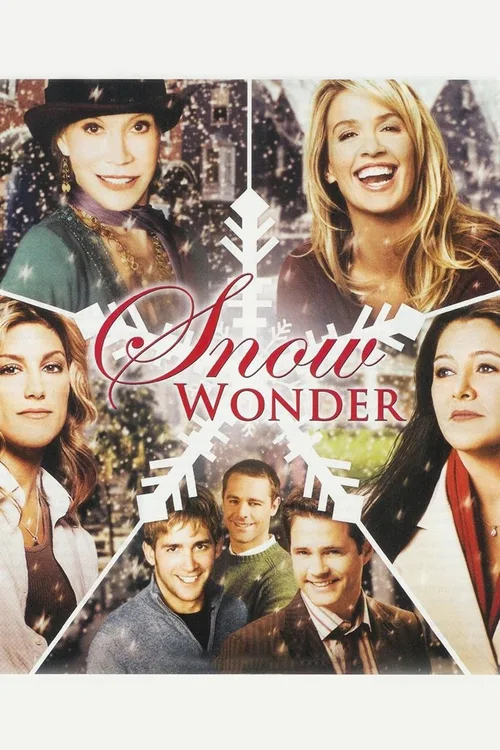
Snow Wonder (2005)
A suspiciously magical Christmas Eve snowstorm blows some small miracles into the lives of people around the country.
 rating 5/10 User rating 15 votes 53%
 ❄ Christmas Connection
Snow Wonder is set entirely on Christmas Eve, with a miraculous global snowstorm as the central premise. Every story thread is driven by the holiday: a widow grieving her first Christmas without her husband, a divorced mother splitting her son between households, a writer seeking meaning from family during the season. Christmas is not backdrop here but the engine of every plot.
Our Review
Snow Wonder aired on CBS on November 20, 2005, which means it landed a full month before Christmas, like a department store Santa appearing before Halloween candy has been cleared from shelves. The timing was deliberate. CBS had built a minor cottage industry of holiday anthology films in the early 2000s, and Snow Wonder was the network's bid to expand the formula into something with a bit more weather-induced ambition. The result is a made-for-television movie that works better as a mood than as a story, which may be exactly what it was designed to be.
The Premise: Christmas Eve, Everywhere at Once
The film adapts "Just Like the Ones We Used to Know," a 2003 short story by Connie Willis published in Asimov's Science Fiction magazine. Willis is not a minor figure in the science fiction world. By 2005, she had accumulated more Hugo and Nebula awards than any other writer in the genres' history, and her novel Doomsday Book had won both prizes simultaneously in 1993. The premise of her source story is beautifully simple: on Christmas Eve, without any meteorological explanation, snow begins falling everywhere on Earth, including places where snow has never fallen.
This is not a disaster movie. Nobody is buried alive. The snow is gentle, inexplicable, and seemingly benevolent, and Willis uses it as a pressure cooker to force her characters into confronting things they have been avoiding. Teleplay writer Rodney Vaccaro kept the structure intact: five interlocking storylines, all happening simultaneously, all nudged toward resolution by the wonder outside the windows.
The difference between the source story and the film is the difference between a good short story and a decent anthology television movie. Willis draws meaning from the scientific mystery, from a climatologist named Nathan who suspects the snow is connected to a "discontinuity" in climate systems and cannot stop calculating while everyone around him is simply enjoying Christmas. That layer of intellectual texture largely disappears from the CBS version. What remains are the human stories, stripped down and softened for a Sunday night audience.
Five Stories, Uneven Results
The cast is the film's strongest argument for itself. Mary Tyler Moore plays Aunt Lula, the eccentric mentor to Eric Szmanda's Luke, an aspiring writer who needs someone to believe in his work. Moore was 68 when she filmed Snow Wonder and had been appearing in CBS holiday movies with some regularity throughout the early 2000s. She plays Lula as a woman who has stopped pretending to be something she is not, which makes her the most watchable person in the film.
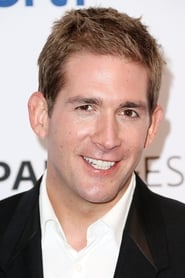
Szmanda was in the middle of his run on CSI at the time, playing lab analyst Greg Sanders, and he brings the same puppy-dog warmth to Luke that made Sanders popular with CSI audiences. The Aunt Lula and Luke storyline is the film's lightest thread, but it's also the most consistently enjoyable. When it works, it works because Moore refuses to play charming. She plays honest instead.
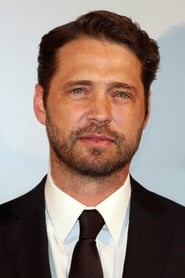
Jason Priestley plays Warren, a husband who uses the snowstorm as cover for being somewhere other than home on Christmas Eve. Priestley was four years removed from Beverly Hills, 90210 by this point, doing the kind of varied television work that mid-career actors navigate between bigger projects. He handles the infidelity subplot without making Warren a complete villain, which is harder than it sounds given how the script frames the character.
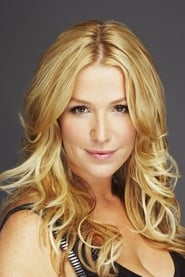
Camryn Manheim's storyline as Bev, a widow spending her first Christmas since her husband's death, carries the film's emotional weight. Manheim had won an Emmy for The Practice in 1998 and brings professional seriousness to a role that could have curdled into sentimentality. She doesn't let it. Jennifer Esposito plays Pilar, a divorced mother negotiating custody pain on Christmas morning. Poppy Montgomery plays Paula, whose friend's wedding collapses in real time.
The Problem With Five Stories
Anthology television movies face a structural problem that Snow Wonder never fully solves. Two hours divided among five storylines gives each plot roughly 20 to 25 minutes of screen time. That is enough to establish a situation and deliver a resolution, but not enough to earn the emotional payoff the film keeps reaching for. Variety's Brian Lowry called it "a sprawling mishmash of holiday stories" that "flits between them amiably enough," which is an accurate description and a gentle one.
The film's best moments come when storylines collide. Characters from different threads bump into each other, share a scene, and move on. This connective tissue gives Snow Wonder a sense of a single world rather than five parallel films. The snowstorm does its job, which is to keep everyone grounded when they might otherwise scatter.
What the film cannot manufacture is genuine surprise. Each arc follows a predictable path toward healing, reconciliation, or acceptance. The scripts for these CBS holiday productions were not written to subvert expectations. They were written to confirm them, warmly and efficiently. Snow Wonder delivers exactly that, which is either its failing or its entire point depending on what you came looking for.
Connie Willis Deserved More of Her Own Story
The most honest criticism of Snow Wonder is that it takes a smarter premise than it uses. Willis's short story works because the impossible snow is genuinely strange and the characters' reactions to it are grounded in recognizable human behavior. The CBS version keeps the snow but loses the strangeness. The meteorologist character who carries the scientific thread in the source story does not survive the adaptation. Nobody in Snow Wonder wonders why it's snowing in Miami. They just pull on scarves and start apologizing to each other.
Willis is a writer who uses fantasy and science fiction to illuminate real emotional terrain. The 2005 television version of her story uses the fantasy element as decoration. This is not a fatal mistake for a holiday anthology film. It is, however, a missed opportunity.
Director Peter Werner keeps the film moving at a pace that prevents it from getting too heavy, and the cinematography leans hard into the picturesque: blue-grey dusk light, snow falling in amber streetlight, Christmas trees glowing through apartment windows. The film looks like a Christmas card wants to look. That is a coherent aesthetic choice even if it sands down the rougher edges of the source material.
Snow Wonder holds a 5.1 on IMDB from viewers who mostly remember it fondly as exactly the kind of low-stakes holiday viewing it was designed to be. Camryn Manheim gives the film more than it deserves. Mary Tyler Moore makes her 20 minutes count. And somewhere in the CBS archives is a version of this story that kept the climatologist.
Fun Facts
The source short story, "Just Like the Ones We Used to Know," was first published in the December 2003 issue of Asimov's Science Fiction magazine and was later collected in Willis's 2017 anthology "A Lot Like Christmas."
Connie Willis, who wrote the original story, has won 11 Hugo Awards and 7 Nebula Awards, more than any other writer in science fiction history. The Science Fiction Writers of America named her a Grand Master in 2012.
Snow Wonder was produced by The Wolper Organization, the production company founded by David L. Wolper, the legendary documentary filmmaker behind Roots (1977) and the 1984 Los Angeles Olympics opening ceremony.
Filming wrapped on July 15, 2005, meaning the cast spent a Los Angeles summer shooting scenes set in a Christmas Eve snowstorm, wearing winter coats in what was likely 90-degree heat on set.
Eric Szmanda was filming Snow Wonder while actively starring as Greg Sanders in CSI: Crime Scene Investigation, a role he held from 2000 through 2015 across the show's full run.
Mary Tyler Moore was 68 when Snow Wonder aired and had appeared in multiple CBS made-for-television holiday films in the early 2000s, including "Miss Lettie and Me" (2002) and "Blessings" (2003), making her a reliable fixture in the network's holiday movie lineup.
Willis's original story features a climate scientist named Nathan who becomes obsessed with identifying the scientific cause of the global snowstorm, a subplot removed entirely from the television adaptation in favor of the five human storylines.
Snow Wonder aired on November 20, 2005, making it one of the earlier entries in the CBS holiday movie season, which typically launched in late November to capture the Thanksgiving weekend audience before the ABC Family and Hallmark channels dominated December.
Cast