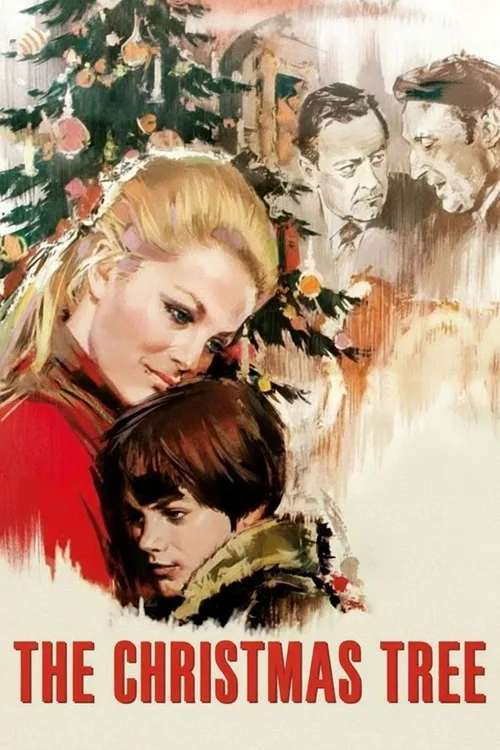
Do NOT See This Picture Alone! see it with someone, with someone special...someone you love. Joyful. Tearful. Real. It's All About Love and Life. And Isn't That What It's All About.
The Christmas Tree (1969)
A French-American millionaire, his girlfriend and his war buddy try to grant his dying son's every wish.
 rating 3/10 User rating 41 votes 62%
 ❄ Christmas Connection
The film is built entirely around a father's mission to give his dying son one perfect Christmas, making the holiday the literal emotional spine of the story. Christmas trees, decorations, gifts, and the season's imagery appear throughout as symbols of what the boy is losing. The title itself is a direct reference to a plot point in the film's final act.
Where to Watch


Our Review
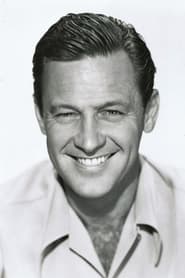
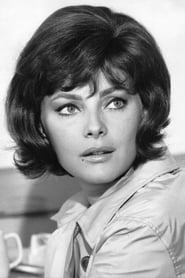
The Christmas Tree came out in 1969, a Franco-Italian co-production directed by Terence Young, who had previously helmed Dr. No and Thunderball. By the time he made this film, Young had earned the right to make a prestige drama with serious stars. He cast William Holden, a genuine Hollywood legend who had won an Oscar for Stalag 17, alongside Italian actress Virna Lisi. The result was a movie so unrelentingly miserable, so tonally bewildering, and so earnestly sincere in its awfulness that it has spent decades being cited as one of the worst Christmas films ever committed to celluloid.
That reputation is not unfair. But it's also not the whole story.
What The Christmas Tree Is Actually About
Laurent Douvre (Holden) is a wealthy Parisian businessman whose young son Pascal witnesses a nuclear test while on a trip to the South of France. The radiation exposure leaves Pascal with leukemia and a terminal diagnosis. Laurent, consumed by guilt and grief, decides to make his son's remaining months as full as possible. He rents a wolf cub named Cesar. He plans trips. He buys things. He attempts, through the sheer force of money and fatherly will, to outrun death.
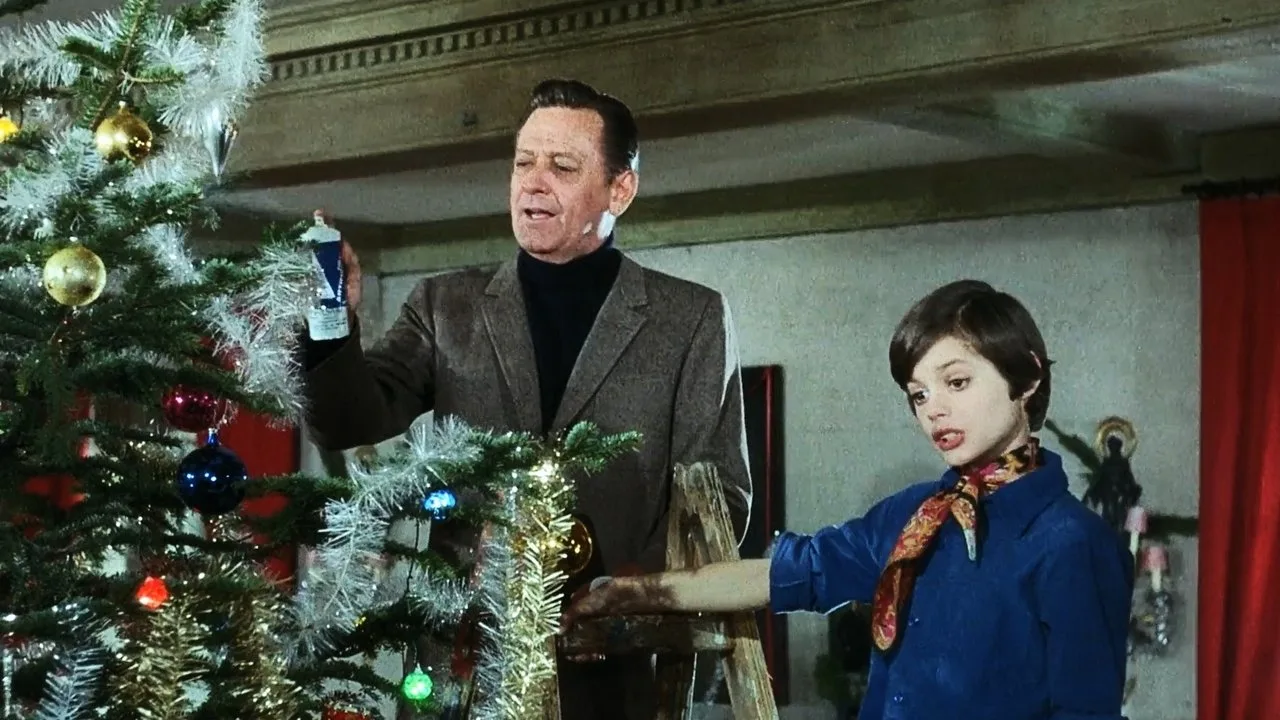
The film's Christmas sequence comes near the end, when Laurent stages an elaborate holiday celebration for Pascal knowing it will almost certainly be the boy's last. It is meant to be moving. The Christmas tree of the title appears as a kind of final gift, a symbol of normalcy offered to a child who has none.
On paper, this is a respectable premise for a tragedy. Fathers watching children die is one of the oldest subjects in drama. The problem is execution.
Where It Goes Wrong (And Why It's Compelling Anyway)
The film moves at a pace that feels less like dramatic restraint and more like the editor fell asleep. Long sequences of Laurent driving, Pascal playing with the wolf, yachts bobbing in harbors, all accumulate without building toward anything. Holden delivers his lines with the weary professionalism of a man who knows the script is not helping him. Lisi, as Laurent's companion Catherine, is given almost nothing to do and does it gracefully.
The wolf cub, Cesar, is the film's most committed performer.
What elevates The Christmas Tree from simply bad to genuinely strange is the film's complete tonal blindness. Young directs the nuclear disaster subplot with the same flat register as a scene where Pascal eats ice cream. The movie doesn't know it's supposed to feel different things at different times. Everything arrives at the same emotional temperature: grave, slightly slow, expensively photographed.
When Mystery Science Theater 3000 featured the film, the riffing practically wrote itself. The movie's problem isn't that it tries to be funny. It's that it tries to be devastating and the mechanisms simply don't work, which produces something funnier than any intentional comedy could have managed.
William Holden and a Career Detour
Holden made The Christmas Tree the same year he starred in Sam Peckinpah's The Wild Bunch, one of the most praised Westerns in American film history. The contrast between those two performances says something worth thinking about. In Peckinpah's film, Holden is electric. In Young's film, he is present. The screenplay, adapted from Michel Bataille's 1967 novel "L'Arbre de Noel," does not give him the kind of material that lets him do what he could actually do.
This happens. Actors take work for reasons that have nothing to do with the script's quality. Holden's later years included genuine masterworks and genuine misfires, often in the same twelve-month period. The Christmas Tree sits in the misfires column, though through no apparent failure of effort on his part.
Is It Worth Watching?
If you approach The Christmas Tree as a serious drama about childhood illness and parental grief, it will disappoint you. The emotional machinery is broken. The film reaches for tears and misses.
If you approach it as a document of late-1960s European co-production filmmaking, with its particular brand of melancholy ambition and sun-drenched location photography, there's something to see. The film looks good. Young knew how to compose a shot, and the French coastline does a lot of heavy lifting.
If you watch it with a tolerance for inadvertent comedy, it has a strange appeal. The earnestness is total. Nobody in this production thought they were making something ridiculous. That sincerity, applied to material that keeps slipping away from the filmmakers, produces a viewing experience unlike most things labeled "Christmas movie."
The nuclear radiation subplot, in particular, lands differently than the filmmakers intended. A child poisoned by a weapons test, a father made helpless by forces beyond wealth or will, set against Christmas decorations and a wolf cub named Cesar. The tonal collision is so complete it becomes its own kind of art. Unintentional art, but art.
Fun Facts
The film is based on Michel Bataille's 1967 French novel "L'Arbre de Noel." Bataille was a French author known for literary fiction, and the source novel was well-regarded in France before Young's adaptation turned it into something else entirely.
Director Terence Young directed the first three official James Bond films: Dr. No (1962), From Russia with Love (1963), and Thunderball (1965). The Christmas Tree represents one of the more dramatic tonal shifts in the career of any major action director.
William Holden won the Academy Award for Best Actor in 1953 for Stalag 17. He was also nominated for Sunset Boulevard (1950) and Network (1976), making him one of the more decorated actors to appear in a film later featured on Mystery Science Theater 3000.
The wolf cub that plays Cesar in the film became one of the production's more discussed elements. Real wolves were used during filming, which added genuine logistical complications to an already unusual production.
Mystery Science Theater 3000 broadcast their episode featuring The Christmas Tree in December 1991 during the show's third season on Comedy Central. The episode has since become a cult viewing tradition among MST3K fans each December.
Virna Lisi, who plays Catherine in the film, was one of Italy's biggest film stars in the 1960s and had turned down a contract with Universal Studios that would have made her a Hollywood leading lady. She preferred to work in Europe, which led her to productions like this one.
The film was shot in both France and Italy, using locations along the French Riviera. The landscape photography is genuinely accomplished, which makes the contrast with the script's failures all the more striking to watch.
Cast