
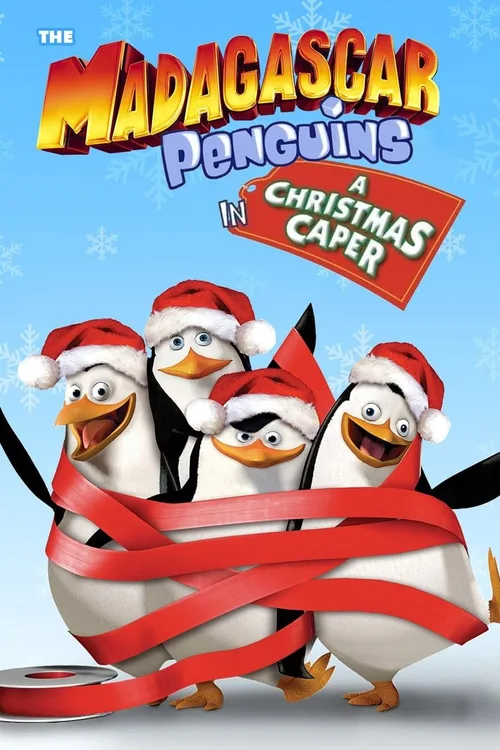
The Madagascar Penguins in a Christmas Caper (2005)
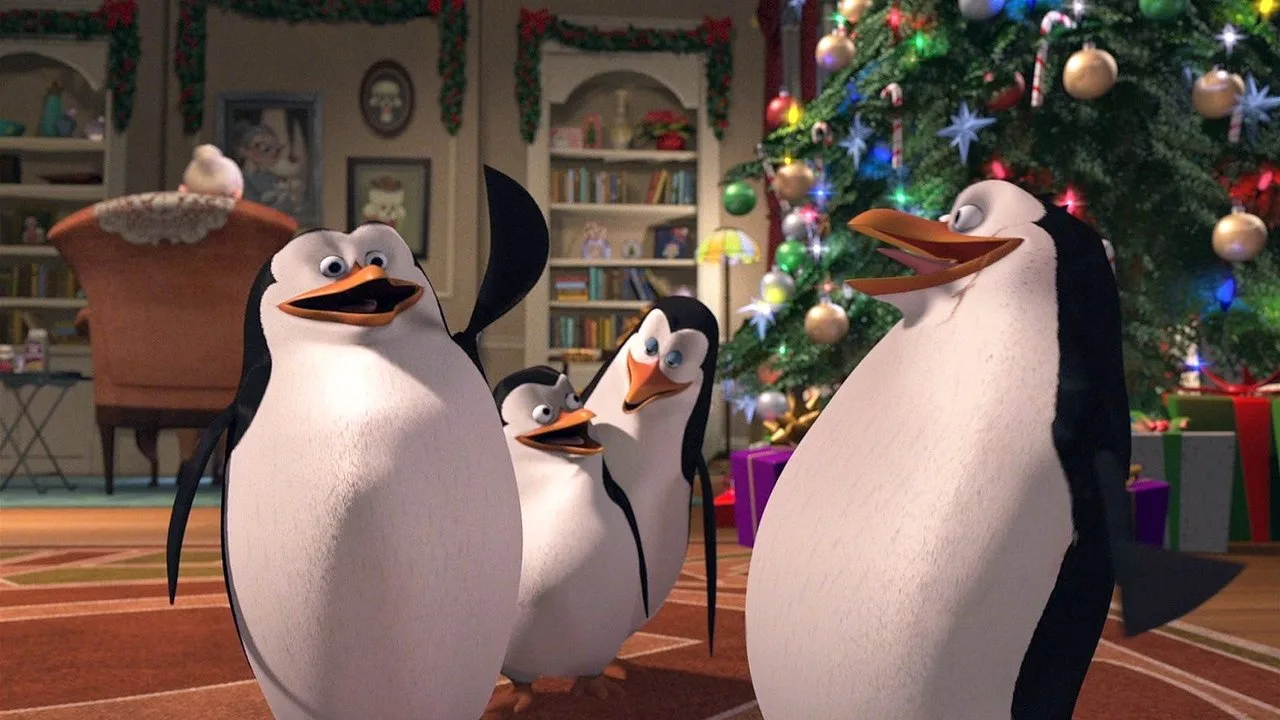
During the holiday season, when the animals of the Central Park Zoo are preparing for Christmas, Private, the youngest of the penguins notices that the Polar Bear is all alone. Assured that nobody should have to spend Christmas alone, Private goes into the city for some last-minute Christmas shopping. Along the way, he gets stuffed into a stocking
 rating 8/10 User rating 385 votes 69%
 ❄ Christmas Connection
The entire short is built around a Christmas Eve rescue mission inside Central Park Zoo. Private sneaks out to buy a gift for Ted the polar bear, gets snatched by a villainous old woman, and the whole caper unfolds against a snowy Manhattan Christmas backdrop. Christmas is not incidental here. It is the engine of the plot.
Where to Watch


Our Review
In October 2005, audiences sitting down for Wallace and Gromit: The Curse of the Were-Rabbit got a twelve-minute bonus they were not expecting. The Madagascar Penguins in a Christmas Caper played before the feature and walked out with most of the conversation. DreamWorks had made five months of its main Madagascar film and figured the penguin quartet deserved their own spotlight. They were right. What they produced in this short was funnier, tighter, and more confidently written than almost anything the penguins would do for the next decade.
The setup is deceptively simple. Private, the youngest and most sentimental of the group, notices that Ted the polar bear is alone in his enclosure while the rest of the zoo celebrates Christmas. He slips away to buy Ted a present. Within minutes, Private is captured by Nana, the terrifying little old woman from the first Madagascar film, who mistakes him for a chew toy for her dog, Mr. Chew. Skipper, Kowalski, and Rico launch a rescue operation through the streets of Manhattan on Christmas Eve.
Twelve minutes. No fat.
Why the Penguins Worked Before Anyone Else Did
The original Madagascar from 2005 is a perfectly fine movie. Ben Stiller, Chris Rock, David Schwimmer, and Jada Pinkett Smith voice the four main animals, and the film has genuine charm. But the penguins, who appear in maybe ten minutes total, consistently threaten to steal every scene they inhabit. The reason is structural. The four leads are essentially playing versions of their own comic personas, while the penguins operate as a unit, a single organism with four distinct functions.
Skipper (Tom McGrath) is the paranoid commanding officer. Kowalski (Chris Miller) is the analyst who explains things with complete confidence and frequent wrongness. Rico (John DiMaggio) communicates mostly in grunts and produces objects from his throat. Private (Christopher Knights) is the naive rookie whose goodness keeps getting the group into situations their tactical training is not designed to handle. This dynamic is so clean it basically writes its own jokes.
The Christmas short takes that formula and runs it through a New York City location with real stakes. Private genuinely cares about Ted. The mission is real. There are consequences if they fail. That emotional grounding is what separates this from pure gag-delivery. You actually want Private to get back to the zoo.
Gary Trousdale and the Animation Craft
The short was directed by Gary Trousdale, who had previously co-directed Beauty and the Beast (1991) and The Hunchback of Notre Dame (1996) for Disney. His hand is visible. The character staging is clean, the comedic timing is precise, and the short never mistakes volume for energy. Michael Lachance's script trusts the characters to carry scenes without explaining them.
The Manhattan winter visuals hold up well. Central Park under snow, the brownstone streets, a yellow cab with a license plate that reads "I8BIGAPEL." The environment is specific in a way that rewards attention. This is not a generic snow globe. It looks like New York.
The original music was composed by James Dooley, who was early in his career at the time. The score stays out of the way, which is the right call when the jokes are this dense.
The Nana Problem (and Why It Works)
Nana is a recurring joke from the first film. She beats up Alex the lion with her purse and becomes a kind of running gag about the violence concealed within the elderly. Used again here, the character risks feeling like a cheap callback. She does not. Private's captivity in her apartment is genuinely uncomfortable in the way good children's comedy allows itself to be uncomfortable. Mr. Chew is a real threat. Nana's indifference to Private's sentience is played straight.
This is the short's smartest move. The rescue has actual tension because the antagonist is not softened for the occasion. Nana is exactly as awful as she was in the feature film, and Private is genuinely in trouble.
Twelve Minutes That Launched a Franchise
The short was included as a bonus feature on the Madagascar DVD release on November 15, 2005, roughly six weeks after its theatrical debut. That's the version most people actually saw. It found a large audience fast.
The response was directly responsible for what came next. The Penguins of Madagascar television series launched on Nickelodeon in 2008 and ran for three seasons. A full feature film, Penguins of Madagascar, arrived in 2014. None of that happens without this short demonstrating that the characters could carry a story on their own.
The short also holds a specific technical distinction. It was the first DreamWorks Animation short to receive a G rating from the MPAA. Not PG. G. DreamWorks had not made anything that clean before.
At the end of the film, Private delivers Ted's gift: a snow globe of the Central Park Zoo, with a tiny polar bear figure inside. Ted holds it up, looks at the snow falling around him in the real enclosure, and looks back at the snow falling inside the globe. It is a small, quiet joke that lands without a single word of dialogue, which is the whole point.
Fun Facts
The short premiered in theaters on October 7, 2005, paired with Wallace and Gromit: The Curse of the Were-Rabbit, making it one of the few animated shorts to open theatrically alongside an already hotly anticipated feature.
It was the first DreamWorks Animation production to receive a G rating from the MPAA. All previous DreamWorks animated films and shorts had been rated PG.
The taxi visible during the New York street scenes has the license plate "I8BIGAPEL," a visual pun reading "I ate big apple," a nod to New York City's famous nickname.
The background music playing in the penguins' habitat while Private talks about Ted is "Jingle Jingle," taken directly from the 1964 television special Rudolph the Red-Nosed Reindeer.
Director Gary Trousdale had previously co-directed Beauty and the Beast (1991) with Kirk Wise at Disney, making this a notable shift to the rival studio's signature franchise characters.
The short runs exactly 12 minutes and is set before the events of the first Madagascar feature, placing it chronologically as the earliest chapter in the whole franchise timeline.
Bill Fagerbakke, best known as Patrick Star in SpongeBob SquarePants, voiced Ted the polar bear. Ted has almost no dialogue, but Fagerbakke's casting added a recognizable name to the zoo's supporting cast.
The success of this short was a key factor in the greenlight for The Penguins of Madagascar Nickelodeon series, which launched three years later in 2008 and ran for 149 episodes across three seasons.
Cast