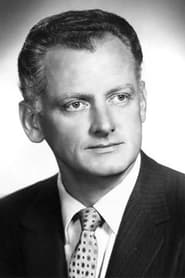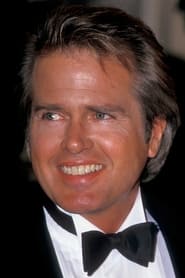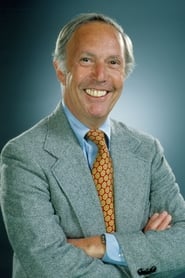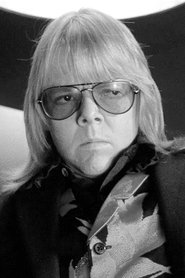

The Night They Saved Christmas (1984)
An oil company is exploring two Arctic sites for oil. The needed blasting at the first site rocks Santa Claus' North Pole village. He realizes that any blasting at the second site will destroy his home. He enlists the aid of a woman and her children to convince her husband (who works for the company) that the first site is where the oil they want is. Along the way, Santa explains all his secrets in delivering presents all around the world.
 rating 6/10 User rating 25 votes 56%
 ❄ Christmas Connection
The entire movie takes place at and around the North Pole during the Christmas season, with Santa Claus, his elves, and the threat to Christmas itself as the central concern. There is no ambiguity here: saving Christmas is literally the plot. The North Pole workshop is lavishly staged and Art Carney's Santa delivers one of the most earnest, un-ironic portrayals of the character from the 1980s TV movie era.
Where to Watch


Our Review
The year is 1984. Jaclyn Smith is at the height of her post-Charlie's Angels fame. Art Carney is 66 years old and has an Academy Award on his shelf. Someone looked at these two facts and decided the logical conclusion was a TV movie where an oil company nearly bulldozes Santa's workshop. The result, The Night They Saved Christmas, is one of the more sincerely made holiday movies of its era, and it holds up better than it has any right to.
What Actually Happens in This Movie
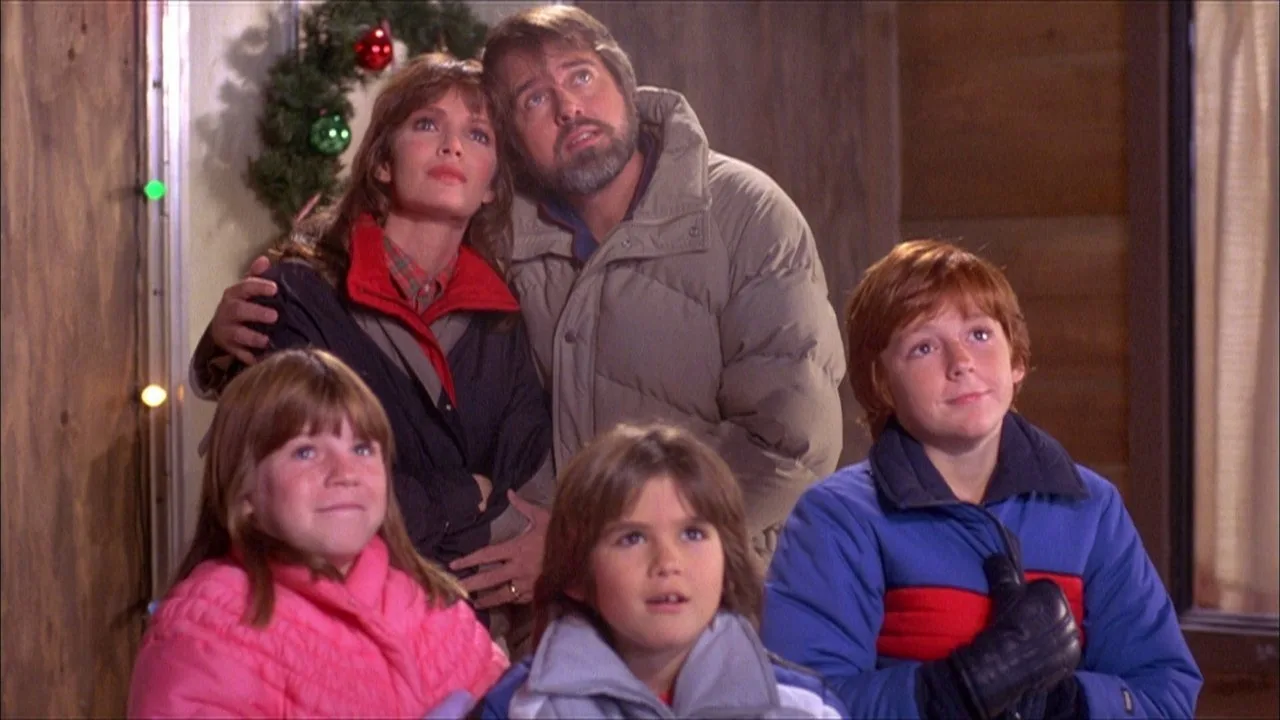
Michael Baldwin (Paul Le Mat) runs a drilling operation near the North Pole for an oil company. His wife, Claudia (Jaclyn Smith), is skeptical when their three children are whisked away by elves to Santa's village, a sprawling underground facility buried beneath the Arctic ice. Santa himself, played by Art Carney with zero irony and considerable warmth, explains the problem: the company's planned drill site will destroy Christmas City. Claudia must convince her husband and his boss to move the drilling location before it's too late.
The environmental stakes are real, and the film doesn't soften them. This is not a movie where the threat is vague. A specific piece of Arctic real estate is on the line, and the film respects its audience enough to make the oil industry's indifference feel plausible rather than cartoonishly evil.
Art Carney's Santa Is the Real Reason to Watch
Carney won his Oscar for Harry and Tonto in 1975, playing an old man who travels cross-country with a cat. He brought the same quality of unguarded humanity to Santa Claus nine years later. His performance has no winking self-awareness. He plays the character as a specific, slightly tired, genuinely good person who has been running a complex logistical operation for centuries and takes it seriously.
The scenes inside Christmas City benefit enormously from this. When Carney walks the children through the workshop explaining how it all works, you believe him. That's not nothing. Plenty of actors in this role play Santa as an idea. Carney plays him as a man.
He was also, by all accounts, the first choice for the role. The production built the part around his particular combination of warmth and gravitas, and it shows.
The Environmental Angle, Circa 1984
The film aired in December 1984 on ABC, two years before Chernobyl and six years before the first Earth Summit put environmental concerns squarely into mainstream political conversation. The idea that a corporation might casually destroy something irreplaceable in pursuit of oil reserves was not the cultural common ground it would later become.
What makes the film's approach interesting is that it doesn't present the oil executives as villains. Michael Baldwin is not a bad person. He's doing his job. The film's argument is that the problem is structural: a company that has decided Christmas City doesn't exist on any map can be indifferent to destroying it. Once he sees it, he acts differently. The movie is optimistic in that specific way: it believes that the problem is ignorance, not malice, and that a direct appeal to a reasonable person's eyes can solve it.
This is, objectively, a naive position. It is also a coherent one, and for a family Christmas movie with a 96-minute runtime, it's the right call.
Jaclyn Smith Holds the Center
Smith is the film's protagonist in the most functional sense: she's the one who has to be convinced, and then the one who has to convince others. She gives the movie a grounded register that prevents it from tipping into pure fantasy. Her skepticism in the early scenes feels genuine rather than performed, which makes the eventual shift credible.
She is also the only adult in the film's first act who treats the children's account of what they saw with anything approaching seriousness. That single character choice does a lot of work for the story's logic.
The Christmas City Sets
For a 1984 TV movie, the production design is ambitious. Christmas City is rendered as a subterranean complex with workshops, living quarters, and a distinct visual identity that owes more to practical engineering than to the sugary candy-cane aesthetic that dominates most Santa's workshop depictions. It looks like a place where actual work gets done.
The budget was not unlimited, and some corners are visible. But the core creative decision, to make Santa's operation feel functional rather than decorative, gives the movie a texture that holds up better than the typical painted-flat approach of its contemporaries.
Where It Fits in the 1980s Christmas TV Movie Landscape
The 1980s produced a specific subgenre: the made-for-TV Christmas movie that aired once or twice on a major network, was largely forgotten by the following decade, and has since acquired a cult following among people who saw it as children and spent twenty years convinced they had imagined it. The Night They Saved Christmas fits this pattern almost exactly.
It's a better film than its obscurity suggests. The cast is too good for it to be otherwise. And it arrived at a moment when TV movies were still made with a kind of earnest craft that the subsequent cable era would largely displace.
If you have children in the 5-to-10 range, this is a legitimate recommendation. If you saw it in 1984 and have been wondering whether it was as good as you remembered, the answer is approximately yes.
Fun Facts
Art Carney won the Academy Award for Best Actor in 1975 for Harry and Tonto, making him one of the few Oscar winners to have played Santa Claus in a major production. He was 66 when The Night They Saved Christmas aired.
The film aired on ABC on December 2, 1984, during the network's Sunday night lineup, which placed it in direct competition with CBS and NBC's own holiday programming.
Jaclyn Smith had completed her run on Charlie's Angels in 1981. This film was part of a sustained effort in the early-to-mid 1980s to establish her as a dramatic TV movie lead, a strategy that proved successful over several years.
Paul Le Mat had appeared in American Graffiti (1973) as John Milner, the film that launched George Lucas's commercial career and introduced Harrison Ford, Richard Dreyfuss, and Ron Howard to mainstream audiences.
The film's core premise, a corporation threatening to destroy the North Pole through resource extraction, predated widespread public environmental consciousness by several years. The first United Nations Earth Summit was held in Rio de Janeiro in 1992, eight years after this movie aired.
Christmas City's underground design was a deliberate production choice to avoid the expense and logistical difficulty of exterior Arctic location shooting. The entire film was shot on soundstages.
The film has no theatrical release and was never shown in cinemas. It was produced specifically for television by Robert Halmi Sr., a prolific TV movie producer responsible for dozens of made-for-TV specials throughout the 1980s and 1990s.
Cast