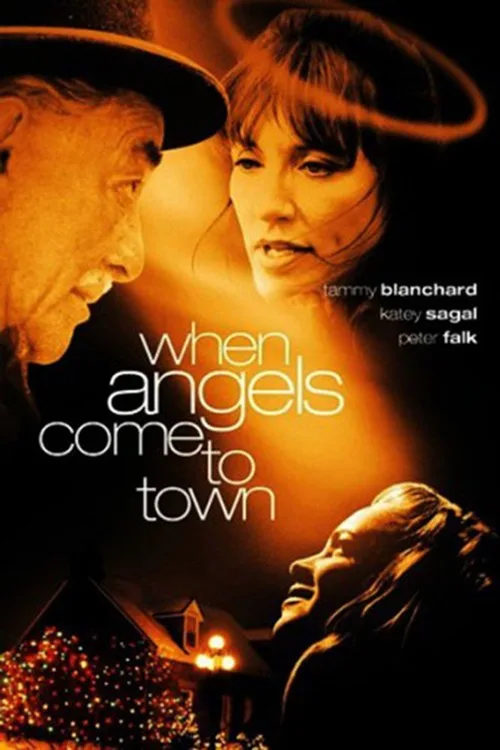
When Angels Come to Town (2004)
Max, an angel in exile, walks around the United States to help humans. In a small town in Maine, he meets a young woman without a family named Sally. As she struggles to get custody of her younger brother, Max immediately believes that his new mission is to help Sally. But Jo, a strict angel, is sent to explain to his colleague that this is not exactly what is expected of him. Indeed, Max's mission is not to help Sally, but Karl, the manager of a small factory of Christmas decorations. His business is barely surviving because its traditional products do not meet the success of yesteryear. First bored, Max notices that Karl knows Sally ...
 rating 6/10 User rating 11 votes 60%
 ❄ Christmas Connection
An angel is dispatched to a small Maine town days before Christmas to mend two broken families, weaving the holiday season into every scene through ornament factories, mysterious gift boxes, and snow-dusted streets.
Our Review
A Rumpled Angel, Two Broken Families, and One Mysterious Box
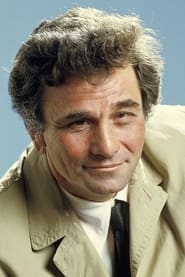
There is something quietly stubborn about Peter Falk as a holiday movie star. By 2004, when When Angels Come to Town aired on CBS on November 28, the actor best known for squinting at murder suspects had made the wandering, raincoat-free angel Max his own recurring December ritual. This is the third and final chapter of that trilogy, following A Town Without Christmas (2001) and Finding John Christmas (2003). It lands in familiar territory without pretending otherwise, and that honesty is part of its modest charm.
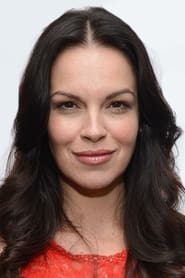
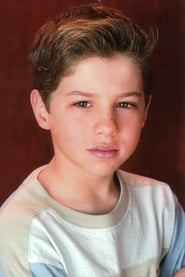
Max arrives in a small Maine town carrying a box he promptly loses track of. A young woman named Sally (Tammy Blanchard) spots him leaving a Christmas shop and gives chase, but Max vanishes the way angels tend to do when the plot requires it. Sally is not simply a bystander. She is fighting to win legal custody of her younger brother Jimmy (Alexander Conti) before the foster system swallows him, and she does not need any more mysteries in her life. Max, operating on celestial instinct rather than clear instructions, immediately decides she is his assignment. He is wrong.
Heaven Has a Bureaucracy Problem
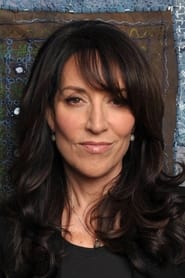
The film's most entertaining idea is that the angel system runs on something that looks a lot like middle management. Jo (Katey Sagal) is dispatched from above to set Max straight. His actual mission is Karl Hoffman (Seann Gallagher), the son of an East German immigrant who now runs his father's Christmas ornament factory and is making modernization decisions that are quietly tearing the family apart. Jo arrives with a clipboard full of grievances and a strict no-intervention policy toward human pleasures. That policy does not survive contact with her first cup of coffee.
Sagal is genuinely funny here, and she earns most of the film's laughs. She moves from stern bureaucrat to curious tourist to warm co-conspirator across the runtime, and the journey feels earned rather than forced. Falk, for his part, never overplays Max. The performance is understated in the way only an actor completely comfortable with a role can manage. He mumbles, shuffles, and quietly fixes things while appearing to bungle everything.
The Ornament Factory as a Christmas Symbol
Director Andy Wolk and screenwriter Michael J. Murray make smart use of the Hoffman factory as the film's emotional center. Christmas ornaments are already loaded with sentiment, and the conflict between Karl's efficiency-driven changes and his father's old-world approach to craft carries real weight. The factory setting also keeps the film visually grounded in Christmas without resorting to the usual avalanche of tinsel. Snow-covered streets, hand-blown glass decorations, and a mysterious wooden box that carries decades of family history do most of the atmospheric heavy lifting.
The mysterious box is the film's MacGuffin, but Murray takes it seriously enough to give it a satisfying backstory. It links the Hoffman family to a past they had nearly forgotten, and its resolution in the final act is genuinely affecting. The film handles its two storylines with more competence than most CBS holiday movies bother with. Sally's custody battle and Karl's family estrangement are kept separate long enough to make their eventual convergence feel meaningful.
Where It Falls Short
The film is still predictable in the specific way that all angel-intervention stories tend to be. Once you understand that Max has been sent to help Karl and not Sally, the remaining plot mechanics are visible well in advance. Blanchard works hard with Sally, but the character is written as pure goodness with very little friction, which makes it difficult to feel genuinely anxious about her custody fight. The child actors are fine without being remarkable, which is about the best that can be said for most family films of this era.
The Montreal locations doubling for Maine are serviceable but occasionally obvious to anyone who has spent time in either place. The production moved quickly, shooting from July 23 to August 20, 2004, and the compressed schedule sometimes shows in scene transitions that feel slightly rushed.
The Falk Effect
What carries the film past its limitations is simply the pleasure of watching Peter Falk inhabit a character who has nothing to prove. Max never explains himself or justifies his existence. He shows up, makes things worse, then quietly makes them better. In one memorable scene, he disguises himself as a woman named Maxine to slip past a situation requiring discretion, and Falk plays it with the same deadpan seriousness he would bring to a Columbo interrogation. It is a small moment, but it encapsulates everything the trilogy understands about its star.
This is comfort viewing in the most literal sense. It asks nothing difficult of the audience and delivers exactly what its premise promises. For a Sunday night in late November, when the tree is up and the standards are appropriately seasonal, that is exactly enough.
The complete Max the Angel box set, including all three CBS holiday films, was released by Paramount Home Media and remains the easiest way to watch the full trilogy.
Fun Facts
When Angels Come to Town is the third and final film in Peter Falk's angel Max trilogy, following A Town Without Christmas (2001) and Finding John Christmas (2003), all three directed by Andy Wolk.
The film aired on CBS on November 28, 2004, the Sunday after Thanksgiving, placing it squarely in the opening slot of the American holiday TV season.
Principal photography took place in Montreal, Quebec, Canada, with the entire shoot wrapped in less than four weeks between July 23 and August 20, 2004.
Alexander Conti, who plays Jimmy Reid, received a nomination at the 2005 Young Artist Awards for Best Supporting Young Actor in a TV Movie, one of the film's only major award recognitions.
Katey Sagal, best known at the time as Peg Bundy on Married with Children, used this role to demonstrate dramatic range well before her acclaimed turn in Sons of Anarchy (2008).
Peter Falk once described the Max character as the opposite of Columbo: where Columbo already knows the answer and pretends not to, Max genuinely does not know and pretends he does.
The Christmas ornament factory at the center of the plot draws on a real Central European tradition: hand-blown glass ornaments have been produced in the Bohemian and Saxon regions since the 1840s, and the film's references to East German craft heritage are historically grounded.
The film was distributed on DVD under the alternate title Max the Angel, which was also used as a box set title for all three Falk angel movies released together by Paramount.
Cast