

White Reindeer (2013)
After an unexpected tragedy, Suzanne searches for the true meaning of Christmas during one sad, strange December in suburban Virginia.
 rating 7/10 User rating 29 votes 49%
 ❄ Christmas Connection
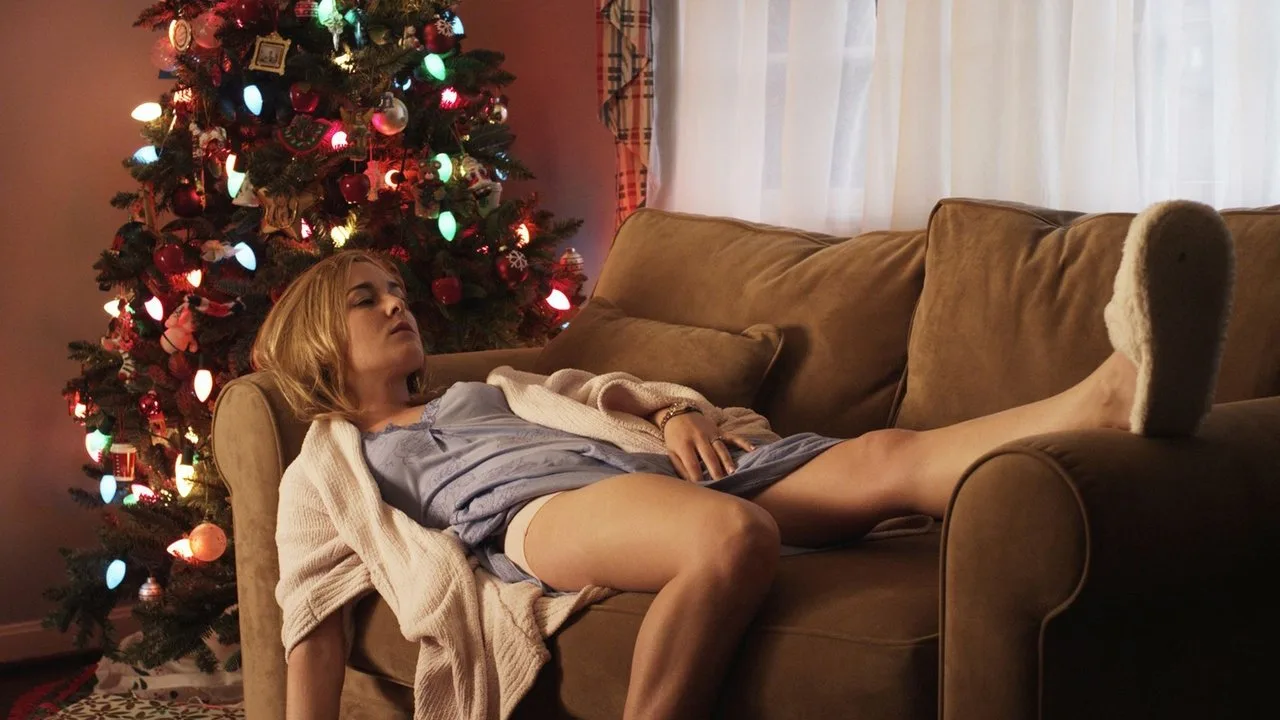
White Reindeer takes place entirely during the Christmas season in suburban Virginia, with tinsel, office parties, mall Santas, and holiday decorations as constant backdrops to its grief-and-hedonism story. Christmas isn't set dressing here; it's the active antagonist, relentlessly cheerful against a woman who has no reason to be. The film's title refers to a figurine that becomes a dark running joke.
Where to Watch


Our Review
White Reindeer opens with Suzanne Barrington, a real estate agent in Northern Virginia, decorating her home with the kind of seasonal precision that suggests she genuinely believes Christmas can be controlled. Then her husband gets shot dead, and none of that precision matters anymore. Zach Clark's 2013 film is about what happens when the holiday you've been scaffolding your sense of order around suddenly refuses to cooperate.
Anna Margaret Hollyman plays Suzanne with something rare in films about grief: she lets the character be ridiculous. Hollyman doesn't ask for our sympathy by playing it straight. Suzanne makes bad decisions, numbs herself with alcohol and cocaine, befriends her dead husband's secret girlfriend (who turns out to be a stripper named Fantasia), and keeps doing all of it inside a house full of tinsel and nativity scenes. The performance is generous and specific in ways that genre films usually aren't.
What Makes This More Than a Dark Comedy
The phrase "dark Christmas comedy" tends to promise a certain kind of cynicism: the movie that sneers at the holiday, congratulates itself for being edgy, and calls it a day. White Reindeer doesn't do that. Clark is interested in what the holiday actually does to people under stress. Christmas demands public happiness. Suzanne is very publicly not happy. That collision is where the film lives.
Laura Lemar-Goldsborough plays Fantasia, and she avoids every trap the role sets. There's no redemption arc where the stripper turns out to have a heart of gold, no scene where she delivers wisdom that changes Suzanne's life. She's just a person who also knew Suzanne's husband, who also has feelings about what happened, and who ends up in this woman's orbit because neither of them has anyone better to be with right now. The friendship that develops is strange and genuine.
Joe Swanberg appears in a supporting role, which places White Reindeer squarely in the American mumblecore tradition. Clark came up alongside directors like Swanberg and Andrew Bujalski, and he shares their interest in performance that feels found rather than constructed. But White Reindeer has a stronger sense of visual design than most mumblecore, with Christmas iconography deployed throughout as a kind of cruel commentary on the action.
Suburban Virginia as Christmas Dystopia
The setting matters. Northern Virginia suburbs are a specific social ecosystem: prosperous, anonymous, defined by what people accumulate and display. Suzanne works in real estate, which means her job is literally to sell domestic fantasy. Her husband was living a double life in this same landscape. Clark films it all in a way that makes the Christmas decorations feel like evidence of something.
The film runs 82 minutes and doesn't waste any of them. Clark knows when to stay with a scene and when to cut. There's a sequence at an office Christmas party that captures the particular horror of being surrounded by people performing holiday cheer when you are actively coming apart. It's uncomfortable to watch in a way that feels earned rather than manufactured.
White Reindeer earned a 90% critical approval rating on Rotten Tomatoes from 31 reviews, which is a better score than most films in the counter-Christmas subgenre manage. IFC Films acquired the North American rights, giving it a proper theatrical and VOD release in December 2013. For a film made on roughly $67,000 total (Clark raised $33,500 via Kickstarter, covering about half the budget), that's a real result.
The Case For Watching It at Christmas
This is not a film you put on with your family on Christmas Eve. It's a film you watch alone, or with someone who can handle a story about grief and bad behavior set against a backdrop of relentless Christmas cheer. It's funny in the way that certain kinds of despair are funny: you laugh because the alternative is worse.
What Clark gets right, and what keeps White Reindeer from being just another "Christmas is actually bad" movie, is that it doesn't argue against the holiday. It just shows what it looks like when a person needs Christmas to hold together, and Christmas won't. The white reindeer figurine that appears throughout the film is the perfect symbol for this: a decorative object that was supposed to mean something, now just sitting there while everything changes around it.
Fun Facts
Director Zach Clark launched a Kickstarter campaign on August 25, 2011, with a goal of $33,500. The campaign met its target after 52 days, and that crowdfunded sum covered approximately half the total production budget, with the remainder paid out-of-pocket by Clark and his producers.
The film was shot on location in the Northern Virginia suburbs of Washington, D.C., specifically chosen for its particular brand of prosperous, anonymous suburban sprawl that Clark wanted as the visual backdrop to Suzanne's unraveling.
IFC Films acquired the North American distribution rights to White Reindeer in September 2013, ahead of its December 6, 2013 theatrical release, giving the micro-budget indie a proper commercial platform.
Anna Margaret Hollyman performed most of the film's more physically demanding scenes, including extended sequences involving alcohol and drug use, with an improvisational approach encouraged by Clark that kept the performance grounded rather than theatrical.
Joe Swanberg, who appears in a supporting role, is himself a prolific mumblecore director whose films include Drinking Buddies (2013) and Happy Christmas (2014). His casting alongside Clark is a rare instance of two indie directors from the same movement sharing screen and behind-the-scenes credit simultaneously.
White Reindeer earned a 90% approval rating on Rotten Tomatoes from 31 critics, making it one of the better-reviewed indie Christmas films of the 2010s, ahead of higher-profile holiday releases that year.
Zach Clark's previous feature, Modern Love Is Automatic (2009), also starred Anna Margaret Hollyman. Their collaboration on White Reindeer marked the second time the director built a film around her performance specifically.
The film's runtime of 82 minutes is deliberately tight. Clark has said in interviews that he removed anything that didn't serve Suzanne's emotional state, which is why the film moves at an unusual pace for grief-centered drama.
Cast