
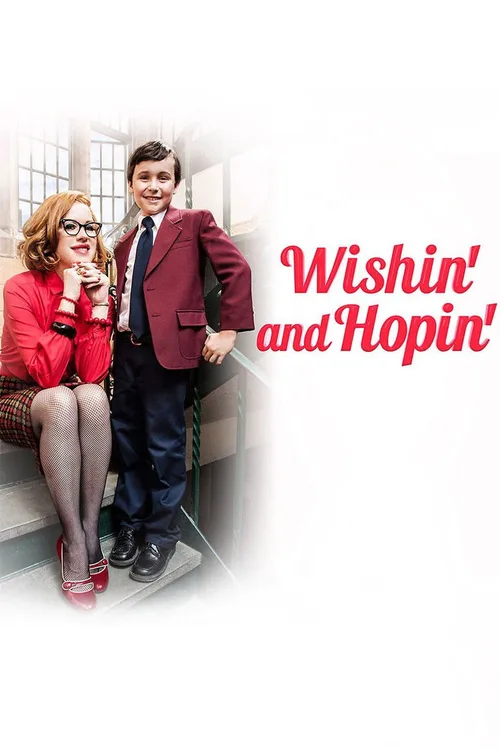
Wishin' and Hopin' (2014)
Felix Funicello is a Catholic school fifth-grader in 1964, whose claim to fame is his cousin Annette Funicello, the famous Mouseketeer and teen movie queen. But grammar and arithmetic move to the back burner this holiday season with the sudden arrivals of substitute teacher Madame Frechette and feisty Russian student Zhenya Kabakova. While Felix learns the meaning of French kissing, cultural misunderstanding, and tableaux vivants, Wishin' and Hopin' barrels toward one outrageous Christmas!
 rating 7/10 User rating 12 votes 48%
 ❄ Christmas Connection
The entire film builds toward a parochial school Christmas nativity pageant that goes spectacularly wrong, making the holiday production the narrative engine of the story. The setting is the fall semester of 1964, with Advent and the Christmas show serving as the deadline against which all the chaos unfolds. The period detail, the church calendar, and the live tableau vivant performance place this squarely in Christmas territory.
Where to Watch


Our Review
Wally Lamb wrote "Wishin' and Hopin'" as a slim holiday novella in 2009, and the whole thing reads like a confession from someone who survived a spectacularly chaotic Catholic school Christmas pageant and needed to get it on paper. The 2014 Lifetime adaptation, directed by Colin Theys, keeps that spirit intact. It is not a prestige production. It is not trying to be. What it is, unexpectedly, is genuinely funny and warmer than the Lifetime label usually promises.
The story follows Felix Funicello, a fifth-grader at St. Aloysius Gonzaga Parochial School in the fictional town of Three Rivers, Connecticut. The year is 1964. Felix's third cousin, as he is at pains to mention, is Annette Funicello, the Mickey Mouse Club Mouseketeer who by that point had already starred in "Beach Party" (1963), "Muscle Beach Party," and "Bikini Beach" (both 1964). Being adjacent to that kind of celebrity means something in a small Connecticut Catholic school, even if it means absolutely nothing in practice.
What Makes This a Christmas Movie Worth Watching
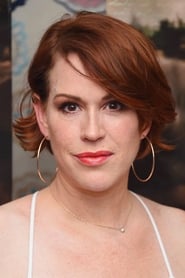
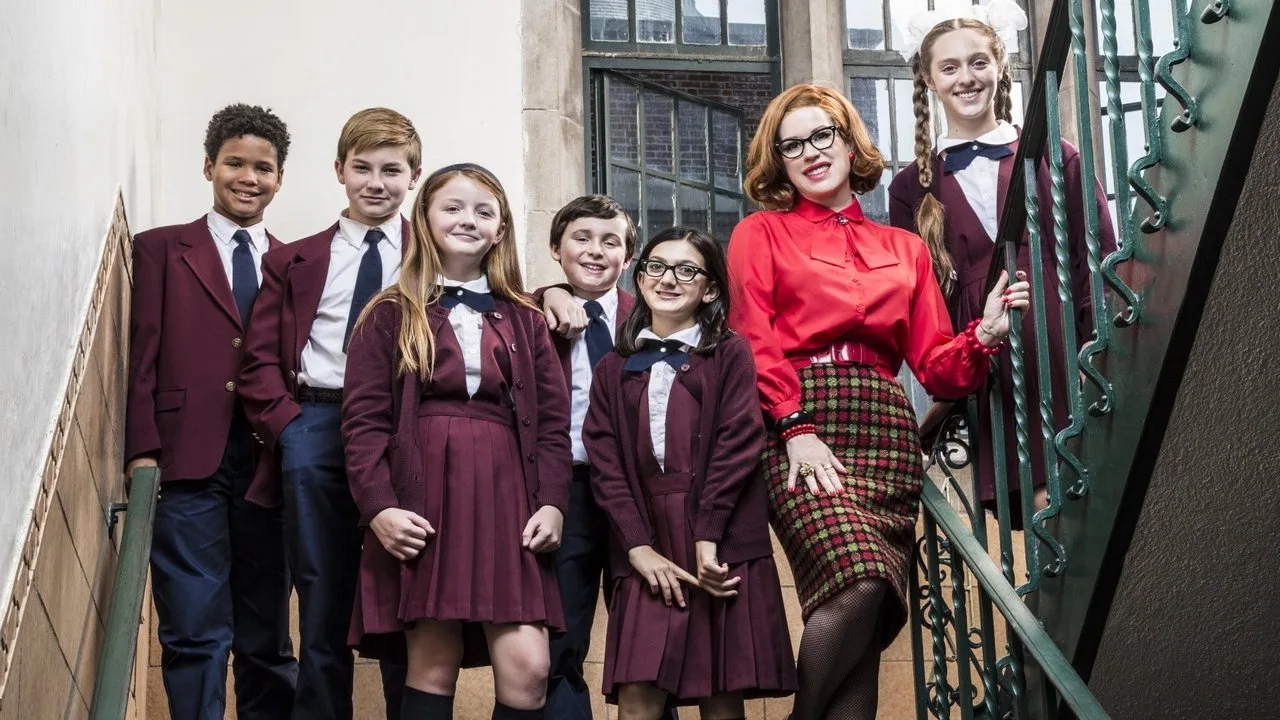
The entire semester builds toward one thing: a Christmas "tableau vivant," which is what the new substitute teacher, Madame Marguerite Frechette, insists on calling the nativity pageant. That terminological upgrade tells you everything about her character. Played by Molly Ringwald, Madame Frechette is a Quebecoise substitute who arrives after the regular teacher, Sister Dymphna, suffers a nervous breakdown. She is theatrical, French-speaking, and utterly out of place in a Connecticut parochial school run by severe nuns.
Ringwald was a smart casting choice. She is actually fluent in French, having spent part of the 1990s acting in French films, which gives the performance a texture that a phonetic approximation would have killed. Her Madame Frechette is less a joke than a force of nature, someone who takes the nativity show seriously as an art form even as everything around it collapses.
The collapse is the point. A student overdoses on snacks before the show. The girl cast as Mary becomes unavailable. Zhenya, a Russian immigrant student who has been teaching the boys to swear in Russian, gets drafted as the Virgin Mary instead. Felix ends up in the manger. The pageant does not go as planned. This is the correct outcome.
The 1964 Setting Does a Lot of Work
Lamb set the story in 1964 deliberately. It is the year after the Kennedy assassination, the same year Vatican II was reshaping the Catholic Church's relationship with its own traditions. American parochial schools in that moment were caught between a world that still ran on strict habits and rulers and a future that was about to loosen everything. The nuns at St. Aloysius Gonzaga do not yet know that their numbers will drop by more than 30 percent over the next 15 years as Vatican II reforms took hold. They are still fully in charge, and the film captures that institutional authority with affection rather than bitterness.
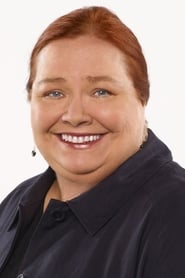
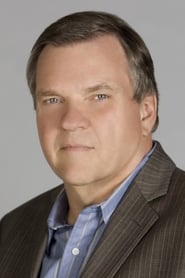
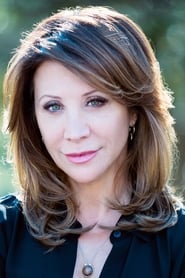
Conchata Ferrell plays Sister Agrippina and Cheri Oteri plays Sister Dymphna, the nun whose emotional unraveling sets the plot in motion. Meat Loaf appears as Monsignor Muldoon. The casting of Meat Loaf as a Catholic monsignor is so absurd it becomes its own joke, and the film knows it.
Chevy Chase Narrates, and That Is Fine
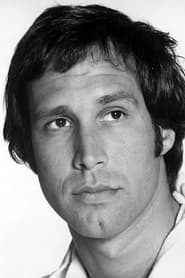
The adult Felix is voiced by Chevy Chase as a narrator looking back at his childhood. It is a structural choice borrowed directly from the source material, and it gives the film its most reliable comic rhythm. Chase's delivery has the right amount of dry distance from the chaos being described. He does not oversell anything. When the pageant falls apart, his narration treats it with the reverence of someone who has been dining out on this story for fifty years.
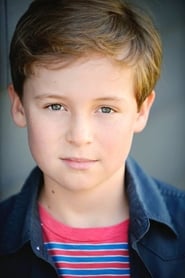
Wyatt Ralff plays young Felix, and the performance has the kind of unself-conscious energy that child actors either have or they do not. Reviewers compared him to Peter Billingsley's Ralphie in "A Christmas Story," and that comparison is not unfair. Both characters are narrated boys whose Christmas plans go sideways. Both films treat childhood embarrassment as high drama. The key difference is that Lamb's Felix is funnier as a bystander than as a schemer. Things happen around Felix. He mostly watches.
A Lifetime Movie That Earns Its Runtime
The film was shot in Connecticut, specifically at Norwich Free Academy and in Jewett City and Willimantic, which is Wally Lamb's home territory. He taught English at the Norwich Free Academy for 25 years, and the school is his alma mater. The production did not fake New England. It went there, and the period detail in the school corridors and classroom sets reflects that rootedness.
This is not a Lifetime movie where someone learns to open their heart to love just in time for Christmas. Nobody is renovating a bed-and-breakfast. Nobody falls for the handsome stranger who turns out to own the tree farm. "Wishin' and Hopin'" is a comedy about institutional chaos, the terrible accountability of being ten years old and put in charge of a manger, and the specific social pressures of a parochial school in the year before everything changed. It earns its 6.5 on IMDb. On the Lifetime scale, it earns considerably more.
Fun Facts
Wally Lamb taught English at Norwich Free Academy in Norwich, Connecticut for 25 years. The school was his own alma mater, and the film was shot there, giving the production a direct connection to the author's real-world background.
Molly Ringwald is actually fluent in French, having relocated to France in the mid-1990s to act in French-language films. This made her casting as the Quebecoise Madame Frechette more than a gimmick.
Meat Loaf's role as Monsignor Muldoon in "Wishin' and Hopin'" (2014) was among his final film appearances before his death in January 2022.
The novella's protagonist, Felix Funicello, is the third cousin of Annette Funicello, the real-life Mickey Mouse Club Mouseketeer who by 1964 had already appeared in six beach party films alongside Frankie Avalon.
The film received a limited theatrical release at the Garde Arts Center in New London, Connecticut on November 23, 2014, before its national Lifetime premiere on December 6, 2014.
In 1964, when the film is set, the Second Vatican Council was actively in session. The reforms it introduced would reduce the number of Catholic sisters in America by more than 30 percent between 1966 and 1980, fundamentally altering parochial school life.
Chevy Chase provided the voice of the adult Felix as narrator, a role that required no on-screen appearance. His disembodied deadpan is one of the film's more consistent pleasures.
Wally Lamb's two earlier novels, "She's Come Undone" (1992) and "I Know This Much Is True" (1998), were both selected for Oprah's Book Club and both reached number one on the bestseller lists. "Wishin' and Hopin'" was his first explicitly comedic, holiday-focused work.
Cast