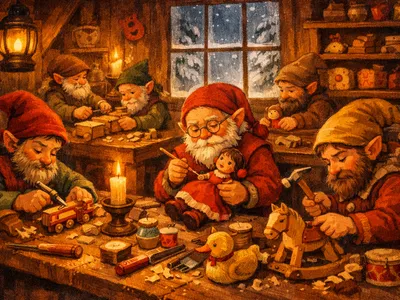

Christmas in Iceland
Iceland celebrates Christmas with 13 mischievous Yule Lads, a giant child-eating cat, and 26 days of holiday. The Yule Lads, sons of the terrifying ogress Gryla, arrive one per day from December 12 to 24, each with a distinct personality and prank. In a country of 380,000 people that publishes more books per capita than anywhere else on earth, the Christmas book flood (Jolabokaflod) is the season's most civilized tradition.
Iceland does Christmas with 13 trolls, a man-eating cat, and more books per capita than any country on earth. The Yule Lads (Jolasveinar), who arrive one per day from December 12, are the descendants of a terrifying folklore tradition that the rest of the world has never quite understood. Their mother, Gryla, cooks naughty children in a cauldron. Their cat eats anyone without new clothes. And yet, modern Icelanders have turned these nightmarish figures into beloved symbols of a season that is, at its heart, about family, books, and smoked lamb in the longest darkness in Europe.
The Yule Lads: 13 Days of Mischief
The Jolasveinar are not Santa Claus. They are 13 troll-like figures, each with a specific personality and prank. Stekkjastaur (Sheep-Cote Clod) arrives first on December 12 and harasses sheep. Giljagaur (Gully Gawk) steals milk. Stufur (Stubby) eats crusts from pans. Thvorusleikir (Spoon-Licker) licks spoons. Pottaskefill (Pot-Scraper) scrapes leftovers. Askasleikir (Bowl-Licker) hides under beds to steal bowls. The list continues through Door-Slammer, Skyr-Gobbler, Sausage-Swiper, Window-Peeper, Doorway-Sniffer, Meat-Hook, and Candle-Stealer.
Children place a shoe on the windowsill each night. Good children find a small gift in the morning. Bad children find a rotten potato. The Yule Lads depart one per day starting December 25, with the last leaving on January 6.
The Christmas Book Flood
Iceland publishes more books per capita than any other country. The majority of the year's titles are released in October and November for the Christmas market, a phenomenon called Jolabokaflod (Christmas Book Flood). On Christmas Eve, after dinner and gift exchange, Icelanders settle in with their new books, chocolate, and a drink. The evening is spent reading. In a country where winter darkness lasts 20 hours and the population is 380,000, the book flood is both commercially savvy and culturally profound.
Frequently Asked Questions
What are the Yule Lads?
The Jolasveinar are 13 troll-like figures from Icelandic folklore who arrive one per day from December 12 to 24. Each has a name reflecting his mischief (Spoon-Licker, Door-Slammer, Sausage-Swiper). They leave gifts in children's shoes for good behavior and rotten potatoes for bad. They depart one per day after Christmas.
What is the Christmas Cat?
The Jolakotturinn is a giant cat from Icelandic folklore that eats children who do not receive new clothes before Christmas. The legend served as motivation to finish textile work before the holiday. Today it is a beloved and slightly terrifying part of Icelandic Christmas culture.
What is Jolabokaflod?
The Christmas Book Flood (Jolabokaflod) is Iceland's tradition of publishing the majority of the year's books in the fall for the Christmas market. Icelanders exchange books on Christmas Eve and spend the evening reading. Iceland publishes more books per capita than any other nation.
Traditions & Customs
The 13 Yule Lads (Jolasveinar)
Starting December 12, one Yule Lad arrives each night, placing a gift in children's shoes (left on the windowsill) if they have been good, or a rotten potato if they have not. Each has a name reflecting his mischief: Spoon-Licker, Door-Slammer, Sausage-Swiper, Window-Peeper. They depart one per day starting December 25.
Gryla and the Christmas Cat
Gryla is a terrifying ogress from Icelandic folklore, mother of the Yule Lads. The Jólakotturinn (Christmas Cat) is her enormous black cat that eats children who do not receive new clothes before Christmas. The threat motivates finishing knitting and sewing projects before the holiday.
Jolabokaflod (Christmas Book Flood)
Iceland publishes the majority of its books in October and November for the Christmas market. On Christmas Eve, Icelanders exchange books and spend the evening reading. The tradition reflects Iceland's extraordinary literary culture: the country publishes more books per capita than any other nation.
Laufabraud (Leaf Bread)
Thin, round flatbread decorated with intricate geometric patterns cut with a knife before deep-frying. Making laufabraud is a family activity during Advent, and the patterns are a point of artistic pride.
Hangikjot (Smoked Lamb)
Smoked lamb, hung over birch or dried sheep dung, is the traditional Christmas main course. It is served with béchamel sauce, green peas, and boiled potatoes. The smoking process gives the meat a distinctive flavor unique to Iceland.
Christmas Eve at 6 PM
Icelandic Christmas officially begins at 6 PM on December 24, when church bells ring across the country. Families sit down to the Christmas meal, exchange gifts, and spend the evening together. The timing allows for a long, unhurried evening.
Christmas Markets
Reykjavik Christmas Village
A small but atmospheric market in Ingolfstorg square in central Reykjavik. Icelandic crafts, woolen goods, and local food are sold in wooden huts. The Northern Lights occasionally provide a backdrop.
Key Dates
First Yule Lad Arrives
Stekkjastaur (Sheep-Cote Clod), the first Yule Lad, arrives. Children begin placing shoes on the windowsill to receive gifts or rotten potatoes.
Thorlaksmessa (St. Thorlak's Mass)
The feast day of St. Thorlak, Iceland's patron saint. Traditionally, skata (fermented skate) is eaten, filling the house with a pungent aroma that signals Christmas is imminent.
Adfangadagur (Christmas Eve)
Christmas begins at 6 PM when church bells ring. The Christmas meal, gift exchange, and Jolabokaflod (book exchange) follow. The evening is spent reading.
Jolardagur (Christmas Days)
Both are public holidays. Quieter days for family visits and leftover hangikjot. The Yule Lads begin departing, one per day.
Threttandinn (Thirteenth Day)
The last Yule Lad departs. Bonfires are lit across Iceland, and elves (huldufolk) are said to move house. The Christmas season officially ends.
Christmas Carols
Heims um bol
Heims um bolOne of Iceland's most popular Christmas songs, a warm melody about the comfort of home during the long winter darkness. It captures the Icelandic emphasis on family and firelight during the season.
Silent Night
JolahljodThe Icelandic version of Silent Night, sung at church services on Christmas Eve across the country.